REVIEW · BEIRUT
Exclusive Journey to Jeita Grotto, Harissa, and Byblos
Book on Viator →Operated by Beirut Daily Tours · Bookable on Viator
Traffic can wreck a good day. This tour keeps you away from Beirut driving stress with private door-to-door transport, and you get the freedom to explore Jeita Grotto and the UNESCO sites on your own terms. My favorite part is how you can move at your pace instead of being rushed by a group, but the one watch-out is that several major attractions have admission fees that are not included, so your total spend may rise.
In practice, this feels built for real life: air-conditioned comfort, a smooth pickup, and a driver who keeps things calm. I noticed the human touch in the feedback I saw—people thanked drivers by name like Fadi, Kassem, Hussein, and Ali for being friendly, flexible, and not overbearing, even when pickup ran a bit late due to hotel location and traffic.
In This Review
- Why this Beirut route is easy to love
- Jeita Grotto: two cave worlds in one ticket plan
- Harissa and the Our Lady of Lebanon statue: pilgrimage meets panoramic Beirut
- Churches of Harissa and the Notre Dame du Liban complex
- Telepherique Harissa: the cable car ride you’ll be glad you added
- Byblos: UNESCO time travel from Phoenician legends to alphabet roots
- Byblos Castle: Crusader stone, sea views, and a small museum pause
- Old Souk and Byblos Port: shop, stroll, then step back to 3000 BC
- How the 8-hour schedule feels in real life
- Price and value: what you pay and what changes your total
- Who this private day trip is best for
- Should you book this Beirut Daily Tours experience?
- FAQ
- What time does the tour start, and how long is it?
- Is pickup and drop-off included?
- Is this tour private or shared with other groups?
- Do I explore on my own, or is there a guide all day?
- Are tickets to the attractions included?
- Is lunch included in the price?
- What’s the price per person?
- What if I need to cancel?
Why this Beirut route is easy to love
- Door-to-door pickup and drop-off means you skip the hardest part: navigating traffic yourself
- Private pace lets you take photos, pause, and move on without watching the clock every few minutes
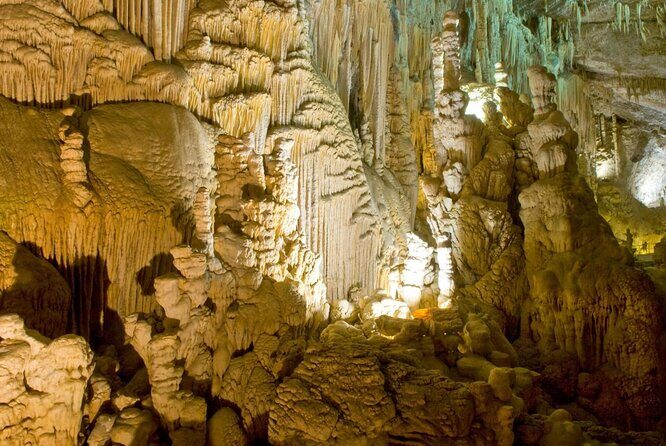
- Jeita Grotto by day is built around two cave levels with totally different vibes (dry formations up top, water passages below)
- Harissa viewpoint time focuses on Our Lady of Lebanon’s bronze statue and the panoramic bay views
- Byblos without the hassle includes a local guide there, plus time to wander the souk and port area
- Mobile ticket is part of the setup, so you’re not stuck scrambling for paperwork
Jeita Grotto: two cave worlds in one ticket plan
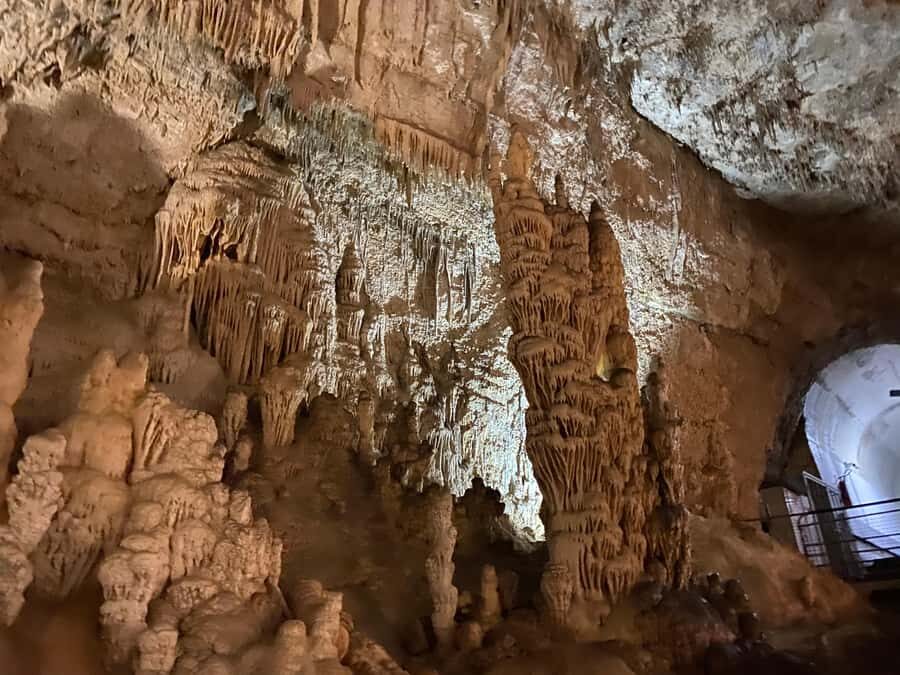
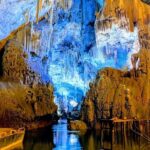
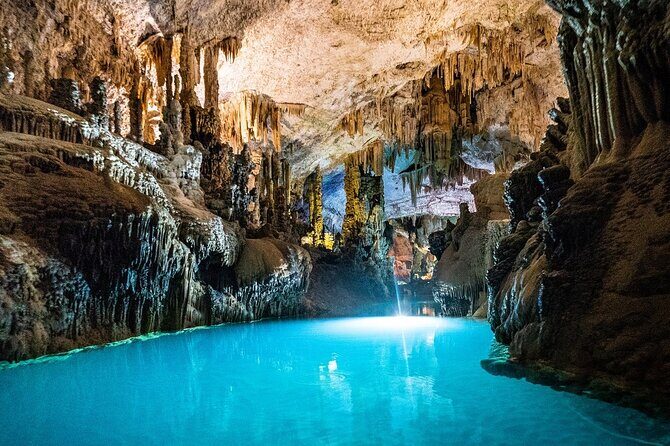
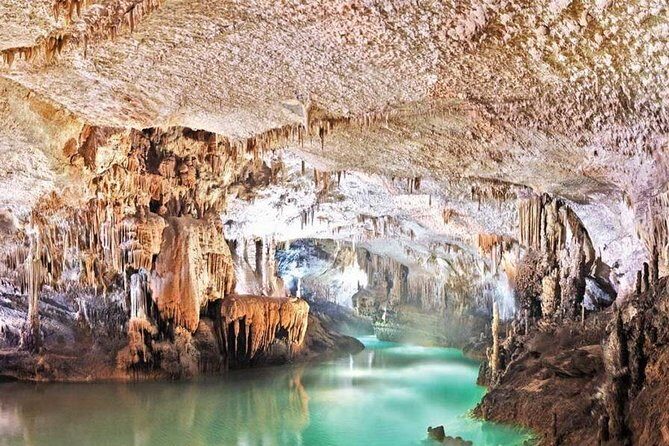
Jeita Grotto is one of Lebanon’s classic stops for a reason. You’re looking at a karst limestone system made of two connected cave areas, stretching from the upper cave to the lower gallery with a major height difference between them.
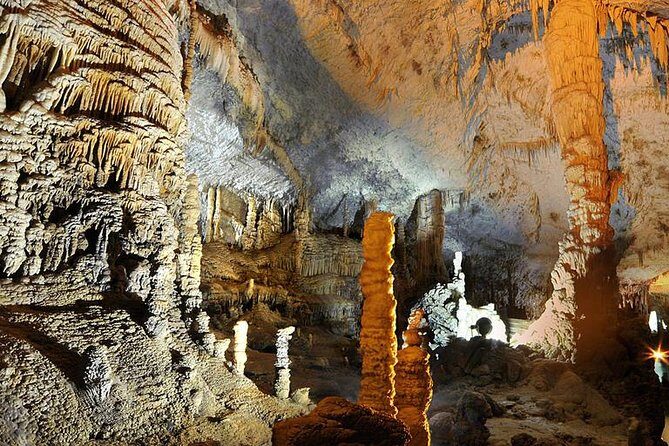
First comes the upper cave. It sits about 300 meters above sea level, and the full upper section runs roughly 2,130 meters. Expect crystallized cave shapes you can’t fake with filters: stalactites, stalagmites, columns, and those curtain-like formations that seem to hang in place.
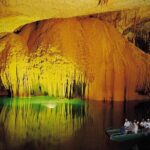
Then you shift to the lower gallery. It runs about 6,200 meters and sits around 60 meters below the upper level. Here the feel changes: you’re walking around a smooth underwater river route and a lake setting, so the lighting and soundscape feel different even when the cave walls look similar.
Timing tip: plan to enjoy both sections. If you only do one, you’ll miss the contrast that makes Jeita special. Also, since the admission for Jeita isn’t included, I’d mentally budget for that before you go, so the total doesn’t surprise you mid-day.
You can also read our reviews of more tours and experiences in Beirut.


Harissa and the Our Lady of Lebanon statue: pilgrimage meets panoramic Beirut
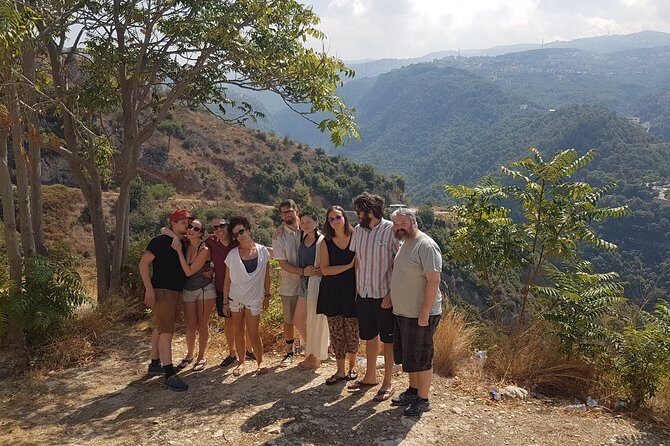
After caves, Harissa feels like a natural change of pace. You’re heading toward one of Lebanon’s biggest Christian pilgrimage destinations, centered on the shrine dedicated to Our Lady of Lebanon.
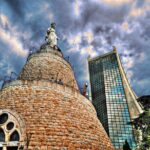
The headline is the 15-ton bronze statue of the Immaculate Conception, Mother of God. It’s 8.5 meters high, with a diameter of about five meters, and the pose matters: Mary stretches her hands while looking over the Bay of Jounieh toward Beirut. Standing there, you get that rare combo of a sacred space and a serious skyline view.
I also like that this portion of the day is time-light. The shrine stop is set for about 30 minutes, and the admission is listed as free. That makes it a good anchor in your schedule, especially if you’d rather spend time wandering Byblos instead of adding extra ticket stops.
Practical note: because Harissa is all about height and views, you’ll want to take a moment before you rush into photos. Look across the bay first, then shoot, so your pictures match what you actually saw.
Churches of Harissa and the Notre Dame du Liban complex
Harissa isn’t just one statue. The area includes the churches and smaller devotional spaces around the main shrine zone.
You’ll see the large painted white statue of Virgin Mary known as Our Lady of Lebanon / Notre Dame du Liban, described as bronze and about 15 tons, with arms stretched. It was made at the end of the 19th century and inaugurated in 1908, and there’s even a chapel inside the base of the statue.
Next to it, there’s a huge cathedral made of concrete and glass. The contrast is striking: this is not a small village church. It’s a big modern worship space built right alongside the older imagery that draws pilgrims.
There are also other churches nearby, including a Byzantine-style Melkite Greek Catholic basilica of St. Paul located south of the main statue. If you like places where different Christian traditions overlap in one area, Harissa gives you that without requiring extra travel time.
Admission for these church stops is listed as free, and the time on the ground is short—about 15 minutes for the churches area—so it’s a quick but meaningful supplement to the main shrine visit.
Telepherique Harissa: the cable car ride you’ll be glad you added
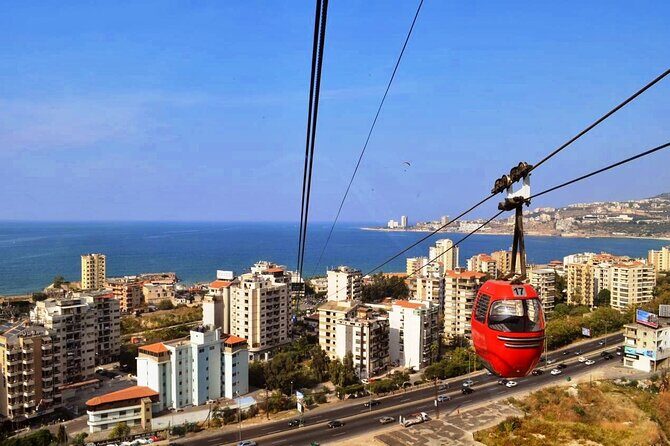
If you want a view without a steep climb, the Télépherique Harissa is the practical add-on. It’s a gondola lift system and one of Lebanon’s older, frequently visited attractions.
The ride operates from Jounieh, about 16 km north of Beirut. It lifts passengers up to roughly 650 meters altitude, passing over a pine-forested steep mountain before arriving at the Our Lady of Lebanon shrine area.
What you’ll appreciate is that you get the bay views from the air. Even if you’re not a big cable-car person, this one helps you experience Harissa from another angle while reducing physical strain.
Admission isn’t included for the Télépherique, so factor it in when you’re budgeting for the day. If you’re going for best value, this is the one paid component besides Jeita and Byblos Castle that can change your total cost the most.
Byblos: UNESCO time travel from Phoenician legends to alphabet roots
Byblos is where the day turns from religious and natural wonder into deep Mediterranean archaeology vibes. It’s a UNESCO World Heritage city and it’s described as one of the oldest Phoenician cities, with habitation reaching back to Neolithic times.
Byblos is also tied to one of the more interesting ideas in Mediterranean history: the Phoenician alphabet and how it spread through the region. In other words, you’re not only walking around ruins—you’re walking around a place connected to stories about how people communicated across centuries.
You’ll typically get around two hours here, and admission for Byblos itself is listed as free. That’s a big deal for value. It means you’re paying for time and transport, not for entry gates just to wander the main site.
How to use your two hours: don’t try to sprint through everything. Pick a few anchor moments—one main viewing area, one stroll through the lanes, then come back if you want a second look. Two hours is enough if you keep moving, and it’s also enough to slow down if you just want to soak up the atmosphere and photos without pressure.



Byblos Castle: Crusader stone, sea views, and a small museum pause
After the main city time, you go up a level—literally. Byblos Castle is a restored 12th-century Crusader castle with a dry moat about 10 meters wide. It sits inside the broader archaeological site, where you can also see the ruins connected to the Temple of Baalat Gebal and the Temple of the Obelisks.
The castle itself gives you the best reason to climb: a perspective over the ruins from the top of its foursquare keep. From up there, you also catch the layout of Bronze Age dwellings below the walls and the sweep toward the sea.
There’s also a small museum plus information panels inside. If you like history but you don’t want a textbook shoved into your day, these panels are a good way to understand what you’re looking at without turning the stop into a lecture.
Admission for Byblos Castle isn’t included, and the stop is about one hour. If you’re watching costs closely, this is one of the ticketed items that’s worth the money because the viewpoint is the point. Without the climb, Byblos can feel like a beautiful wandering town. With the castle, it becomes something you remember.
Old Souk and Byblos Port: shop, stroll, then step back to 3000 BC
Two small stops round out the day, and they’re the kind that make the whole route feel complete.
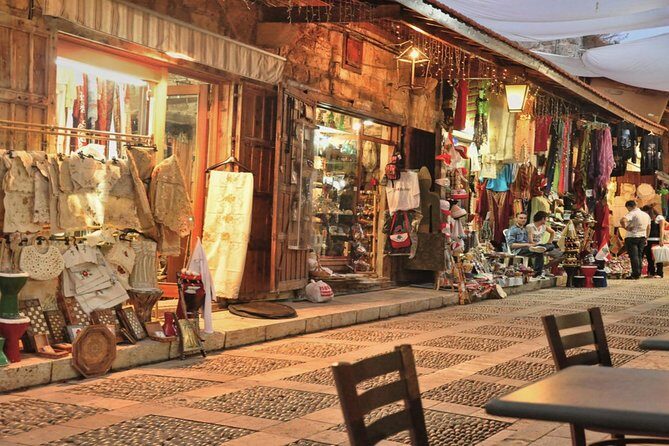
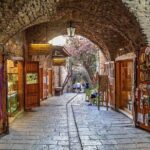
Old Souk: This is the cobblestone market area where you can shop for souvenirs and antiques, or just stroll through the lanes and admire the architecture. It’s not a timed performance—plan for about 10 minutes if you’re only popping in, or longer if you like looking for small handmade items.
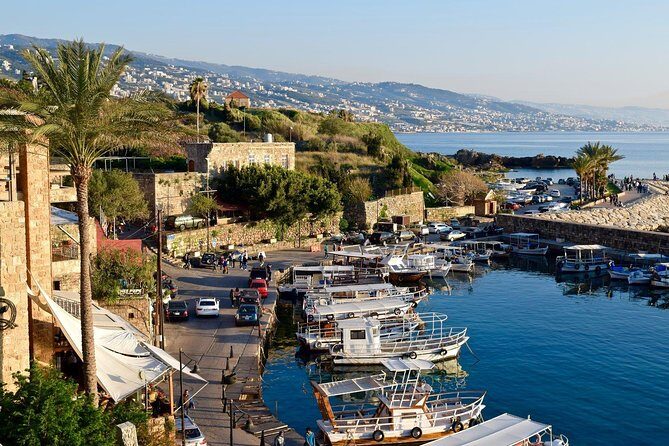
Byblos Port: Then there’s the port area, described as an ancient port and believed by Lebanese accounts to be the oldest port in the world. It’s tied to the idea that around 3000 BC Byblos was a major timber shipping center in the eastern Mediterranean.
That port moment is quick—about 10 minutes—but it’s a nice way to end the day. You stand there and the place starts to feel less like ruins on a map and more like a working coastline that mattered to real trade and travel long before modern borders.
How the 8-hour schedule feels in real life
This is built as an approximately 8-hour private outing starting around 9:00 am. You’ll spend real time in the big sights—Jeita, Byblos, Harissa—then use the shorter stops to keep the day from dragging.
The biggest advantage is the way transport is handled. You get an air-conditioned private vehicle with hotel pickup and drop-off, so you avoid the hardest parts of driving in a big city. The reviews that mention people like Hussein, Ali, Kassem, and Fadi point to something consistent: the service feels relaxed and flexible, not stressful.
One practical consideration: some pickups can run slightly late depending on hotel access and traffic. That’s not a dealbreaker, but I’d plan your morning accordingly. If you have another reservation right after the tour ends, give yourself a cushion.
Also, there’s no included lunch. The good news is that you have free areas in Byblos and Harissa where you can likely grab something, but the schedule here doesn’t include a fixed meal plan. If lunch matters to you, you’ll want to build it into your time using the Byblos window or a short stop approach before returning.
Price and value: what you pay and what changes your total
At $50 per person, the headline cost is reasonable for a private, door-to-door day trip covering three major destinations. You’re paying for transportation across the Beirut region and the convenience of not managing driving, parking, and route planning yourself.
The value story gets even better because several key areas are free: the shrine of Our Lady of Lebanon is listed as free, churches in Harissa are free, Byblos is free, and the old souk and port are free. So the day’s cost doesn’t hinge only on ticket gates.
Where your budget can shift is admissions not included:
- Jeita Grotto admission is not included
- Byblos Castle admission is not included
- Télépherique admission is not included
If you want a quick math check: the more of those paid stops you add (especially Télépherique and castle), the more your final total will rise. But if you love viewpoints and memorable photo stops, those paid entries can still be money well spent.
My advice: decide your priorities before you go. If your top two priorities are caves and a sea-view climb, plan for Jeita and Byblos Castle and treat Harissa’s cable car as the optional upgrade.
Who this private day trip is best for
I’d especially recommend this for you if:
- you want private transport and hate the idea of fighting traffic yourself
- you like doing things at your own speed and not being interrupted
- you want a single day that hits Jeita Grotto, Harissa, and Byblos without chaining together buses and taxis
It’s also a strong fit if you’re a couple, family, or small group that wants control. Since it’s private and only your group participates, the day doesn’t need to match other schedules.
If you’re the type who wants a full guided lecture at every stop, this may feel more self-directed than you prefer. The format here leans toward independent exploration, with a tour leader and a local guide in Byblos to help you understand what you’re seeing.
Should you book this Beirut Daily Tours experience?
Yes, I’d book it if you want a smart, efficient route with low stress and real variety: cave wonder, pilgrimage views, and a UNESCO port-city walk. The door-to-door setup, air-conditioned comfort, and private pace are the big wins, and the free stops keep the day from feeling like a ticket-shopping marathon.
Hold off or re-think it only if you’re trying to keep a tight all-in budget and you don’t want to pay extra for Jeita, Byblos Castle, and the Télépherique. In that case, you can still do parts of the area without extra costs, but this specific tour plan is designed to cover the major highlights, including ticketed ones.
If you like your travel days to feel smooth, meaningful, and a little bit scenic, this one is a solid bet from Beirut.
FAQ
What time does the tour start, and how long is it?
It starts at 9:00 am and runs for about 8 hours.
Is pickup and drop-off included?
Yes. You get hotel pickup and drop-off.
Is this tour private or shared with other groups?
It’s private. Only your group participates.
Do I explore on my own, or is there a guide all day?
You explore independently at your own pace, with a tour leader included. You also have a local guide in Byblos.
Are tickets to the attractions included?
No. Admission tickets are not included for Jeita Grotto, Télépherique Harissa, and Byblos Castle. The shrine and the church area in Harissa are free, and Byblos, the old souk, and the Byblos port are listed as free.
Is lunch included in the price?
No, lunch is not included.
What’s the price per person?
The price is $50.00 per person.
What if I need to cancel?
You can cancel for free up to 24 hours before the experience starts for a full refund. If you cancel less than 24 hours before, the amount paid is not refunded.