REVIEW · BEIRUT
Chouf Charm: Private Journey Through Lebanon’s Historic Heartland
Book on Viator →Operated by Beirut Daily Tours · Bookable on Viator
One day in Lebanon’s Chouf feels like stepping through a time portal. This private, transport-only tour is built for easy sightseeing: Deir el Qamar’s historic streets plus Beiteddine Palace and the Al-Shouf Cedar Nature Reserve—with a helpful tour leader keeping things moving. The trade-off is simple: admission isn’t included for the palace and the cedars, and lunch isn’t included either.
I like the pace because it’s not a grueling hike-and-run day. You get air-conditioned comfort, door-to-door pickup/drop-off, and a private driver doing the driving while you focus on the sights. One more thing to consider: you’ll spend about an hour at the cedars reserve, so plan to treat it as a scenic visit rather than a deep wilderness trek.
In This Review
- Key highlights you’ll actually feel
- A door-to-door Chouf day plan (and what it costs in the real world)
- Beiteddine Palace: the summer residence behind the gates
- Deir el Qamar’s old streets: churches, mosque, and a village story that survived
- Fakhreddine Mosque: oldest in Mount Lebanon and built with intention
- Saydet el Talle Church: Our Lady of the Hill, with Phoenician echoes
- Al-Shouf Cedar Nature Reserve: UNESCO biosphere, giant cedars, and a gentle length of time
- Timing, comfort, and lunch: making the 8 hours feel easy
- Who this private Chouf route suits best
- Should you book Chouf Charm with Beirut Daily Tours?
- FAQ
- FAQ
- What time does the tour start?
- How long is the Chouf Charm tour?
- Is hotel pickup and drop-off included?
- Is this a private tour?
- Is lunch included?
- Are tickets included for all stops?
- Do I get a mobile ticket?
- What is the cancellation policy?
Key highlights you’ll actually feel
- Deir el Qamar, repaired after destruction: a multi-religious village story that includes a 1860 rebuild.
- Beiteddine Palace, with layered rule: Ottoman admin, French mandate offices, then the president’s summer residence.
- Fakhreddine Mosque details: built in 1493 and restored in the 1500s, with an octagonal minaret.
- Saydet el Talle Church on older ground: a 15th-century church linked to Phoenician-era ruins.
- Al-Shouf cedars in a UNESCO biosphere: giant cedars inside a reserve tied to the UNESCO biosphere network.
A door-to-door Chouf day plan (and what it costs in the real world)
This tour is designed as transport-first sightseeing. You start around 9:00 am with pickup offered, then a private chauffeur handles the route in an air-conditioned vehicle, keeping the day calm and predictable.
At $75 per person for an ~8-hour day, the value comes from the simplicity: you get a structured route through several major Chouf landmarks without needing to coordinate cars, parking, or timing between sites. If you’re traveling with a small group, group discounts may help too, since this is priced per person.
Here’s the cost wrinkle: lunch isn’t included, and admission isn’t included for Beiteddine Palace and the Shouf Cedar Reserve. The good news is that some stops are free—Deir el Qamar’s municipal area, plus the mosque and church—so your spending is concentrated on the two ticketed main attractions.
You can also read our reviews of more private tours in Beirut
Beiteddine Palace: the summer residence behind the gates
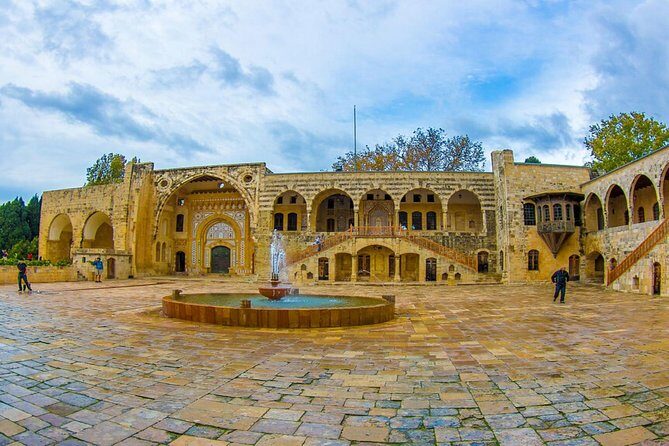
Beiteddine Palace is the day’s big architectural payoff. Built between 1788 and 1818 by Emir Bashir Chehab II, it has that “power-and-palace” feeling—thick walls, formal spaces, and a sense that politics lived here as comfortably as beauty. Even if you only have an hour to tour, the place communicates why it mattered.
The palace also has a layered timeline that your guide can help you connect. After 1840, the Ottomans used it as a government building, and during the French Mandate it served as a local administrative office. Then in 1943, it was declared the president’s official summer residence, and during the Lebanese Civil War it suffered heavy damage.
What’s important for your planning: parts of the palace are open to the public, but the rest is still the president’s summer residence. That means you’re seeing the public-facing sections rather than “everything”—still worth it, but it’s good to know what kind of access to expect. The palace time is about 1 hour 30 minutes, and admission is not included in your tour price.
Practical tip: if you’re sensitive to direct sun or heat, plan to time your photos and linger a bit longer in shaded indoor areas while you can. Palace days tend to reward patience.
Deir el Qamar’s old streets: churches, mosque, and a village story that survived
After the palace, you head into Deir el Qamar, one of the Chouf region’s best-known historic villages. The name means Monastery of the Moon, and the vibe here is small-town and human-scale—narrow streets, traditional stone houses, and religious buildings that reflect how mixed the community has been over time.
This stop is a mix of sightseeing and context. Deir el Qamar is described as the first Lebanese village to have a municipality in 1864. And it’s not just one-faith history: people from all religious backgrounds lived here, with a mosque, synagogue, and Christian churches mentioned as part of the village’s older fabric.
The story has a painful chapter too. In 1860, the village was destroyed during the civil war between Druze and Christians, and the town was set ablaze. Afterward, Napoleon III sent a French contingent to help rebuild it. That “rebuilt” feeling matters because it explains why the architecture and religious sites don’t look like a single era—they’re the result of layers of recovery and change.
For you, the payoff is that the village isn’t only a backdrop. You’re walking through a place where different eras and communities have left visible marks. Your time here is about 30 minutes, and that’s enough for a short, meaningful stroll and a few key views.
Fakhreddine Mosque: oldest in Mount Lebanon and built with intention
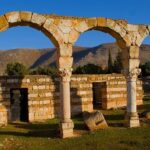
In Deir el Qamar, the Fakhreddine Mosque is one of the easiest stops to love, even if you’re not a religious architecture specialist. It was built in 1493 and restored in the sixteenth century by Fakhreddine I, and it’s noted as the oldest mosque in Mount Lebanon.
The headline detail is the octagonal minaret. That kind of shape gives it a distinct silhouette against the hillside, and it’s the sort of element you notice faster than you’d expect. The visit time is short—about 15 minutes—and admission is free.
If you want to get the most out of a short stop, slow down for a couple of minutes at the minaret viewpoint and take in the proportions. The charm of Deir el Qamar is that even small stops have personality.
Saydet el Talle Church: Our Lady of the Hill, with Phoenician echoes
Just down the same historic path, Saydet el Talle Church (Our Lady of the Hill) gives you a different angle on the site. It dates to the 15th century, and the story connects it to earlier ruins.
The information you’ll hear ties the church to Monk Nicolas Smisaati, who built the church on the site over the ruins of an older Phoenician temple dedicated to Astarte. That earlier temple was later destroyed by an earthquake in 859—a reminder that places in this part of the world often have deep, long timelines.
There’s also a legend that’s part of the folklore around the area. It involves a Druze emir in Baakline who reportedly saw a light coming out of the hill and ordered soldiers to dig, leading to guidance about building a mosque if they found an Islamic symbol. The exact details vary by retelling, but the key point is that local stories add an extra layer to what you’re seeing in front of you.
Time here is also around 15 minutes, and admission is free.
You can also read our reviews of more historical tours in Beirut
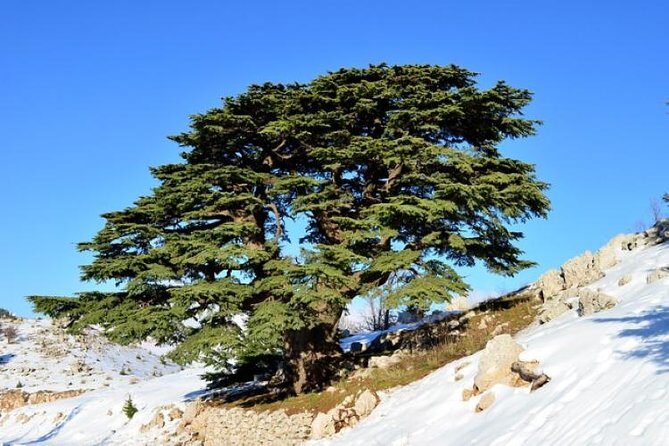
Al-Shouf Cedar Nature Reserve: UNESCO biosphere, giant cedars, and a gentle length of time
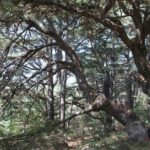
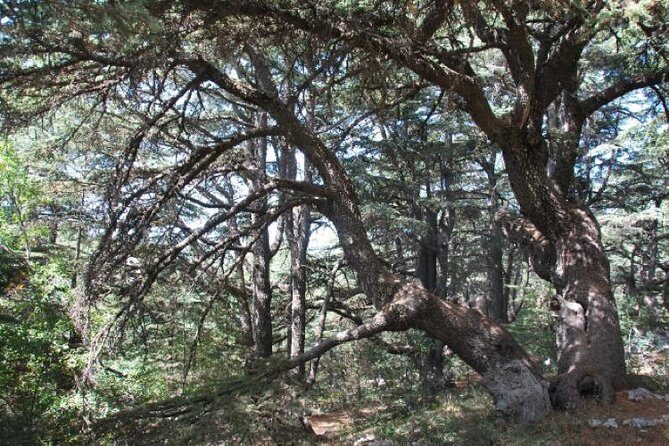
Now for the reason many people come to the Chouf: the cedars. The Al-Shouf Cedar Nature Reserve—part of the wider Al-Shouf Cedar Nature Reserve recognized as a UNESCO biosphere reserve in 2005—is a huge protected area on the slopes of Barouk Mountain.
Even though your tour time at the reserve is about 1 hour, the scale of the place is dramatic. The reserve is described as covering 550 km², and it’s noted as representing about 5.3% of Lebanon’s territory and 70% of Lebanon’s green area, with the added note that it’s the largest nature reserve in the Middle East. That’s a lot of “big picture” for a relatively short stop.
Admission isn’t included, and the best way to think about this visit is: you’re getting a structured taste of the cedars and the setting. If you want long hikes, you’ll need extra time outside this day trip. But if you want a calm, scenic hour with a clear route and a driver who brings you back, this works well.
Bring essentials even for a short nature stop: water, sun protection, and good walking shoes. Cedar reserve paths can be uneven, and the day includes village walking too.
Timing, comfort, and lunch: making the 8 hours feel easy
This is a transport-only door-to-door experience, which is exactly why it feels less stressful. You get private transportation in an air-conditioned vehicle, and the tour is positioned as a “take it easy” day with a private chauffeur doing the driving.
The pace is practical: palace first (when energy is highest), then Deir el Qamar’s historic buildings, and finally the cedar reserve. The stop lengths are compact—30 minutes for the village municipal area, 15 minutes for each smaller religious site, then 1 hour 30 minutes for Beiteddine Palace and 1 hour at the cedars reserve.
The only food gap is that lunch isn’t included. You’ll want to plan for either a quick meal before you go, a snack for the middle, or a post-tour bite back in Beirut. If you’re prone to getting hungry on tours, don’t wait until you feel it—build in a small plan.
Comfort tip: bring a light layer. Even in warm seasons, you can get temperature swings between shaded village lanes, palace rooms, and the cooler air near mountain areas.
Who this private Chouf route suits best
This tour fits best if you like a structured day and don’t want transportation friction. It’s ideal for:
- People who want historic sites with context more than long hikes
- Families or anyone who prefers short walking segments in multiple locations
- Travelers who’d rather focus on seeing Deir el Qamar + Beiteddine + cedars in one day
It may be less ideal if you’re chasing a long cedar trek or you want a slow, unplanned wandering day with plenty of free time in each location. With the fixed stop times, you’re getting a curated sample rather than an open-ended roam.
The overall service style seems designed for flexibility too. The experience includes a tour leader and a private driver, and the day is described as personalized—useful if you want your pace adjusted or have specific interests in the historic details.
Should you book Chouf Charm with Beirut Daily Tours?
If you’re in Beirut and you want a solid Chouf hit without the hassle, I think this is a sensible booking. For a single 8-hour day, you get the “big three” people want: Deir el Qamar’s storybook streets, Beiteddine Palace’s political and architectural layers, and the cedars at Al-Shouf.
You should still book with your eyes open on two practical points: palace and cedars tickets cost extra, and lunch is on you. If that doesn’t bother you, the door-to-door private setup and helpful guide approach make it good value, especially when you’d otherwise spend time figuring out logistics.
FAQ
FAQ
What time does the tour start?
The tour starts at 9:00 am.
How long is the Chouf Charm tour?
It runs for approximately 8 hours.
Is hotel pickup and drop-off included?
Yes. Hotel pickup and drop-off are included.
Is this a private tour?
Yes. It’s a private tour/activity, and only your group participates.
Is lunch included?
No. Lunch is not included.
Are tickets included for all stops?
Not all stops. Admission tickets are not included for Beiteddine Palace and the Shouf Cedars Reserve. Deir al Qamar Municipality, Fakhreddine’s Mosque, and Saydet el Talle Church have free admission noted.
Do I get a mobile ticket?
Yes. A mobile ticket is included.
What is the cancellation policy?
You can cancel for a full refund if you cancel at least 24 hours before the experience starts. If you cancel less than 24 hours before, the amount paid is not refunded.
If you’d like, tell me your travel dates and how many people are in your group—I can help you think through whether the extra admissions + lunch fit your budget and pace.