REVIEW · BEIRUT
Exploring Beirut’s Past: A Private Guided Historical Tour
Book on Viator →Operated by Beirut Daily Tours · Bookable on Viator
Beirut reads like a living history book. This private 5-hour tour gives you a guided walk through big-name sites, from archaeology at the National Museum to downtown landmarks tied to Ottoman, Crusader, Mamluk, and Ottoman-era stories. I love that it’s a true private format with hotel pickup, so you’re not stuck with a rushed crowd. I also like that the route mixes major monuments with the everyday city feel of the Corniche, Zaytouna Bay, and Beirut Souks. One possible drawback: museum admission is not included, and access in downtown can shift with local security and street conditions.
The standout for me is how the guide links places together so you understand why they matter, not just where they are. In real visits I’ve heard praise for guides like Pierre and Susan, with driver Nasser also credited for keeping the day smooth and even funny. Still, if you’re expecting hours inside every stop, note that several locations are quick picture-and-orientation stops.
In This Review
- Key highlights you should care about
- Why this 5-hour Beirut route works
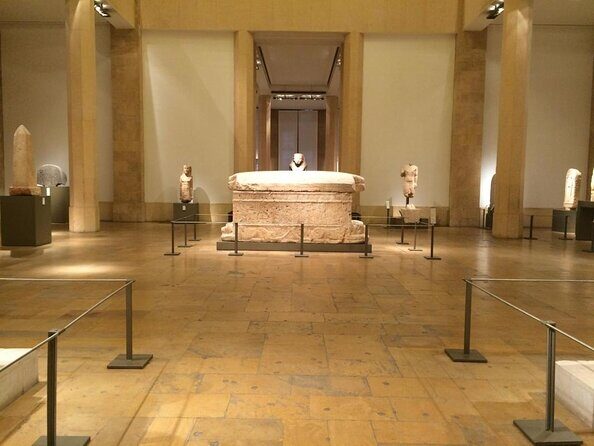
- National Museum of Beirut: a strong start before downtown
- Raouche: Pigeon Rocks and the Corniche in quick, scenic doses
- Zaytouna Bay: the waterfront “reset” before the hard stuff
- The abandoned Holiday Inn Hotel: a war landmark you can’t ignore
- Downtown Beirut’s faith landmarks: Mohammad Al-Amin, Al-Omari, and Saint George
- Mohammad Al-Amin Mosque (the Blue Mosque)
- Al-Omari Mosque
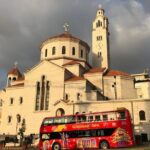
- Greek Orthodox Cathedral of Saint George
- Martyrs’ Square and Nejme/Place de l’Etoile: the political heart of Downtown
- Martyr’s Square
- Place de l’Etoile (Nejme Square)
- Beirut Souks: a shopping stop with real staying power
- Roman Baths in downtown: outdoor ruins you can actually use
- Price and logistics: what $75 buys you
- When to go and what to watch for
- So, should you book this private Beirut history tour?
- FAQ
- How long is the private guided historical tour of Beirut?
- What is the price per person?
- Is hotel pickup and drop-off included?
- Does the tour include a professional guide and transportation?
- Are tickets included for the National Museum of Beirut?
- Are the other listed stops free to enter?
- What day(s) does the tour run?
- What time does the tour operate?
- Are meals included?
- Is free cancellation available?
Key highlights you should care about
- National Museum of Beirut sets the context with Lebanon’s archaeology and artifacts from across the country (2 hours on the route).
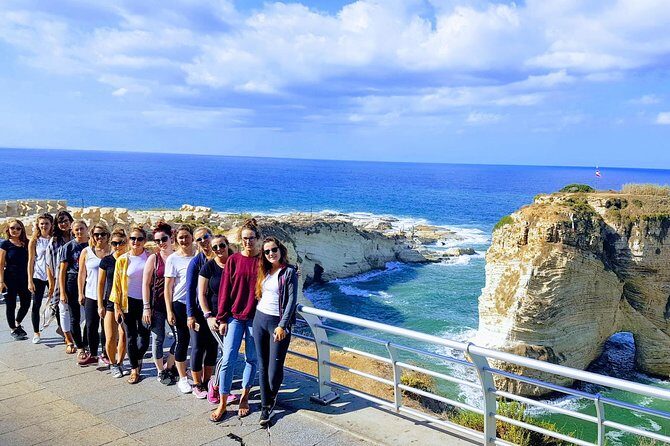
- Raouche’s Pigeon Rocks + the Corniche give you fast, iconic sea-and-city views in under 30 minutes.
- Downtown religious landmarks show layered rule changes from 7th-century origins to Crusader and Mamluk transformations.
- A real war landmark tour stop: the abandoned Holiday Inn linked to the Battle of the Hotels era.
- Downtown squares in one sweep: Martyrs’ Square, Nejme/Place de l’Etoile, and the 1930 four-faced Rolex clock.
- Roman Baths in the open air as a usable cultural space, not just a fenced-off ruin.
Why this 5-hour Beirut route works
This is the kind of day tour that helps you get your bearings fast without flattening Beirut into a checklist. You start with the National Museum, then shift into coastline views, then spend time in the downtown core with mosques, churches, public squares, and shopping streets. The rhythm matters: Beirut’s past is stacked vertically, so seeing it in an order that starts with archaeology and ends with Roman remains makes the city feel less like a jumble.
At $75 per person for about 5 hours, the value hinges on what you’re getting: hotel pickup and drop-off, a professional guide, and comfortable private transportation (air-conditioned). If you’re trying to do this solo, you’d likely spend time coordinating transport, tickets, and interpretation. Here, you trade some independence for a guided hit of the places that most shape how Beirut looks and how it was shaped.
One more practical note I like: the tour is private. That means your guide can keep the pace aligned with your questions, rather than waiting for a group that takes forever at every photo spot.
You can also read our reviews of more guided tours in Beirut



National Museum of Beirut: a strong start before downtown
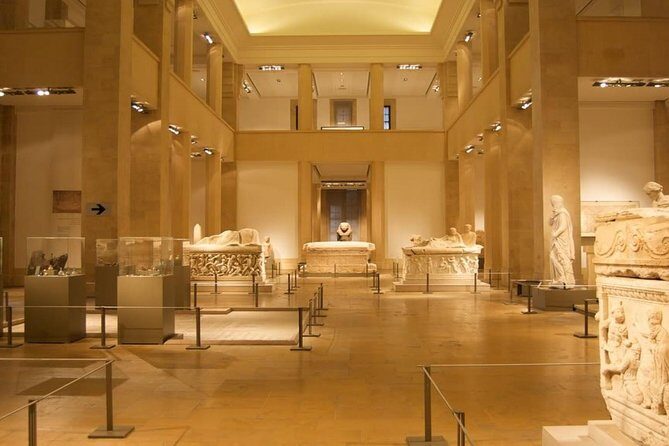
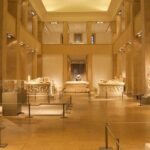
Your first stop is the National Museum of Beirut, Lebanon’s main archaeology museum. This is your best “orientation tool” on the day. The museum houses major artifacts from across Lebanon, with excavations that span the country—useful because Beirut is a crossroads, not an isolated story.
It’s also the stop with the most time: 2 hours. Admission is not included, so you’ll want to plan for that extra cost when you budget. I think that’s worth it, because once you’ve seen the museum’s overview of civilizations and material culture, the later downtown sites feel more connected instead of random.
If you’re the type who likes explanations (and not just signs), this is where guides tend to earn their keep. One highlight I heard from real guides on similar days is that this museum is often treated as the anchor point, especially if downtown access is affected by local security or protests.
Raouche: Pigeon Rocks and the Corniche in quick, scenic doses
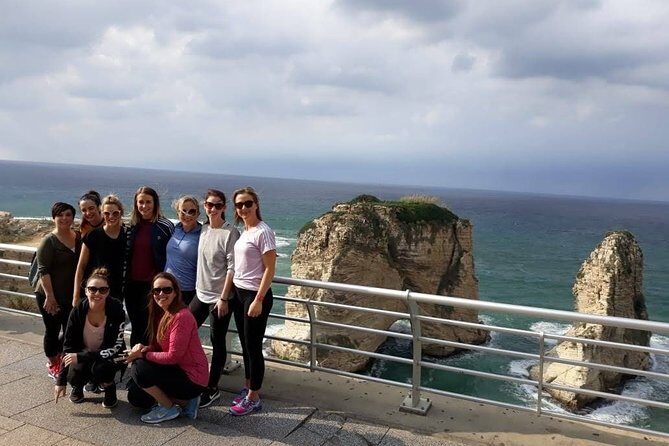
After the museum, the tour swings west to the sea. The Pigeon Rocks in Raouche are the iconic pair of rock formations at Beirut’s western-most tip. The visit is short—about 10 minutes—but it’s a high-impact stop because the rocks look like landmarks, not just scenery.
From there, you continue to the Corniche Beirut, specifically Al Manara Corniche, stretching from Ramlet al Bayda toward Saint George marina. This is the famous seaside promenade lined with palm trees, with the Mediterranean in front and Mount Lebanon visible from the eastern side. The stop is also listed at about 10 minutes.
Why these coastal pauses matter: they change your pace and your perspective. Beirut’s downtown history can feel heavy. The sea views reset you, and they also help you visualize the city’s geography—where the old and the new meet along the shoreline.
Zaytouna Bay: the waterfront “reset” before the hard stuff
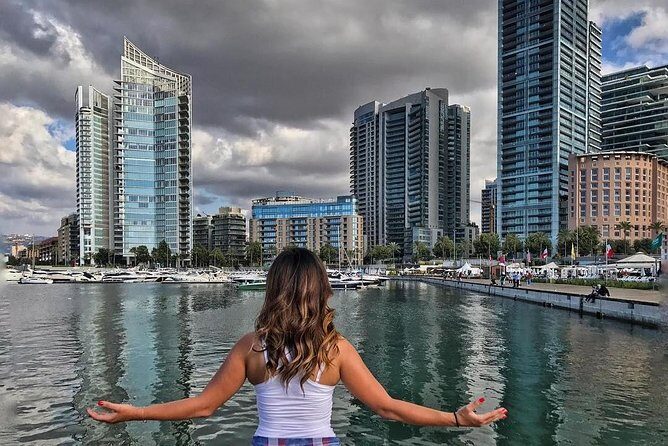
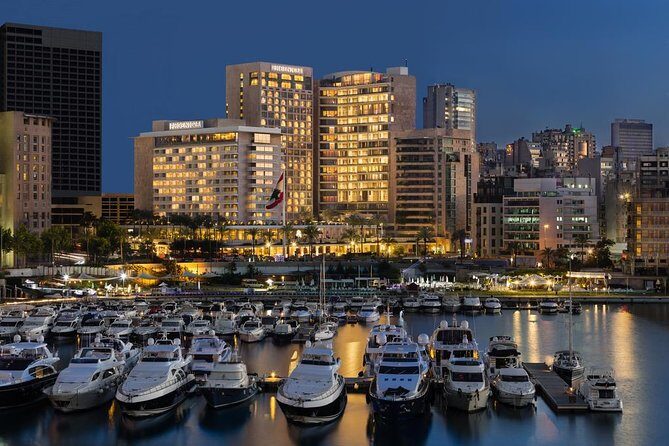
Next you’ll head to Zaytouna Bay, described by its official materials as Beirut’s finest leisure destination. It’s a newer waterfront promenade with shops and restaurants, and you’re given about 10 minutes to look around.
This stop isn’t about ancient layers. It’s about how Beirut tries to live forward along the water. If you want contrast in one day—ruins and relics on one side, modern leisure on the other—Zaytouna Bay is a clean break.
If you’re trying to shop or grab a snack later, you’ll at least get a sense of the area’s vibe. Just remember: meals aren’t included on the tour.
The abandoned Holiday Inn Hotel: a war landmark you can’t ignore
One of the most memorable stops on the route is the abandoned Holiday Inn Hotel. This building is tied to Beirut’s civil war era and, specifically, the “Battle of the Hotels.”
Here’s what matters for understanding the place:
- It was built between 1971 and 1974, during a period when Beirut’s economy was booming and the city was a top destination.
- It operated until the Lebanese civil war began in 1975.
- The hotel became part of a prolonged struggle known as the Battle of the Hotels, involving more than 25,000 combatants competing for control of luxury hotels, including the Holiday Inn and the Phoenicia.
- The building remains untouched and abandoned decades later, functioning as a reminder of the conflict’s impact.
This stop is emotionally heavy compared to the museum or the shoreline. But it’s also one of the most important parts of understanding why Beirut’s architecture and city center still carry visible scars.
If you’re sensitive to war imagery, go into this stop with that awareness. For many people, it turns the day from “sightseeing” into a real education.
You can also read our reviews of more private tours in Beirut



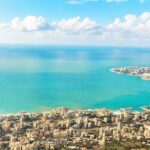
Downtown Beirut’s faith landmarks: Mohammad Al-Amin, Al-Omari, and Saint George
From the war landmark, the tour moves back into the downtown core where you’ll see multiple religious sites, each tied to different eras of power.
Mohammad Al-Amin Mosque (the Blue Mosque)
This mosque is Lebanon’s biggest, also commonly called the Blue Mosque. It’s located near Martyrs’ Square in downtown Beirut. Opened in 2008, it has four minarets rising 65 meters high. The mosque’s domes are covered in light blue tiles, with multiple domes and tall arches.
It’s listed as about 10 minutes, so you’re not expected to do a long visit. Instead, you get a guided look that helps you understand what you’re seeing—scale, style, and the architecture choices reflected in the domes and arches.
Al-Omari Mosque
Next comes Al-Omari Grand Mosque, tied to a major timeline of change. It originated in 635 AD in the age of Omar Bin El Khattab. In the 12th century, crusaders converted it into the Church of Saint John. Later, in 1291, the Mamluks retransformed it into a grand mosque again. The civil war damaged it, and refurbishment was completed in 2004.
That long chain of conversions is the point here. You’re not just looking at a building. You’re seeing how power and religion left marks in stone and structure.
Greek Orthodox Cathedral of Saint George
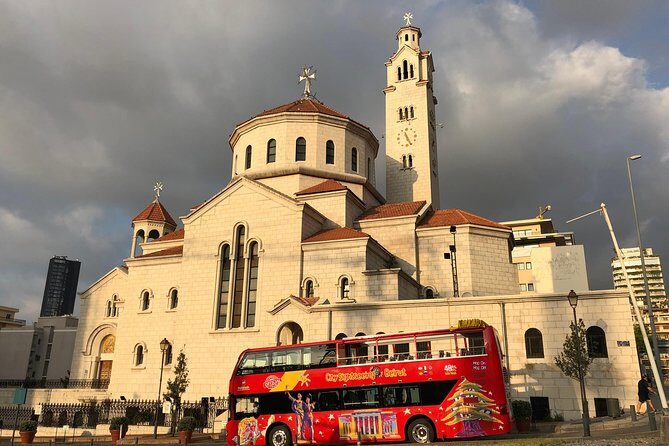
The Greek Orthodox Cathedral of Saint George is the oldest church in Beirut and one of the oldest in the region. It serves as the seat of the Greek Orthodox Metropolitan bishop of the Greek Orthodox Archdiocese of Beirut. You’ll also hear about its historic connection to Beirut’s famous Law School. The first Christian temple on the site dates back to the mid 6th century AD.
Again, you get about 10 minutes, which means you’ll want to watch for the guide’s story beats: age, role in the city, and how this church fits into downtown’s broader history.
Martyrs’ Square and Nejme/Place de l’Etoile: the political heart of Downtown
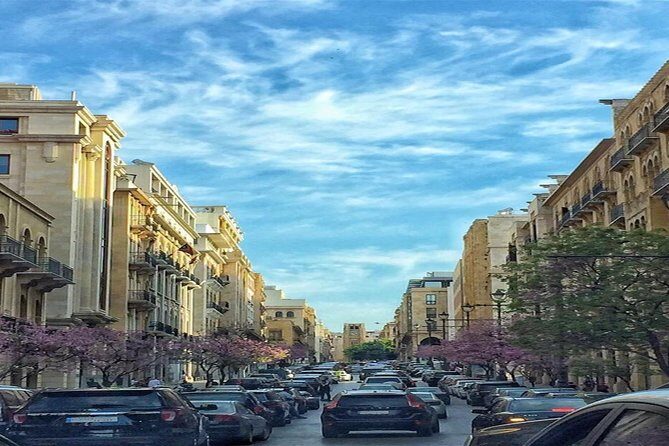
Your downtown walk continues through key public squares.
Martyr’s Square
Martyr’s Square sits in the heart of downtown Beirut and was historically known as Al Burj or Place des Cannons. It was renamed after the 6 May 1916 executions carried out by the Ottomans of Lebanese nationalists ordered by Jamal Pasha during World War I.
This is a quick stop at about 10 minutes, but the meaning is big. A square is where people gather and where history gets staged. With this one, you’re seeing a site that carries a specific political memory.
Place de l’Etoile (Nejme Square)
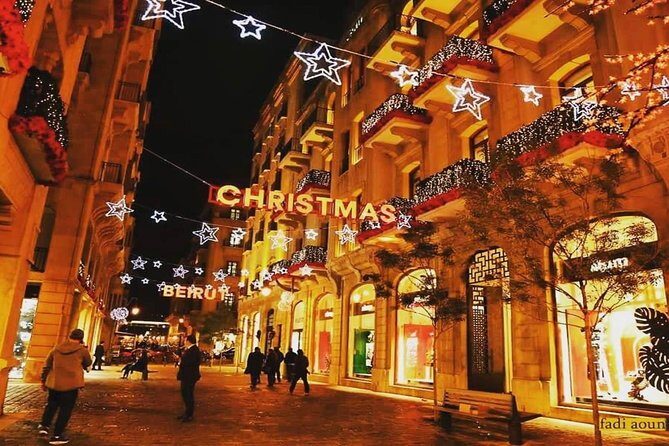
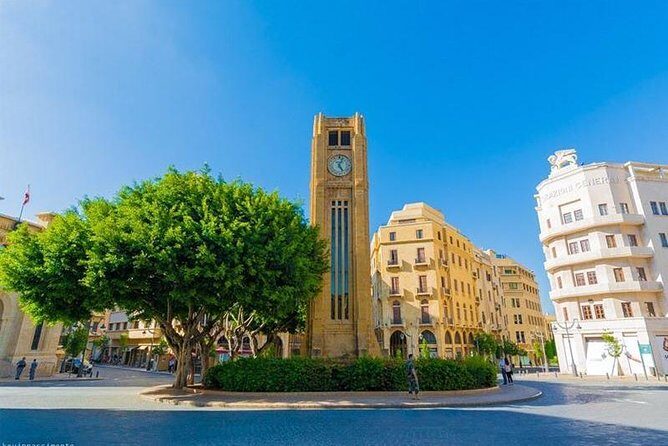
Then comes Nejme Square / Place de l’Etoile, described as the central square in the Downtown area. It’s where you’ll find the Lebanese Parliament and related buildings, plus two cathedrals, a museum, and cafes and restaurants. The most famous detail is the 1930 four-faced Rolex clock, a global icon of Beirut’s downtown architecture.
If you like city form—how buildings frame space—this square is a fast lesson in how Beirut’s center was shaped to look official and ceremonial.
Beirut Souks: a shopping stop with real staying power
After squares, you head to Beirut Souks, a commercial district in the city center with over 200 shops, plus 25 restaurants and cafes, an entertainment center, and a cinema complex. The tour time is about 10 minutes, so it’s more about orientation than browsing deeply.
Even in a short stop, you can get the sense of why this area is a major draw: it’s positioned as one of the largest and most diverse shopping and leisure spots in Beirut.
If you want to shop or eat later, use this as your map moment. You’ll know you’re in the main commercial zone, not just passing through.
Roman Baths in downtown: outdoor ruins you can actually use
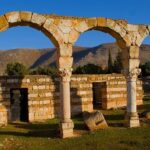
The last stop is the Roman Baths, also known as the Roman Berytus Baths. These are described as the largest outdoor sight in downtown Beirut. They were discovered in 1968–1969 and underwent major renovation in the mid 1990s.
The site’s timeline is part of the story:
- The first bath complex was created in the early first century under Augustus.
- A major earthquake in 551 AD destroyed the baths.
- Today, one of the bath areas is used for artistic performances and concerts, so the space isn’t sealed away from modern life.
You’ll get about 10 minutes here, but you’ll likely walk away with a clearer mental picture than you’d get from a quick glance alone. It’s one of those places where the stone layout and the open-air setting help you imagine everyday life long ago.
Price and logistics: what $75 buys you
Here’s the practical breakdown of the value.
Included:
- Comfortable private transportation plus an air-conditioned vehicle
- Hotel pickup and drop-off
- Tour leader
- Professional guide
- Mobile ticket
- Group discounts are offered (so the per-person cost can drop with the right group setup)
Not included:
- Meals
- National Museum of Beirut admission (admission ticket not included)
At $75 per person for about 5 hours, you’re paying mostly for time saved and interpretation delivered. The stops that are free include Pigeon Rocks, Corniche, Zaytouna Bay, the mosques, Saint George Cathedral, Martyr’s Square, Place de l’Etoile, Beirut Souks, and Roman Baths. The museum is the one you should plan to pay separately.
If you hate museum planning and you don’t want to run from one spot to the next on your own, this is a good trade.
If you love independent wandering and want a slower pace with longer stops, you might feel the tight timing at several locations. The design is efficient, not slow.
When to go and what to watch for
The tour runs on Tuesday through Sunday, with a start window listed as 8:30 AM to 1:00 PM (with date-specific variations in the schedule). That means you’ll usually get a morning-style itinerary.
Also, downtown Beirut can be affected by security or demonstrations. In at least one guide account, access to the city center was limited by tight security and protesters, which impacted what could be visited beyond the museum. Your guide can still keep the day meaningful, but you should expect that the exact flow might be shaped by what’s happening outside.
So, should you book this private Beirut history tour?
I’d book it if you want a guided day that hits the big themes of Beirut: archaeology, coastal identity, layered religious architecture, downtown political memory, and the shadow side of the civil war.
I’d skip it (or at least adjust expectations) if you want long stays inside every site or if you only care about one category like museums or religious buildings. The strength here is the mix, and the stops are mostly short at each location.
If you’re pairing this with other Beirut plans, use this day to get context first. After a route like this, the city makes more sense on your own time.
FAQ
How long is the private guided historical tour of Beirut?
It’s listed as approximately 5 hours.
What is the price per person?
The price is $75.00 per person.
Is hotel pickup and drop-off included?
Yes, hotel pickup and drop-off are included.
Does the tour include a professional guide and transportation?
Yes. It includes a tour leader, a professional guide, and an air-conditioned vehicle with comfortable private transportation.
Are tickets included for the National Museum of Beirut?
No. The National Museum of Beirut admission ticket is not included.
Are the other listed stops free to enter?
The tour details list admission tickets as free for the other stops, including Pigeon Rocks, Corniche Beirut, Zaytouna Bay, the mosques, Martyr’s Square, Nejme Square/Place de l’Etoile, Beirut Souks, and the Roman Baths.
What day(s) does the tour run?
Tuesday through Sunday is listed for the main schedule.
What time does the tour operate?
The opening hours are listed as 8:30 AM to 1:00 PM (with some date-specific schedule notes).
Are meals included?
No. Meals are not included.
Is free cancellation available?
Yes, free cancellation is available up to 24 hours in advance of the experience start time for a full refund.