REVIEW · BEIRUT
Guided Small-Group Tour to Beirut, Beiteddin & Deir elQamar
Book on Viator →Operated by Lebanon Tours & travels · Bookable on Viator
One morning, two regions of Lebanon. This full-day guided route threads through Beirut’s sea-and-downtown landmarks, then climbs into Mount Lebanon’s Emir world at Deir el Qamar and Beiteddine Palace. I love the small-group setup that keeps the stops more manageable, and I also love that you get lunch included after the city sightseeing. The main drawback to plan for: many Beirut stops are quick hits (often around 10 minutes), so it’s best if you’re good with photo stops and moving on.
You start at 8:30am with hotel pickup/drop-off and travel in an air-conditioned vehicle (with a max of 15 people). You’ll also get a mobile ticket, which keeps things simple before you head out.
What makes this tour feel different is the mix: big iconic sites like the Pigeon Rocks and major downtown religious landmarks, plus harder context stops like the abandoned Holiday Inn, a lingering war reminder in the middle of the city.
In This Review
- Key highlights you’ll actually care about
- How the morning flows: timing, vehicle comfort, and your pace
- Pigeon Rocks and Al Manara Corniche: the Beirut postcard view
- Zaytouna Bay and the abandoned Holiday Inn: modern leisure and a hard memory
- Downtown mosques and the Greek Orthodox Cathedral: the city’s layered faith
- Mohammad Al-Amin Mosque (the Blue Mosque)
- Al-Omari Grand Mosque: built, converted, rebuilt
- Greek Orthodox Cathedral of Saint George
- Martyrs Square and Nejme Square (Place de l’Étoile): symbols, politics, and a famous clock
- Martyr’s Square (historically Al Burj / Place des Cannons)
- Place de l’Étoile / Nejme Square
- Beirut Souks and Roman Baths: shopping streets plus ancient infrastructure
- Beirut Souks
- Roman Baths in the center of it all
- Leaving the city for Deir al-Qamar: Monastery of the Moon village time
- Fakhreddine’s Mosque and Saydet el Talle Church: centuries layered in faith sites
- Fakhreddine’s Mosque
- Saydet el Talle Church (Our Lady of the Hill)
- Beiteddine Palace: the Emir residence that became a national symbol
- Lunch, comfort, and the value of an organized small group
- Price and what you get for $99
- Should you book this Beirut–Beiteddine–Deir al-Qamar tour?
- FAQ
- How long is the tour?
- What does the tour cost?
- Is hotel pickup and drop-off included?
- Is lunch included?
- How many people are in the group?
- What time does the tour start?
- Are tickets included for all stops?
- How far is Deir al-Qamar from Beiteddine Palace?
- What is the cancellation policy?
Key highlights you’ll actually care about
- Beirut’s best-known skyline moment at Pigeon Rocks, plus the palm-lined Corniche viewpoint
- Zaytouna Bay as a modern waterfront contrast to the older downtown streets
- Holiday Inn war landmark stop that adds real historical context
- Downtown religious architecture in a tight area: mosques and a cathedral close together
- Deir el Qamar’s multi-faith village story, including places tied to centuries of change
- Beiteddine Palace for 1.5 hours, with most other stops being quick and efficient
How the morning flows: timing, vehicle comfort, and your pace
This is an 8-hour guided day that’s built for variety rather than long stays. You’ll be in the vehicle often, but the trade-off is that you get to see Beirut’s major sights and then switch gears into the Chouf District with Deir el Qamar and Beiteddine Palace.
The pacing mostly works like this:
- Beirut portion: lots of short, focused stops (several are listed at about 10 minutes)
- Chouf portion: longer breaks for village and palace time (Deir al-Qamar stretches 30 minutes, and Beiteddine Palace is 1 hour 30 minutes)
That matters because you’re not paying just for driving. You’re paying for a guide-led route that keeps you from wasting time figuring out what’s where, and you’re getting a full “Beirut + Mount Lebanon” day without needing separate bookings.
You can also read our reviews of more guided tours in Beirut

Pigeon Rocks and Al Manara Corniche: the Beirut postcard view
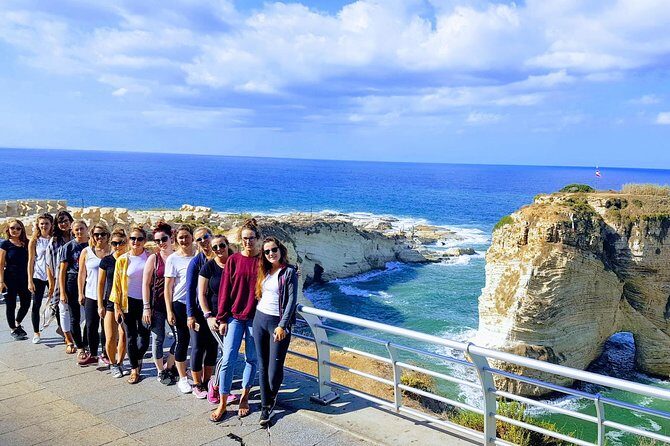
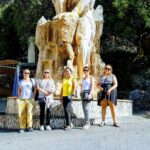
Your first stop is Pigeon Rocks in Raouche—two massive rock formations at Beirut’s western-most tip. It’s famous for a reason: the rocks look like they’re guarding the sea, and the waterfront surrounding them gives you that immediate “this is Beirut” sense of place.
A few practical notes:
- You only have about 10 minutes, so treat it like a quick orientation stop, not a long photo marathon.
- If it’s windy or hot, you’ll feel it fast near the coast—wear something light and plan your photos early.
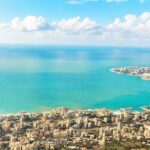
Right after that, you’ll pass through the Al Manara Corniche, the well-known seaside promenade stretching from the Ramlet al Bayda area toward the Saint George marina. It’s lined with palm trees and gives you Mediterranean views, plus the classic contrast of sea on one side and Mount Lebanon’s summits on the other.
This stop is valuable because it helps you understand Beirut visually: the city’s identity is tied to the coastline, and Corniche gives you that “eastern hills behind the city” angle.
Zaytouna Bay and the abandoned Holiday Inn: modern leisure and a hard memory
Next up is Zaytouna Bay, described as Beirut’s finest leisure destination. You’ll see it as a waterfront promenade with shops and restaurants, a newer layer of city life compared to the older downtown landmarks. Even with just 10 minutes, it’s a good palate cleanser.
Then comes a stop that shifts the mood: an abandoned Holiday Inn Hotel, described as a war landmark. The hotel was built between 1971 and 1974 during a booming period, then kept operating until the civil war began in 1975. After that, it became part of the long conflict known as the Battle of the Hotels, when more than 25,000 combatants fought for control of luxury hotels, including the Holiday Inn and the Phoenicia.
What you’re looking at today is a building that remains untouched and empty for decades—an uncomfortable reminder of what conflict does to ordinary city progress.
This is the kind of stop I appreciate on a tour like this because it adds context. Beirut isn’t just architecture and views; it also carries scars, and ignoring those makes the rest of the sightseeing feel incomplete.
Downtown mosques and the Greek Orthodox Cathedral: the city’s layered faith
Beirut downtown packs several landmark buildings into a small area, which is why this tour can cover so much in limited time.
Mohammad Al-Amin Mosque (the Blue Mosque)
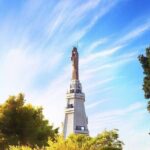
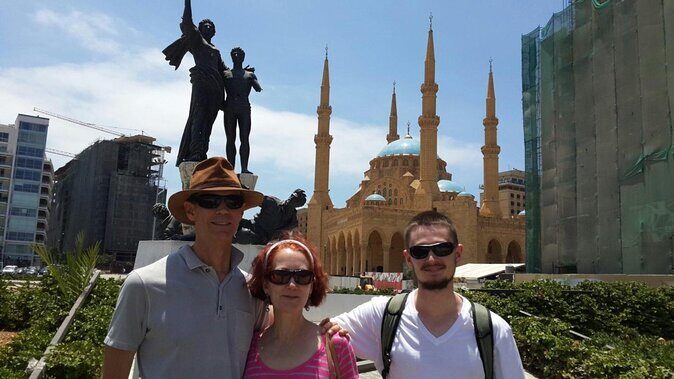
You’ll visit the Mohammad Al-Amin Mosque, also called the Blue Mosque. It’s the biggest mosque in Lebanon, located near Martyrs Square. It opened in 2008, and it has four minarets that rise to 65 meters.
The description of the mosque highlights its light blue tile domes and tall arches, and with 10 minutes, you’re mostly there to see scale and detail from the right angles. Even if you’re not staying long, this stop gives you a powerful sense of modern religious architecture in the center of the city.

Al-Omari Grand Mosque: built, converted, rebuilt
Next is the Al-Omari Grand Mosque, which has an unusually long timeline attached to it:
- Built in the age of Omar Bin El Khattab in 635 AD
- Converted to Church of Saint John by the crusaders in the 12th century
- Retransformed into a Grand Mosque by the Mamluks in 1291
- Refurbishment completed in 2004 after civil-war damage
That sequence is the real story here. In a short stop, you’re seeing a site that has been re-assigned across eras, depending on who held power and what faith community shaped the city at the time.
Greek Orthodox Cathedral of Saint George
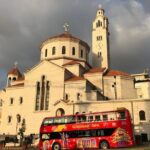
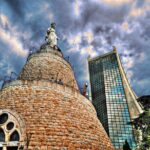
Finally in the religious cluster, you’ll stop at the Greek Orthodox Cathedral of Saint George, the seat of the Greek Orthodox Metropolitan bishop of Beirut and its dependencies. It’s described as the oldest church in Beirut and among the oldest in the region.
The first Christian temple on this site dates to the mid sixth century AD, and it’s closely tied to Beirut’s famous Law School. With 10 minutes, you’re not going to read every detail—but you do get the sense that Beirut’s downtown is a layered stage, where modern institutions sit near ancient ground.
Martyrs Square and Nejme Square (Place de l’Étoile): symbols, politics, and a famous clock
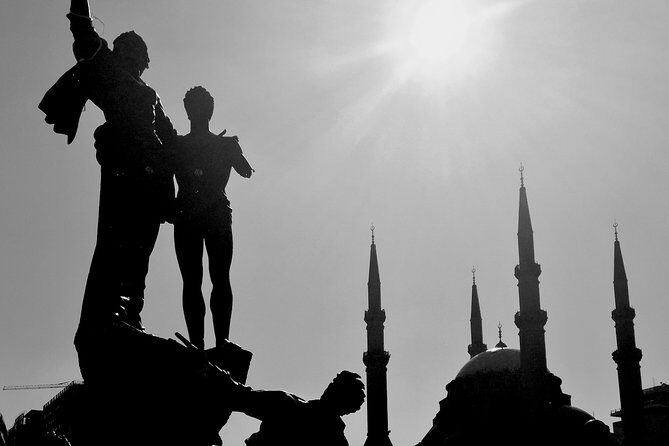
After the religious stops, you’ll move into two iconic downtown squares.
Martyr’s Square (historically Al Burj / Place des Cannons)
Martyr’s Square is at the heart of downtown Beirut and has older names like Al Burj and Place des Cannons. Its current name comes from the 6 May 1916 executions of Lebanese nationalists ordered by Jamal Pasha during World War I.
This stop is quick, but it matters. It turns the area from sightseeing-only into a place where you can read the city as a political document. You’ll also understand why downtown Beirut carries such emotional weight.
Place de l’Étoile / Nejme Square
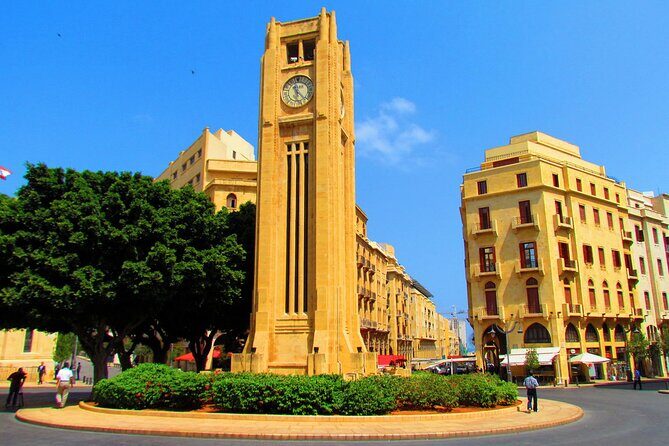
You’ll then see Place de l’Étoile (also called Nejme Square), the central downtown hub. It’s home to the Lebanese Parliament and related buildings, plus two cathedrals and a museum.
The standout detail is the 1930 four-faced Rolex clock, which you’ll recognize even if you don’t catch the smaller architecture immediately. With 10 minutes, your goal here is to take in the layout and spot the clock, then use it as your reference point for how downtown is organized.
Beirut Souks and Roman Baths: shopping streets plus ancient infrastructure
Two different downtown experiences happen back-to-back.
Beirut Souks
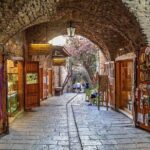
The Beirut Souks is a large commercial district with over 200 shops and about 25 restaurants and cafes, plus entertainment and a cinema complex. The tour gives you around 10 minutes, which is enough time to get a feel for the energy and spot what you’d come back for on your own.
If you like markets and street life, this stop helps you decide whether you’ll want a second visit later. If you’re not a shopper, treat it as an easy break between monuments.
Roman Baths in the center of it all
Then you’ll visit the Roman Berytus baths, described as the largest outdoor sight located in downtown Beirut. They were discovered in 1968–1969 and renovated in the mid 1990s.
A few timeline facts that make this stop click:
- Roman Berytus had four major bath complexes
- The first one dates to the early first century under Augustus
- A major earthquake in 551 AD destroyed the baths
Today, one bath complex is used as an artistic performance and concert space. Even with 10 minutes, it’s a rare moment where you’re standing in a physical footprint of ancient city life without needing to travel far outside downtown.
Leaving the city for Deir al-Qamar: Monastery of the Moon village time
After the Beirut portion, you shift into the Chouf District with Deir al-Qamar, meaning Monastery of the Moon. It’s located in the Mount Lebanon area, about 5 kilometers outside Beiteddine Palace.
This village stop is a real change of pace: you get about 30 minutes, which is long enough to grasp the village character rather than just snap-and-go.
Here’s what Deir al-Qamar is especially known for based on the details you’ll hear:
- It was the first village in Lebanon to have a municipality in 1864
- It’s described as the birthplace of various well-known people—artists, writers, and politicians
- It’s a multi-faith place historically, with a mosque, synagogue, and Christian churches
- It was destroyed in 1860 during Druze–Christian conflict and later rebuilt with a French contingent sent by Napoleon III
That mix of civic pride, religious variety, and the village being rebuilt after destruction makes Deir al-Qamar feel more like a lived community than a themed stop.
Fakhreddine’s Mosque and Saydet el Talle Church: centuries layered in faith sites
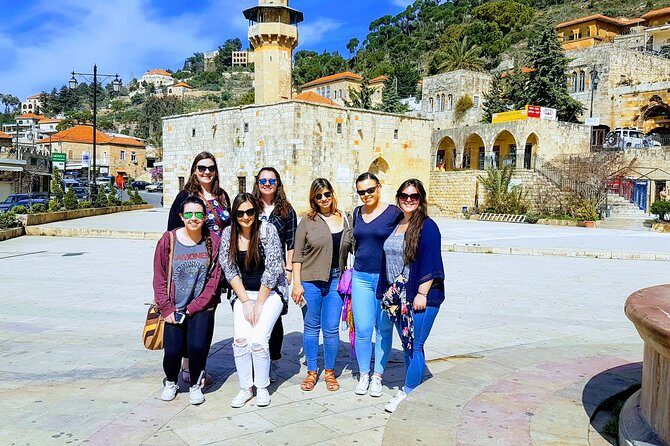
You’ll make two shorter cultural stops in Deir al-Qamar.
Fakhreddine’s Mosque
Fakhreddine Mosque features an octagonal minaret and was built in 1493, then restored in the 16th century by Fakhreddine I. It’s described as the oldest mosque in Mount Lebanon.
With 15 minutes, you’ll focus on seeing its shape and how the site fits into the village surroundings. For me, the best part of short mosque stops is the contrast: you’re looking at a structure meant to anchor worship, not just impress tourists.
Saydet el Talle Church (Our Lady of the Hill)
Then comes Saydet El Talle Church, also referred to as Our Lady of the Hill, dating to the 15th century.
The site includes a deeper timeline: a monk named Nicolas Smisaati built the church on ruins of an older Phoenician temple dedicated to Astarte, later destroyed by an earthquake in 859. The tour also shares a legend tied to the hill of Dar El Kamar, involving a light seen by a Druze Emir in Baakline and soldiers digging after dawn.
Even if you only see a small portion in your allotted time, this is the kind of stop that makes the village feel like it grew over centuries, with belief systems layered on top of each other.
Beiteddine Palace: the Emir residence that became a national symbol
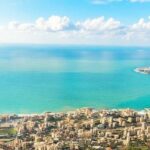
The day’s big architectural finish is Beiteddine Palace, also called the House of Faith. Expect about 1 hour 30 minutes here, and note that the palace admission ticket is not included.
This palace is a 19th-century complex, built by Emir Bashir Chehab II between 1788 and 1818. Later chapters of its use include:
- After 1840, it was used by the Ottomans as a government building
- During the French Mandate, it served as a local administrative office
- In 1943, it became the president’s official summer residence
- During the Lebanese Civil War, it was heavily damaged
- Parts are open to the public today, while other parts still function as the president’s residence
So when you walk through, you’re not just looking at one era. You’re seeing how power and administration reshaped the same walls over time.
This is also where the tour earns its keep. Beirut gives you the city’s present and layered downtown identity. Deir al-Qamar gives you village survival and multi-faith continuity. Beiteddine Palace then ties it all into an Emir-era story you can actually see in stone.
Lunch, comfort, and the value of an organized small group
The tour includes lunch (labeled as Taste real Lebanon with a fresh, authentic lunch included). You’ll appreciate this because the itinerary covers long movement and short stops. Having food handled means you spend energy on the sites instead of negotiating for meals.
The vehicle is air-conditioned, and pickup/drop-off is included. That matters a lot on a day that includes both downtown Beirut and the Mount Lebanon drive.
Also, with a maximum of 15 travelers, you generally get:
- easier navigation between stops
- less time waiting
- more chance to ask the guide questions when you have a moment
Price and what you get for $99
At $99 per person for an ~8-hour guided day with pickup/drop-off and lunch, the value is strongest for people who want structure. You’re paying for a route that links:
- multiple free-in-the-moment downtown sights (several listed as free admission)
- Deir al-Qamar’s village sites
- and a dedicated 1.5-hour Beiteddine Palace visit
The one spending caveat is the palace ticket: Beiteddine admission is not included. Still, that’s typical for palace visits, and you can budget for it ahead of time since the rest of the listed stops are free.
If you’re traveling solo or trying to do this efficiently without renting transport, this price feels reasonable. If you’re the type who wants long museum time at each stop, you might find the short Beirut segments too tight.
Should you book this Beirut–Beiteddine–Deir al-Qamar tour?
Book it if:
- you want a one-day connection between Beirut and Mount Lebanon
- you like guided context, not just photos
- you’re happy with a steady pace and quick stops in the city
- you value included pickup and lunch to keep the day smooth
Skip it (or plan a different format) if:
- you hate “rush through landmarks” schedules
- you want long stays at each site rather than a curated route
- you prefer to explore downtown at your own speed without fixed timing
My take: this tour is built for practical travelers who want a lot of Lebanon in one shot—sea views, downtown monuments, and then the Emir-era world at Beiteddine. The mix is the point, and the small-group size helps it stay enjoyable rather than chaotic.
FAQ
How long is the tour?
It runs for about 8 hours (approx.).
What does the tour cost?
The price is $99.00 per person.
Is hotel pickup and drop-off included?
Yes. Hotel pick-up and drop-off are included.
Is lunch included?
Yes. Lunch is included.
How many people are in the group?
The tour has a maximum of 15 travelers.
What time does the tour start?
The start time is 8:30am.
Are tickets included for all stops?
Most stops are listed as having free admission, but Beiteddine Palace admission is not included.
How far is Deir al-Qamar from Beiteddine Palace?
Deir al-Qamar is described as being five kilometers outside of Beiteddine palace.
What is the cancellation policy?
There is free cancellation. You can cancel up to 24 hours in advance for a full refund.