REVIEW · BEIRUT
Private Guided Tour to Jeita Grotto through Harissa and Byblos
Book on Viator →Operated by Lebanon Tours & travels · Bookable on Viator
Three holy sites and one underground miracle.
This full-day private tour takes you out of Beirut for Jeita Grotto and its boat ride through limestone formations, then up to Harissa for big viewpoints and a cable car to the Virgin Mary shrine. I love the mix of underground nature plus above-ground panoramas—two very different kinds of wow in one day. One thing to plan for: key attractions have tickets that are not included, and lunch isn’t included either.
I also like the pacing. You’re picked up and dropped off at your hotel in an air-conditioned vehicle, so you’re not stressing about schedules or traffic. You may be guided by people like Hassane Mrad, Ahmad, Hussein, Hassan, Alan, Mustafa, or Albert—names that show up often—so chances are good you’ll get that calm, practical Lebanon context while you travel.
In This Review
- Quick highlights you’ll actually feel in your day
- Leaving Beirut for Jeita Grotto: more than just getting out of town
- Jeita Grotto’s upper and lower galleries: why the boat ride is the point
- Harissa: churches, the Virgin Mary shrine, and the cable car over Jounieh
- Byblos: walking ancient Phoenician streets with a local guide
- Byblos Castle, the souks, and the port: choosing your favorites
- How the 8-hour day feels: pacing, comfort, and what to plan around lunch
- Price and value: is $75 per person a good deal here?
- Who this private Jeita–Harissa–Byblos tour is best for
- Should you book it?
- FAQ
- How long is the private tour?
- Does the tour include hotel pickup and drop-off?
- Is lunch included in the price?
- Are entrance tickets included for Jeita Grotto and the cable car?
- Is this tour private or shared?
- Do I get a mobile ticket?
Quick highlights you’ll actually feel in your day
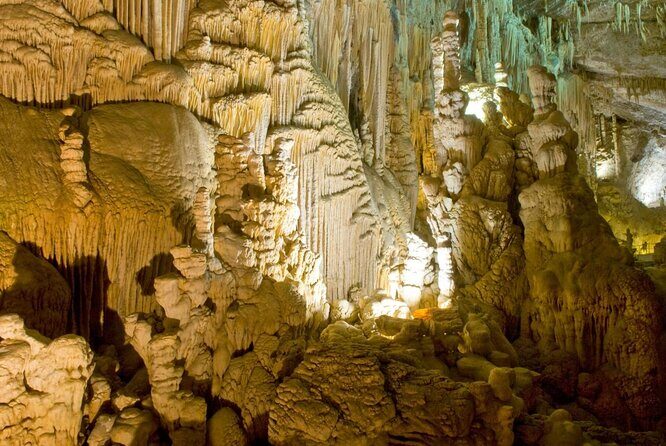
- Jeita Grotto boat time: a smooth ride under the limestone world, with upper and lower galleries.
- Harissa views over Jounieh and Beirut: the Mary statue looks outward, not inward.
- Cable car history in real time: Téléferique Harissa has been running since 1965.
- Byblos with a local guide: you get the story while you walk the streets and see the ruins.
- Old souks plus the port: shopping stroll, then a look at a place tied to early Mediterranean trade.
Leaving Beirut for Jeita Grotto: more than just getting out of town
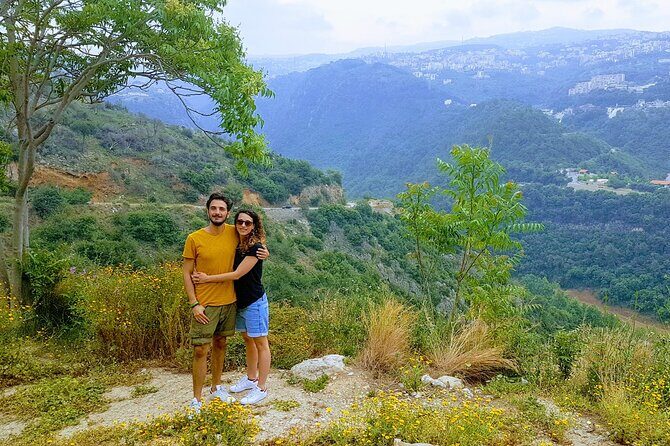
The best part of this tour is that it treats the day like a circuit, not a checklist. You start with pickup from your Beirut hotel and head north in a private, air-conditioned vehicle. That matters because Lebanon roads can be… lively. Being driven means you can keep your energy for the sites.
You’ll arrive for Jeita Grotto, and the visit is long enough to feel worth it. Expect about 1 hour 30 minutes inside the complex. Admission for Jeita is not included, so budget for tickets separately and keep an easy payment method ready.
Even before you enter, the location does some work for you. Jeita is set about 300 meters above sea level, and the complex has a 305-meter height difference between the upper and lower parts. You’re going from “Lebanon hillside” into a natural structure that took millions of years to shape.
You can also read our reviews of more guided tours in Beirut


Jeita Grotto’s upper and lower galleries: why the boat ride is the point

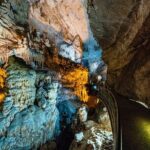
Jeita Grotto is a karst limestone system made of two interconnected cave areas. One is higher, one is lower, and together they feel like two scenes in the same film.
Upper cave first: it stretches about 2,130 meters overall. This is where you’ll see a dense mix of formations—stalactites, stalagmites, columns, and the more delicate shapes people describe as curtains and draperies. It’s not just a cave. It’s an entire room-by-room gallery of slow geology.
Then comes the lower experience, which is where the tour earns its keep. The lower gallery runs about 6,200 meters and sits roughly 60 meters below the upper cave. Here, you’ll move along a smooth route with an underwater river and a lake, so the environment feels more fluid and alive. The tour includes a boat component for the limestone views, and that boat ride changes the way you see the cave. Instead of walking past everything, you glide through it.
Why this matters for your day: caves can be pretty, but they can also start to blur if you only stand and look. The boat rhythm helps you stay present—pay attention to how the light falls, how the rock textures change, and how the scale hits you when you’re not just staring at one wall.
Practical note: Jeita is listed as a 1 hour 30 minutes stop. Plan to be flexible. If you’re someone who likes extra time for photos, you might want to arrive with a short photo strategy: a couple of wide shots, then a few close-ups, then enjoy the ride instead of chasing the perfect angle.
Harissa: churches, the Virgin Mary shrine, and the cable car over Jounieh
After Jeita, you shift from “cool underground” to “open air with views.” That’s when Harissa feels like the relief your brain didn’t know it needed.
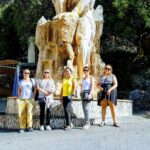
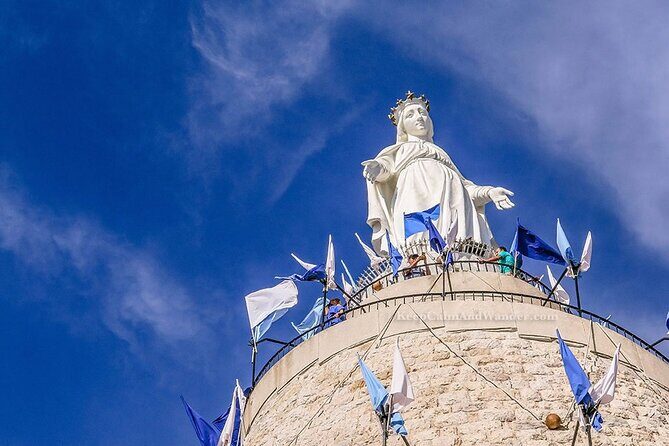
The tour pauses at the Shrine of Our Lady of Lebanon for about 30 minutes. The centerpiece is a massive bronze statue: a 15-ton Immaculate Conception with dimensions around 8.5 meters high and a five-meter diameter. One of the most memorable details is that Mary stretches her hands toward Beirut, overlooking the Bay of Jounieh. It’s the kind of sight where you instantly understand why pilgrims come here.
Then you have time at churches of Harissa for about 15 minutes. You’ll be able to see the iconic statue known as Our Lady of Lebanon (also associated with Notre Dame du Liban), plus the adjacent cathedral built of concrete and glass. The statue’s base includes a small chapel, but your real payoff in this short stop is the visual contrast: pilgrimage centerpiece outside, then different Christian denominations in the area nearby.
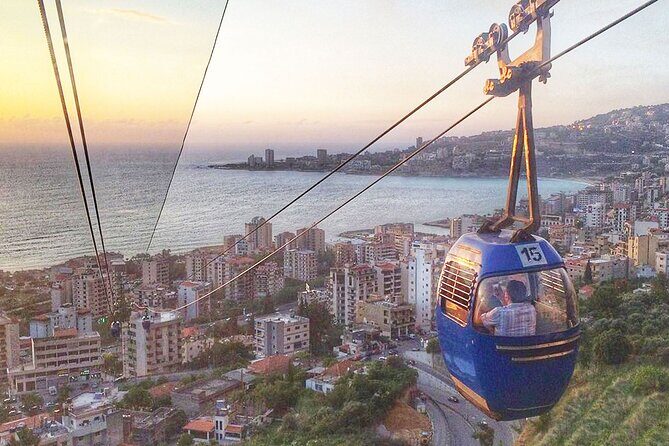
After that, the tour includes the Téléferique Harissa cable car ride for about 30 minutes. This is one of Lebanon’s older attractions, dating back to 1965, and it’s described as a trip down memory lane—though what matters to you is the practical part. You’re up high with bay views, and the cable car gives you a different angle on the coastline and city below. Even if you’ve seen cable cars before, Harissa’s setting makes it feel more “viewpoint mission” than “ride and done.”
Ticket note: admission for the cable car is not included. Keep that in mind so you’re not standing there thinking about money while everyone else is quietly enjoying the lift.
Byblos: walking ancient Phoenician streets with a local guide
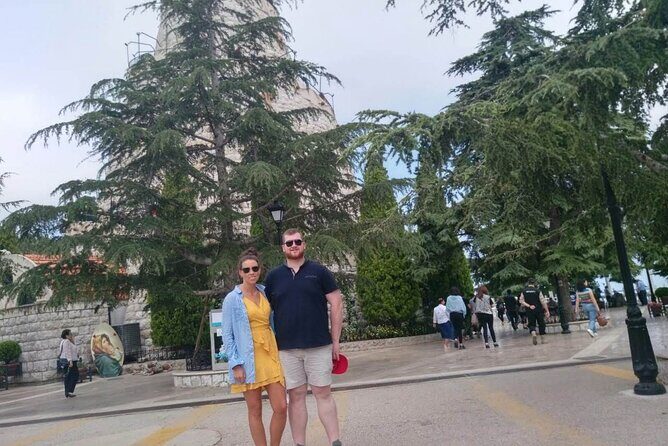
Byblos is the payoff for anyone who likes their history with cobblestones. The tour allots about 2 hours in the Byblos area, and you get a local guide in Byblos as part of the included services.
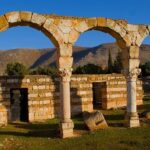
Byblos is often called one of the oldest Phoenician cities, with settlement tracing back to Neolithic times. It’s also tied to the story of the Phoenician alphabet and how writing spread through the Mediterranean world. You won’t need to be a scholar to get value here—your guide’s job is to connect what you see to why it mattered.
This stop is great because it’s not only about monuments. It’s also about atmosphere: streets, angles, and the way old architecture frames the sea. When you have a guide, you’re more likely to notice details you’d otherwise pass—shapes of buildings, the logic of the old port city layout, and why certain structures were placed where they are.
Two-hour timing is a good middle ground. It’s long enough to feel like you had time, but short enough that you won’t end up tired and irritated by the end.
Byblos Castle, the souks, and the port: choosing your favorites
You’ll also visit Byblos Castle for about 1 hour. The castle is a restored 12th-century Crusader structure, set within the archaeological site area. There’s a 10-meter-wide dry moat around it, and the view from the keep gives you a good perspective over the ruins below.
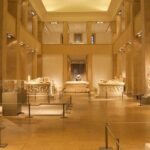
Inside, there’s a small museum and information panels that map out the city’s story. Admission for the castle is not included, so again, tickets are your “extra planning” item.
After the castle, there’s a quick stroll through the Byblos old souk for about 10 minutes. This is more about the walk than a full shopping session. You’ll see souvenirs and antiques, but the real value is the feeling of wandering on old cobblestone streets while the sea stays in the background of your mind.
Finally, you get time at Byblos Port for about 10 minutes. Locals believe it’s the oldest port in the world, tied to timber shipping in the eastern Mediterranean around 3000 BC. Even if you only get a short look, that short look can do a lot for context—suddenly you understand why the city matters.
You can also read our reviews of more private tours in Beirut





How the 8-hour day feels: pacing, comfort, and what to plan around lunch

On paper, this is an 8-hour day. In reality, it feels like three mini-adventures: cave world, mountain shrine-and-views, then historic Byblos on foot. The private vehicle keeps the transitions smooth, especially between Jeita and Harissa, and between Harissa and Byblos.
The comfort piece is real. You’ve got an air-conditioned vehicle, pickup and drop-off from your hotel, and you’re not sharing the car with strangers who are still negotiating where to sit. The guide/tour leader format also helps. The day is structured, but it still leaves you room to ask questions at stops.
Lunch is the one missing piece. It’s not included. That’s not a deal-breaker, but it changes how you should plan your energy. If you want to keep the day comfortable, I’d pick a simple strategy before you go:
- choose a nearby lunch option once you’re in Byblos
- or eat lightly before heading out so you don’t crash at the end
Also, Jeita and the cable car and the castle are ticketed separately. If you prefer a “pay once and forget it” style, this tour will feel a bit more hands-on. If you’re okay with that tradeoff for a private driver and guide time, it’s a fair swap.
Price and value: is $75 per person a good deal here?
At $75 per person, you’re paying for a private, guided full day from Beirut. That price covers comfortable private transportation, free hotel pickup and drop-off, a tour leader, and a local guide in Byblos. In other words, you’re not just buying access to places—you’re buying a smooth day with interpretation.
The main add-ons are clear:
- Jeita Grotto admission is not included
- Téléferique Harissa admission is not included
- Byblos Castle admission is not included
- Lunch is not included
So the value depends on your travel style. If you’re traveling as a couple or small group and you’d rather avoid public buses plus misreading signage, this can be one of the more sensible ways to see a lot of Lebanon in one day. If you’re the type who hates ticket extras or wants everything packaged with no decisions, you’ll need a bit more mental budget.
Still, the best value here is the mix: caves plus pilgrimage views plus Phoenician-era walking. A lot of day trips do two of those. Doing all three with a private drive and local guiding is what makes the money feel earned.
Who this private Jeita–Harissa–Byblos tour is best for
This fits you if:
- you want to see major highlights outside Beirut without handling logistics
- you like nature sights, but also want history that comes with context
- you prefer a calmer day with time to absorb, not a sprint
It may not fit you as well if:
- you want a completely ticket-included day with zero add-ons
- you love long, slow stays in one place more than moving between three
It’s also listed as most travelers can participate, and it’s a private tour where it’s just your group—useful if you want a day that feels less crowded and more tailored.
Should you book it?
Yes—with one condition: go in expecting ticket add-ons for Jeita, the cable car, and Byblos Castle, plus lunch you’ll choose yourself. If you do that, you’ll get a day that feels like you experienced Lebanon from three angles in one shot: under the earth, on the hillside, and along the old Mediterranean shoreline.
If your schedule is tight and you want maximum meaning per hour—cave wonder, pilgrimage views, and Phoenician streets—this is a strong way to spend your day.
FAQ
How long is the private tour?
The tour runs about 8 hours.
Does the tour include hotel pickup and drop-off?
Yes. Pickup and drop-off from your Beirut hotel are included.
Is lunch included in the price?
No. Lunch is not included.
Are entrance tickets included for Jeita Grotto and the cable car?
No. Admission tickets for Jeita Grotto and Téléferique Harissa are not included. Byblos Castle admission is also not included.
Is this tour private or shared?
It’s private. Only your group participates.
Do I get a mobile ticket?
Yes. The tour includes a mobile ticket.