REVIEW · BEIRUT
Exclusive Excursion: Discover Baalbek, Anjar, and Chateau Ksara
Book on Viator →Operated by Beirut Daily Tours · Bookable on Viator
Baalbek and wine in one car. I like the private car and driver because it keeps the day relaxed from start to finish, and I really like having a guide to connect what you’re seeing at Baalbek and Anjar to the big picture. One thing to keep in mind: admission tickets aren’t included for several stops, so you’ll want to budget a bit more on top of the tour price.
This is the kind of day that works because you’re not juggling directions or timing. The schedule is built around meaningful stops: Roman temples first, then a fast hit at the Stone of the Pregnant Woman, then the Umayyad ruins at Anjar, and finally Château Ksara for a tour and tasting in the Bekaa Valley.
A possible drawback? It’s a full day (about 8 hours) with travel time between sites, so you’ll want good walking shoes and you should plan for some waiting during ticketing.
In This Review
- Key things to know before you go
- A private day that keeps the driving simple
- Baalbek Temples: Roman scale plus a living sacred site
- The Stone of the Pregnant Woman: a 15-minute moment that lands
- Anjar (Aanjar): Umayyad ruins and the meaning of being on the route
- Château Ksara: touring cellars and tasting Lebanon’s dry wine story
- Price and value: where the $70 really goes
- Who should book this day trip (and who should skip it)
- Should you book Beirut Daily Tours for Baalbek, Anjar, and Ksara?
- FAQ
- How long is the excursion?
- What time does the tour start?
- Do I get hotel pickup and drop-off?
- Is lunch included in the price?
- Are the admission tickets included?
- Is this a private tour?
Key things to know before you go
- Private, air-conditioned transport from hotel pickup to hotel drop-off keeps things comfortable for the whole loop
- Baalbek with a guide helps you understand the Roman sanctuary and the triad of deities tied to earlier Phoenician cults
- Two quick Baalbek moments: a longer temple visit plus a focused 15-minute stop at the Stone of the Pregnant Woman
- Anjar’s crossroads story: you learn how an inland commercial center sat on routes linking Beirut–Damascus and Homs–Tiberiade
- Château Ksara tour and tasting at Lebanon’s oldest winery, founded in 1857 by Jesuit priests
- Wine without stress: having a driver removes the usual problem of mixing tasting with driving
A private day that keeps the driving simple
Lebanon’s roads can be lively, and when alcohol enters the picture, the best plan is to take driving off your plate. This tour handles that with comfortable private transportation, plus hotel pickup and drop-off. The day starts at 8:30 am, which means you’ll reach the Bekaa before the heat and before crowds can fully take over your thinking.
What you’re buying here is not just seats in a vehicle. You’re buying time and sanity: the route is planned, the guide keeps the context flowing, and the pacing fits into a day that still feels like a journey rather than a rushed checklist.
At $70 per person for roughly 8 hours, it can be good value—especially if you’re traveling with a small group and the day’s structure does the heavy lifting. The tour also uses a mobile ticket, which tends to make check-in easier than hunting for paper vouchers.
You can also read our reviews of more tours and experiences in Beirut.


Baalbek Temples: Roman scale plus a living sacred site
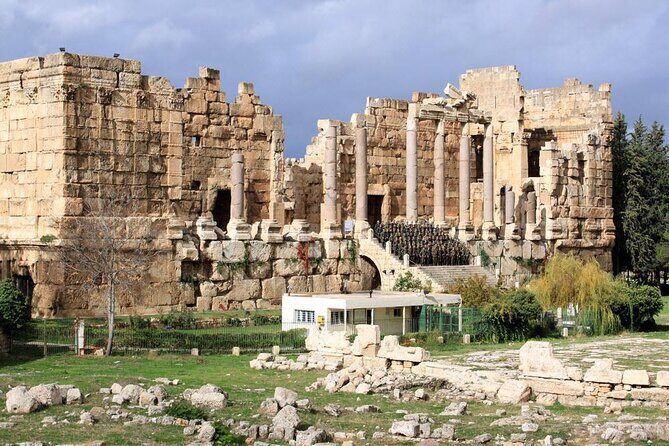
Your first stop is Baalbek, one of the most famous Roman sanctuaries in the world. You’re visiting the temple complex at the foot of the south-west slope of Anti-Lebanon, bordering the fertile Bekaa plain, at about 1,150 meters altitude. That setting matters. It helps explain why Baalbek became such a powerful pilgrimage destination: the site sits at a crossroads of geography and culture, not just in the middle of nowhere.
The Roman boom here didn’t happen overnight. The colossal constructions were built over more than two centuries, reaching their apogee during Roman times. When you’re standing in the temple area, the guide’s job is to turn that scale into something you can understand: this sanctuary honored a triad of deities under the name of the Romanized Triad of Heliopolis—Jupiter, Venus, and Bacchus—linked to an earlier, essentially Phoenician cult.
This first Baalbek segment is around 1 hour, and it’s the right length for most people if you want to see the big monuments without losing the whole day to walking. The key is your guide’s narrative. Without that, the site can feel like impressive stone blocks. With it, it turns into a place where the religious purpose makes sense.
One extra element that adds depth here is the Mosque of Sayeda Khawla. You’ll visit it on the believed burial site of Sayyida Khawla, the daughter of Imam al-Hussein, grandson of the Prophet Muhammad. People of Baalbek hold a story that when the caravan of captives of Karbala passed through Baalbek, Khawla passed away and was buried there. It’s a reminder that Baalbek isn’t only an ancient ruin. It’s still part of living faith today.
The only real consideration at this stop is timing and ticketing. The temple admission isn’t included, so factor in some extra time for entry procedures once you arrive.
The Stone of the Pregnant Woman: a 15-minute moment that lands
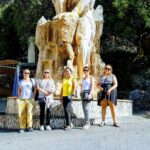
Right after the main temple visit, you get a quick, focused stop at the Stone of the Pregnant Woman. This isn’t a full museum-style experience. It’s a “see it, understand the size, move on” kind of moment.
Here’s what makes it worth your attention: it’s a worked Roman monolith, and it’s among the largest monoliths ever quarried. Nearby is another ancient stone block, and together these pieces were presumably intended for the nearby Roman temple complex. The point your guide should highlight—because it’s not always obvious at first glance—is the monolithic gigantism. The Romans weren’t just building temples. They were staging enormous statements of power and devotion.
This stop is 15 minutes, and that’s about right. You’ll leave with something concrete in your mind: an object that shows how far the Romans went with materials and labor. It’s also a nice tempo reset before you head to Anjar.
Admission is free for this stop, which helps keep your day’s costs a little more predictable.
Anjar (Aanjar): Umayyad ruins and the meaning of being on the route
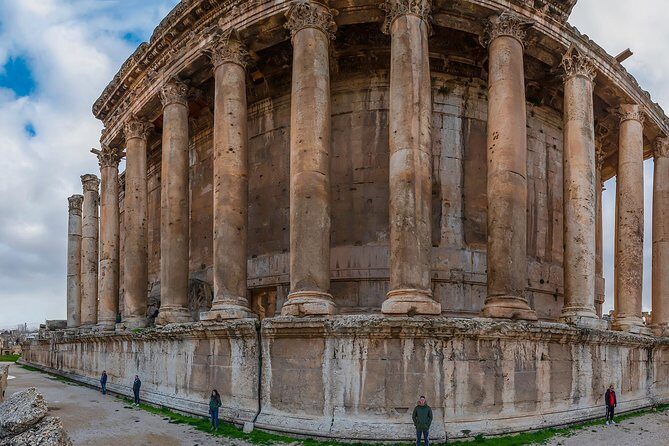
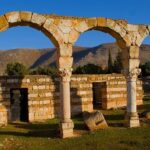
Anjar is a different kind of thrill. If Baalbek is about Roman imperial architecture, Anjar is about an Umayyad-era inland city with strong connections to trade and movement.
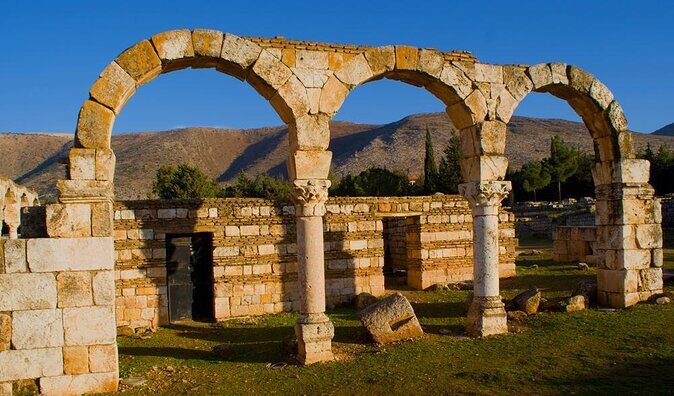
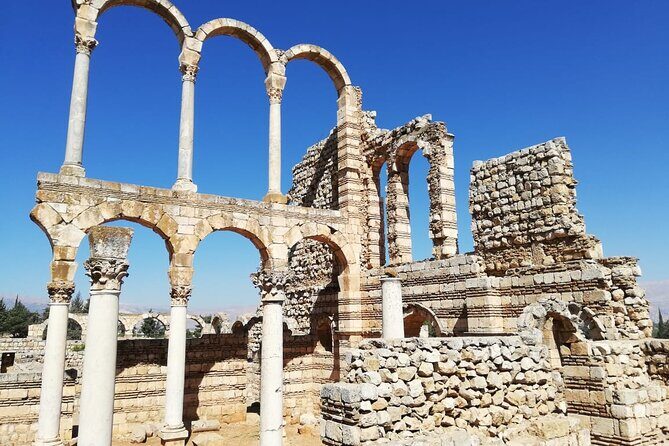
You’ll spend about 45 minutes here, and it works best if you let the guide point out what makes the ruins more than just scattered walls. The Umayyad Ruins of Aanjar are described as outstanding testimony to Umayyad civilization and as a good example of an inland commercial center. This matters because Anjar wasn’t only religious. It was positioned at the crossroads of routes: one leading from Beirut to Damascus, and another crossing the Bekaa leading from Homs to Tiberiade.
Even the discovery story is interesting. The site was only discovered by archaeologists at the end of the 1940s, so you’re seeing something that was uncovered relatively recently compared to the age of the structures themselves.
What you can expect to notice during your visit includes walls of the Umayyad palace, harems, a mosque, the great palace of the Caliph, thermal baths, and many pillars with some Roman architectural elements. That Roman touch is a useful detail: it signals how Mediterranean cultures traded ideas even as different empires controlled the region.
The downside here is similar to Baalbek: admission isn’t included for Anjar. Also, because the time is limited, you won’t have the hours you might want if you like taking slow, photo-heavy walks. Still, 45 minutes with interpretation is enough to understand the layout and why it existed.
Château Ksara: touring cellars and tasting Lebanon’s dry wine story
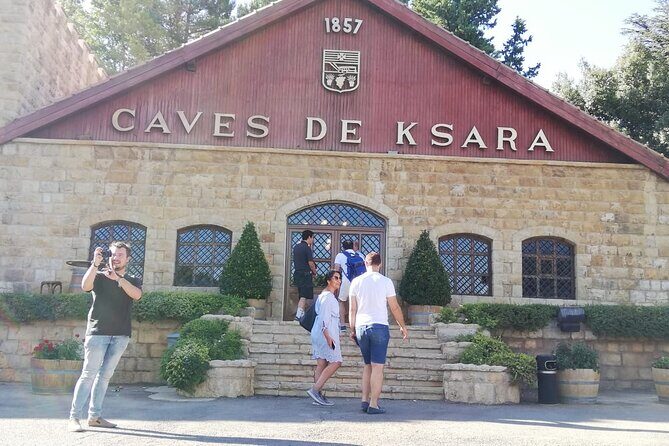
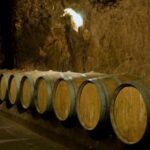
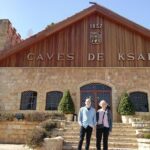
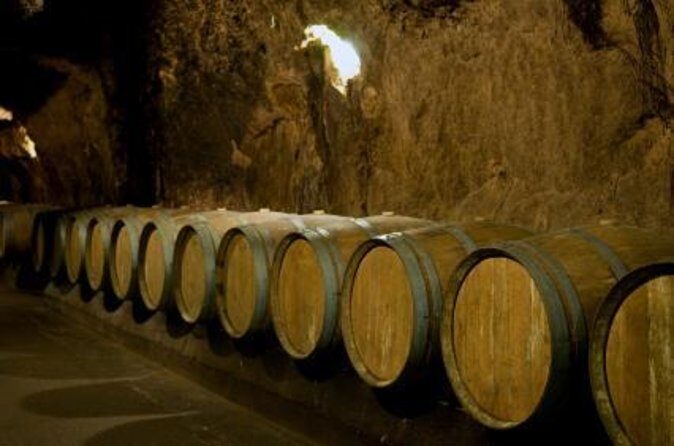
After Roman and Umayyad ruins, you’ll shift into a very different rhythm at Château Ksara in the Bekaa Valley. This is Lebanon’s oldest winery, founded in 1857 by Jesuit priests. The winery is also credited with developing the first dry wine in Lebanon.
If you’re the kind of wine lover who wants the reason behind the glass, this stop should satisfy you. Château Ksara produces about 3 million bottles annually and exports to over 40 countries. That scale is part of what makes the visit practical and polished—you’re not just stepping into a family hobby. You’re visiting an established, industrial-grade winery with a long public-facing story.
The time here is about 1 hour, and it’s designed to include both a tour and a tasting. Admission isn’t included, so again, budget a little for entry and tasting costs on top of the tour price.
Also, plan your mindset. Don’t expect a full-day wine school. This is a focused tasting experience that fits into an 8-hour itinerary. The real win is that you’ll taste wine after you’ve spent the day learning how cultures built empires here—Roman stone, Umayyad city planning, and then wine culture tied to place and tradition.


Price and value: where the $70 really goes
Let’s talk about money like a friend, not like a spreadsheet.
At $70 per person, you’re paying for private, door-to-door transportation, a tour leader, a local guide, and an air-conditioned vehicle for about 8 hours. For a combo day like this—two UNESCO sites plus a winery—what makes the price feel reasonable is that you’re not paying for just one attraction. You’re paying for connected logistics, plus interpretation at the sites.
A few cost notes that affect value:
- Lunch isn’t included, so you’ll need to sort food on your own during the day or wherever your guide recommends a break.
- Admission tickets aren’t included at Baalbek, Anjar, and Château Ksara (the Stone of the Pregnant Woman is free).
That doesn’t make the tour expensive—it just means the total day cost is a combination of tour price plus site entries plus whatever you choose for lunch.
If you like the idea of wine tasting but don’t want to drive after, this kind of structured day can be worth it fast. Getting a private driver solves the biggest practical problem. And if you’re traveling with a friend, the private setup feels even better because you’re not splitting convenience in your head—you’re actually splitting it in the car.
Who should book this day trip (and who should skip it)
This tour is a strong fit if you:
- Want UNESCO visits that feel connected, not like separate bus rides
- Appreciate context—Roman temple meaning, Umayyad city purpose, and how wine ties into the Bekaa story
- Prefer a private format where you can move at a human pace
- Plan to taste wine and don’t want to worry about driving afterward
You might skip it if you:
- Want long, slow time in each site without any tight schedule pressure
- Are allergic to paying extra for admissions at major stops
- Need a fully flexible day with no set itinerary rhythm
Comfort-wise, it should work for most travelers thanks to the air-conditioned vehicle and private setup, but the walk-and-stand time at historic sites is still part of the package.
Should you book Beirut Daily Tours for Baalbek, Anjar, and Ksara?
I’d book this tour if you want one day that links ancient empires and Lebanese wine without turning your schedule into a headache. The private transportation and guided stops are the main strengths. Baalbek is the headliner, and Anjar gives you a contrasting layer that keeps the day from feeling one-note. Then Château Ksara closes the loop with a tasting that feels like a reward, not an afterthought.
Book it with two assumptions:
1) You’ll pay for some admissions on top of the $70 tour price.
2) You’ll need to plan lunch yourself.
If those points sound fine, this is a high-value way to spend time in and around Beirut when you want depth, not just checkmarks.
FAQ
How long is the excursion?
It runs for about 8 hours (approx.).
What time does the tour start?
The start time is 8:30 am.
Do I get hotel pickup and drop-off?
Yes. Hotel pickup and drop-off are included.
Is lunch included in the price?
No. Lunch isn’t included.
Are the admission tickets included?
Admission tickets are not included for Baalbek, Anjar, and Château Ksara. The Stone of the Pregnant Woman stop is free.
Is this a private tour?
Yes. It’s a private tour/activity, so only your group participates.