REVIEW · BEIRUT
Guided Half-Day Private Beirut Historical Tour
Book on Viator →Operated by Lebanon Tours & travels · Bookable on Viator
Beirut is a city that rewards focus. This half-day private tour is built to get you oriented fast, while still giving you real stories, not just stop-and-photo. You’ll move around in a comfortable private vehicle, with front-door hotel pickup and drop-off, so you can spend your energy on the history.
I like that the route mixes big-name sights with less-obvious context, from the National Museum to the Roman Baths and downtown churches and mosques. I also like the pacing: it gives you enough time to look closely at key places, while still leaving you breathing room afterward.
One possible drawback: the day is packed into about 5 hours, so if you like long stops and slow wandering, you may want to plan extra independent time for your favorites.
In This Review
- Quick hits: what makes this Beirut tour click
- Why a half-day private tour makes sense for Beirut
- Hotel pickup, air-conditioned comfort, and how that affects your day
- National Museum of Beirut: your best history investment
- Roman Baths in downtown Beirut: small time, big story
- Martyr’s Square and the Blue Mosque: power, faith, and architecture
- Al-Omari Mosque and St George Cathedral: a street-level history lesson
- Place de l’Etoile and Beirut Souks: where you see the city working
- Waterfront payoff: Zaytouna Bay, the Corniche, and Raouche Pigeon Rocks
- The abandoned Holiday Inn war landmark: learning without spectacle
- Price and value: what you get for $75
- What to plan before you go (and how to keep the day enjoyable)
- Who this Beirut tour suits best
- Should you book this guided half-day private Beirut tour?
- FAQ
- How long is the guided half-day private Beirut historical tour?
- Is hotel pickup and drop-off included?
- What is included in the price?
- Are admission tickets included?
- Is lunch included?
- Is the tour private?
- Do you provide confirmation after booking?
- What is the cancellation policy?
- What is the meeting convenience like for the tour?
Quick hits: what makes this Beirut tour click
- Hotel pickup and drop-off: less hassle, more sightseeing time
- A private guide’s context: history that connects the dots across neighborhoods
- Museum plus downtown landmarks in one tight loop
- Free sights add up: many stops are listed as free entry
- Waterfront views at the end: Zaytouna Bay, the Corniche, and Raouche Pigeon Rocks
- A war landmark stop: the abandoned Holiday Inn adds weight to the day without dragging it out
Why a half-day private tour makes sense for Beirut
Beirut can feel like a lot at once. Different eras sit close together, and downtown streets can be confusing if you’re trying to navigate on your own. A private half-day tour is a smart fix: you get a planned route, local context, and transportation that keeps the day moving.
This experience is also a good way to get your bearings. You’ll see major anchors—Martyr’s Square, the big mosques, major churches, the Souks, and the seaside—so you can later pick neighborhoods you actually want to return to. The best part is that it’s not only about architecture. The guide’s stories are aimed at explaining how Lebanon’s past shaped the city you’re walking through now.
And because it’s private, you’re not stuck with a rigid group pace. It’s built for your time, your questions, and your ability to slow down for photos when the view hits.
You can also read our reviews of more guided tours in Beirut



Hotel pickup, air-conditioned comfort, and how that affects your day
A lot of tours in big cities burn time in logistics. Here, you get hotel pickup and drop-off, plus a ride in an air-conditioned vehicle. That matters in Beirut because your “half day” can turn into a full day if you’re constantly planning transport, crossings, and timing.
You’ll also start from a calmer place. Instead of figuring out where to stand, you arrive at each stop with someone explaining what you’re about to see. The stops themselves are short at most locations, so having transportation handled makes the whole schedule feel easier.
One practical note: the tour runs about 5 hours, and the museum stop alone is around 2 hours. That means comfortable shoes are a real upgrade, and it’s worth bringing water if you tend to get thirsty quickly.
National Museum of Beirut: your best history investment
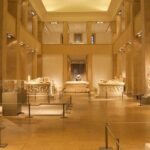
The National Museum of Beirut is the kind of stop that turns random city scenes into something you understand. It’s the country’s principal archaeology museum, and the focus is on artifacts pulled from excavations across Lebanon. If you’ve only seen a few monuments so far, this is where the context gets built.
This stop is listed at about 2 hours, which is exactly the amount of time that lets you slow down. You can look at artifacts without feeling like you’re rushing through labels. The museum’s value isn’t just that things are old—it’s that it offers a broad overview of Lebanon’s history and the civilizations that influenced this crossroads over time.
Admission isn’t included, so plan to budget for the museum ticket separately. If you hate paying extra for key stops, this is the one place where you’ll feel it most.
Roman Baths in downtown Beirut: small time, big story
After the museum, you’ll step into downtown and see the Roman Baths—ancient baths linked to Roman Berytus. The ruins are described as the largest outdoor Roman sight in downtown Beirut. They were discovered in 1968–1969 and renovated in the mid-1990s.
What I like about this stop is how it connects layers of history: the baths began in the early first century under Augustus, then suffered destruction in 551 AD from a major earthquake. That kind of timeline makes you look at ruins differently. They’re not just leftovers; they’re evidence of what changed, what broke, and what continued.
This stop is listed as about 15 minutes, and entry is free. Expect to get a quick sense of the site, plus enough guidance to understand what you’re looking at. One part of the complex is used for artistic performances and concerts, which helps the space feel alive rather than frozen in time.
Martyr’s Square and the Blue Mosque: power, faith, and architecture
Downtown Beirut’s religious and civic landmarks are close together, and this tour uses that to your advantage.
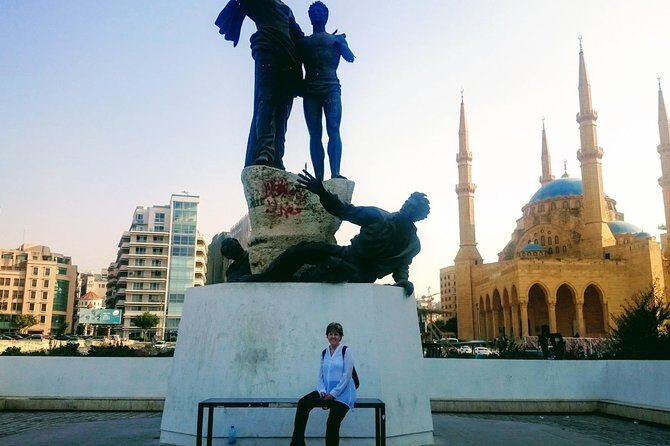
First up is Martyr’s Square, historically known as Al Burj or Place des Cannons. It’s named after executions on 6 May 1916 by the Ottomans of Lebanese nationalists, ordered by Jamal Pasha during World War I. That name alone is heavy. The guidance here matters because the square isn’t just a pretty meeting point—it’s a memory you can stand in.
Then comes Mohammad Al-Amin Mosque, also called the Blue Mosque. It’s described as the biggest mosque in Lebanon, near Martyr’s Square, opened in 2008. You’ll see four minarets that rise 65 meters and multiple domes with light blue tiles. It’s a striking stop, and it’s also quick—about 10 minutes and free entry.
If you want a practical tip, it’s this: plan your camera angles before you arrive. The scale can pull your eyes upward fast, and you’ll want photos that capture domes and minarets without cutting them off.
You can also read our reviews of more private tours in Beirut



Al-Omari Mosque and St George Cathedral: a street-level history lesson
After the big mosque, the day keeps moving through downtown’s other landmark of faith. Al-Omari Grand Mosque traces back to 635 AD in the era of Omar Bin El Khattab. Later, crusaders converted it to the Church of Saint John in the 12th century. Under the Mamluks it became a grand mosque again in 1291. During the Civil War it was damaged, and refurbishment finished in 2004.
This is one of those stops where the building tells you about shifting power and changing identities. And because the entry is listed as free with about 10 minutes on-site, you’ll want the guide’s explanation to make the rapid stop feel complete.
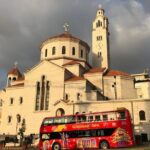
Then you’ll visit the Greek Orthodox Cathedral of Saint George, described as the oldest church in Beirut and one of the oldest in the region. It’s the seat of the Greek Orthodox Metropolitan bishop for Beirut and dependencies. The first Christian temple at the location dates to the mid-sixth century AD, and it’s closely associated with Beirut’s famous law school. Again, about 10 minutes and free entry.
Together, these two stops give you a fast lesson in how religion and politics share space in real cities—sometimes literally, in the same locations across centuries.
Place de l’Etoile and Beirut Souks: where you see the city working
Next the tour shifts from sacred sites to civic space and commerce.
Place de l’Etoile (also called Nejme Square) is the central square of Downtown Beirut. The tour notes that it’s home to the Lebanese Parliament and complementary buildings, plus two cathedrals and a museum. It’s also known for the 1930 four-faced Rolex clock and the square’s architecture, making it a recognizable icon worldwide.
This stop is about 15 minutes and free. Even if you don’t do much shopping, it’s worth using this moment to look around. You’ll understand why this area feels like a hub and how people flow through it.
Then you go to Beirut Souks, described as a commercial district with over 200 shops, plus 25 restaurants and cafes and a cinema complex. It’s presented as the largest and most diverse shopping and leisure area in Beirut, and it’s free to enter the area. This stop is also about 15 minutes.
Here’s how to make the short Souks stop pay off: treat it like a survey. Walk enough to see what’s there, check for the kind of souvenirs you actually want, and note what you might return for later. With a half-day schedule, quick orientation is the win.
Waterfront payoff: Zaytouna Bay, the Corniche, and Raouche Pigeon Rocks
After downtown, the tour relaxes into the water views.
You’ll visit Zaytouna Bay, described as a new waterfront promenade with shops and restaurants. It’s about 10 minutes and free entry. This stop works well as a mental reset—less looking at dates and more looking at the Mediterranean.
Then come the sights along the seaside. The tour includes Corniche Beirut, also called Al Manara Corniche, stretching from Ramlet al Bayda to Saint George marina. It’s described as the most renowned seaside promenade, lined with palm trees and offering views of the Mediterranean, Pigeon Rock, and Mount Lebanon on the eastern side. This stop is about 15 minutes and free.
Finally, you’ll reach Pigeon Rocks in Raouche (Rock of Raouché). These two rock formations sit at Beirut’s western-most tip, and the setting is the postcard reason people come. You’ll have about 15 minutes, free entry.
If you care about photos, aim to position yourself so the rocks sit in relation to the coastline. A quick stop can still get you great shots if you know what you want first.
The abandoned Holiday Inn war landmark: learning without spectacle
This is the stop that adds emotional weight to the day.
The tour includes an abandoned Holiday Inn Hotel, described as a war landmark. It was built between 1971 and 1974 during a period when Beirut’s economy was booming and the city saw heavy tourism from across the Middle East. The hotel functioned until the Lebanese civil war began in 1975. It later became part of the Battle of the Hotels, where more than 25,000 combatants fought over control of luxury hotels, including this Holiday Inn and the Phoenicia hotel.
The key detail here is that the Holiday Inn remains untouched and abandoned, left empty for decades as a reminder to the Lebanese population about the horrors of war.
This part of the tour isn’t about thrill-seeking. It’s about context—how conflict can halt everyday life and leave scars in the built environment. You may feel the weight here, and that’s normal. If you’re the type who prefers your history light, this stop might feel uncomfortable. If you want understanding, it’s an important final note before you go back to your own pace.
Price and value: what you get for $75
At $75 per person for a private half-day, the value hinges on a few things:
- You’re paying for a private guide and private transport, not just access to attractions.
- The tour includes hotel pickup and drop-off plus an air-conditioned vehicle, which saves real time and effort.
- Several stops are listed with free admission (Roman Baths, Martyr’s Square, both mosques, St George Cathedral, Place de l’Etoile, Beirut Souks, Zaytouna Bay, Corniche, Pigeon Rocks).
The one ticket you should expect to pay separately is the National Museum of Beirut, since it’s listed as admission not included. If you’re the kind of traveler who likes museums and wants context instead of guesswork, that extra museum ticket is often worth it.
For a traveler doing a quick Beirut visit, this price can be a good deal because you’re buying time efficiency: you cover a lot of major landmarks without spending the day organizing transit.
What to plan before you go (and how to keep the day enjoyable)
This is a half-day itinerary with multiple short stops and one longer museum block. Since the tour runs about 5 hours, you’ll want to plan your other plans around it.
- Bring comfortable shoes for mosque/cathedral areas and the waterfront.
- Plan lunch after: lunch isn’t included, so you’ll likely want to eat later near where you’re staying.
- Expect free stops to mean quick look time: a lot of the free-entry locations are 10–15 minutes, so you should let the guide do the heavy lifting with explanations.
- Dress with respect at major religious sites (recommendation, since you’ll be visiting mosques and a church).
A small but helpful mindset: treat this as orientation with story. If you want slow pacing, pick one or two favorite stops afterward and spend your extra time there.
Who this Beirut tour suits best
This tour fits best if you:
- Have limited time in Beirut and want key sights covered in one go
- Prefer a private guide to connect the history from place to place
- Like a mix of religious architecture, ancient remnants, and city layout
- Want seaside views at the end to close the loop
If you’re already a Beirut history expert and love independent wandering, you might not need the guide. But for most first-timers—or anyone returning who wants a focused recap—this kind of structure is a real convenience.
Should you book this guided half-day private Beirut tour?
I’d book it if you want a clean, time-efficient way to see Beirut’s most important landmarks with real context and comfortable transport. The combination of a museum stop, multiple downtown faith sites, a city-center square, shopping streets, then the waterfront views makes the day feel complete without overstaying.
I’d skip it or add extra solo time if you dislike structured schedules or you know you’ll struggle with the emotional weight of the abandoned Holiday Inn war landmark. Otherwise, this is the kind of tour that helps you leave with better understanding and a shorter list of what to explore next.
FAQ
How long is the guided half-day private Beirut historical tour?
It’s listed as approximately 5 hours.
Is hotel pickup and drop-off included?
Yes, the tour includes hotel pick up & drop off.
What is included in the price?
Included items are hotel pickup & drop-off, comfortable private transportation, professional guides, an air-conditioned vehicle, and local authentic experiences.
Are admission tickets included?
Admission ticket for the National Museum of Beirut is not included. The stops listed as free include the Roman Baths, Martyr’s Square, Mohammad Al-Amin Mosque, Al-Omari Mosque, the Greek Orthodox Cathedral of Saint George, Place de l’Etoile, Beirut Souks, Zaytouna Bay, Corniche Beirut, and Pigeon Rocks in Raouche.
Is lunch included?
No, lunch is not included.
Is the tour private?
Yes, it’s described as private. Only your group will participate.
Do you provide confirmation after booking?
Confirmation will be received at the time of booking.
What is the cancellation policy?
Free cancellation is available. You can cancel up to 24 hours in advance for a full refund.
What is the meeting convenience like for the tour?
The tour offers front-door pickup and drop-off, and you’ll travel by air-conditioned private vehicle between stops.