REVIEW · BEIRUT
Small Group Tour to Sidon, Tyre & Maghdouche with lunch
Book on Viator →Operated by Beirut Daily Tours · Bookable on Viator
Sea castle views and Roman ruins in one day. That’s the feel of this small-group heritage trip from Beirut, where you knock out Sidon, Tyre, and Maghdouche with door-to-door comfort and a guided plan. You’ll see the crusader-era Sidon Sea Castle, walk around Tyre’s major archaeological zones, and stop at a Melkite Marian shrine tied to a story from 1721.
I especially like the pacing and the mix of sites. You get a quick hit of dramatic architecture in Sidon (including a khan courtyard and the soap-making story), then you shift to the bigger, open-air scale of Tyre for the real time-well-spent archaeology. I also like that the day is kept tight with a capped group size of up to 20, so you’re not lost in a crowd when your local guide starts connecting the dots.
One possible drawback: a few of the stops have admission tickets not included (like the Sea Castle, the Soap Museum, and Al-Bass), so you’ll want to budget a bit on top of the $99 price.
In This Review
- Key things I’d flag before you go
- Sidon, Tyre & Maghdouche: Why This Beirut Day Trip Works
- Price and what you’re really paying for
- Getting There Comfortably: Pickup, Minivan, and Time on Your Side
- Small-group size: up to 20
- Sidon’s Sea Castle and the Khan Courtyard: Crusaders, Trade, and Craft
- Soap Museum in Sidon: The Hammam Connection You’ll Actually Remember
- Maghdouche’s Marian Shrine: A Pilgrimage Story in Stone and Light
- Tyre: Phoenician Roots to Roman Power, with Beaches for Breathing Space
- Al-Bass Archaeological Site: Roman Hippodrome, Necropolis, and a Triumphal Arch
- Old Souk Heritage Square in Tyre: Food Stops Without the Tour Being About Shopping
- Lunch in Tyre: Traditional Food That Keeps You Going
- Who This Tour Fits Best (and Who Might Want Something Else)
- Booking Advice: How to Decide Fast
- FAQ
- What cities are included on the tour?
- How long is the tour?
- Is lunch included?
- What’s the group size?
- Is hotel pickup and drop-off included?
- Are admission tickets included for every stop?
- What time does the tour start?
- Do I get a mobile ticket?
- Is free cancellation available?
Key things I’d flag before you go
- Door-to-door pickup and drop-off from Beirut, with an air-conditioned minivan for the long day.
- Lunch in Tyre at a local restaurant, so you’re not hunting for food mid-ruins.
- Free entry at several major stops, including Khan al-Franj, the Marian shrine in Maghdouche, and Tyre’s main areas.
- A focused archaeology block in Tyre (including Al-Bass, the Roman hippodrome/necropolis area).
- A small-group rhythm that leaves time for questions and real guidance instead of a rushed sweep.
- If you’re lucky with your timing and guide team, you may get an extra expert moment in Tyre—on one trip, the driver/guide Hassane arranged an archaeologist visit.
Sidon, Tyre & Maghdouche: Why This Beirut Day Trip Works
If you’re in Lebanon for the first time, it’s easy to waste a day trying to plan transportation between places that feel far apart. This itinerary removes that friction. You start at 8:00 am in Beirut, ride in an air-conditioned minivan, and spend your time at the places that actually explain Lebanon’s layers: Phoenician port city, Roman civic power, crusader defenses, and Ottoman-era commercial life.
The value is in how it pairs the stories. Sidon gives you the “defense and trade” angle—sea castle, khan, and crafts. Tyre gives you the “big archaeology” angle—causeways, arches, necropolis, and the Roman showpiece of a hippodrome. Maghdouche adds the “belief and local pilgrimage” layer with the Our Lady of Awaiting shrine, discovered in 1721 by a shepherd.
A few more Beirut tours and experiences worth a look

Price and what you’re really paying for
At $99 per person for about 8 hours, the headline value is simple: you get transportation, a guide team, and lunch. Most of the cost is doing the heavy lift for you—getting you out of Beirut and back, keeping the day structured, and giving you interpretation at each stop. Then you only pay extra for the few sites where admissions aren’t included.
In other words: you’re not just buying entry tickets. You’re buying time and clarity.
Getting There Comfortably: Pickup, Minivan, and Time on Your Side
This is one of those days where comfort quietly matters. You’re driving from Beirut into southern and coastal Lebanon, and that takes time. The tour uses an air-conditioned vehicle and includes hotel pickup and drop-off, which helps a lot if you don’t want to arrange taxis for multiple legs.
The schedule is built around short guided visits. Some stops are around 10 to 30 minutes, and Tyre stretches to about 2 hours total, with a dedicated hour at Al-Bass. That structure is practical. It keeps you moving through three big locations without turning the whole day into one long sit-in-transport situation.
Small-group size: up to 20
A maximum of 20 travelers makes a real difference. You’re more likely to hear the guide clearly near the front, and there’s room for questions when history gets specific. It’s also easier to manage timing when you’re switching between viewpoints, courtyards, and archaeological paths.
Sidon’s Sea Castle and the Khan Courtyard: Crusaders, Trade, and Craft
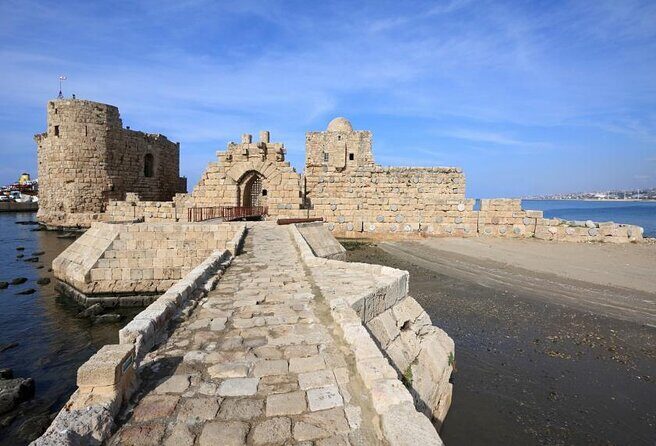
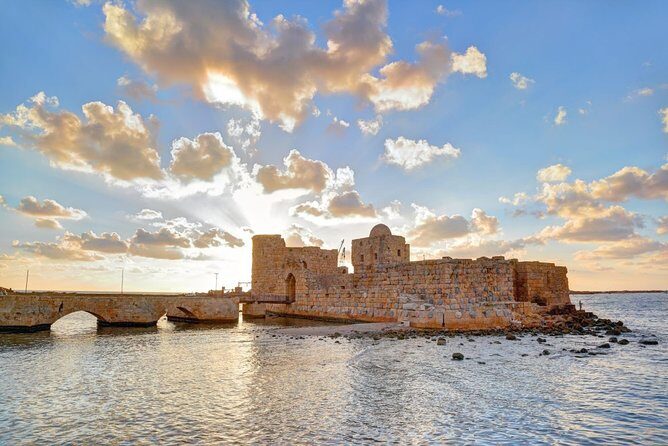
Sidon starts strong with the Crusaders Sea Castle. The setting alone is the hook: the castle was built in the 13th century on a small island, connected by a causeway. That’s the kind of design that tells you why it mattered—defense you can reach, and reach that you can control.
From the facts on site, the story gets clearer fast. The castle was largely destroyed by the Mamluks in 1291 and later restored by Fakhr el-Dine Maan II in the early 17th century. Even if the embellishments shown in older prints are not what you see today, the remaining structure gives you a physical sense of how fortress life might have worked.
Practical tip: plan for some walking and uneven surfaces around a historic coastal structure. Wear shoes that don’t hate you by midday. Admission isn’t included here, so keep that in mind.
Then you jump to a totally different kind of Sidon landmark: Khan al-Franj. This is a large rectangular courtyard with a central fountain and covered galleries—an old-school commercial hub in stone. It was built in the beginning of the 17th century by Emir Fakhreddine II to host ambassadors and support commerce between Lebanon and France.
What I like about this stop is that it changes the pace from military to civic life. A khan is a working building. It’s a reminder that history wasn’t only armies and rulers—it was also trade, writing, and diplomacy.
This one is free, and the stop is short, about 15 minutes, which makes it a nice reset before the more niche (and fascinating) craft story of the soap museum.


Soap Museum in Sidon: The Hammam Connection You’ll Actually Remember
If you’ve ever wondered why Lebanese soap and bath culture matter beyond the scent, the Soap Museum (Saida) gives you the link. The museum focuses on Levantine soaps and traces the history of soap making in the region, including how traditional olive oil soaps are made.
The building itself is part of the story. It’s an old soap factory built in the 17th century, though parts are thought to date back to the 13th century. The museum also includes a historical section based on onsite excavations with artifacts like fragments of pottery and clay pipe heads from the 17th to 19th centuries.
This stop isn’t huge in time—about 30 minutes—but it sticks with people because it’s tactile. Even without buying anything, watching or hearing how the process works turns abstract “heritage” into something you can picture.
Admission isn’t included here, so again, budget a little extra if you want to do everything.
After that, you get a short walk through Sidon Souks, the retail and craft center of the city. Expect narrow alleyways, kiosks, and shops—think tailors, jewelers, grocers, and more. It’s about atmosphere and orientation, not shopping stamina.
Maghdouche’s Marian Shrine: A Pilgrimage Story in Stone and Light
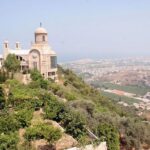
Next is Our Lady of Awaiting, also known as Our Lady of Mantara, in Maghdouché. This is a Melkite Greek Catholic shrine, and the story behind it gives the site its weight.
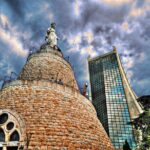
According to the shrine’s tradition, it was discovered on 8 September 1721 by a young shepherd. The shrine complex includes a tower with the statue of the Virgin and Child, a cathedral, a cemetery, and a sacred cave believed to be the place where Mary rested while waiting for Jesus.
This is free and scheduled for about 30 minutes. That’s a good amount of time for a respectful visit—long enough to see the main elements, not so long that it drags into boredom.
If you’re the kind of traveler who likes sites where faith and local history overlap, you’ll appreciate this stop more than you might at first glance. It’s not just a photo moment. It’s a living place tied to a specific narrative.
Tyre: Phoenician Roots to Roman Power, with Beaches for Breathing Space
Tyre is the main attraction, and it’s handled well. The town is an ancient Phoenician port city with deep roots, including the story of Elissar (often associated with the founding myth of Carthage). Tyre was also known across the ancient world for its purple dye made from murex sea snails.
You also get a sense of why this is one of Lebanon’s top archaeological stretches: Tyre’s foundations date back to around 2750 BC, and then it passes through a long list of rulers—Egyptians, King Hiram’s era of prosperity, and later Assyrians, Neo-Babylonians, Greeks, Seleucids, Romans, Byzantines, Arabs, Crusaders, Mamluks, and Ottomans. That timeline sounds broad, but on the ground it becomes a way of seeing layers in architecture and layout.
The good part is that Tyre is not just ruins. It’s also a seaside town with clean, popular beaches, which means you’re not stuck in a purely archaeological mood all day.
Tyre’s main entry is free on this tour, and the time allocation is solid: about 2 hours total, which lets you slow down enough to understand what you’re looking at.
Al-Bass Archaeological Site: Roman Hippodrome, Necropolis, and a Triumphal Arch

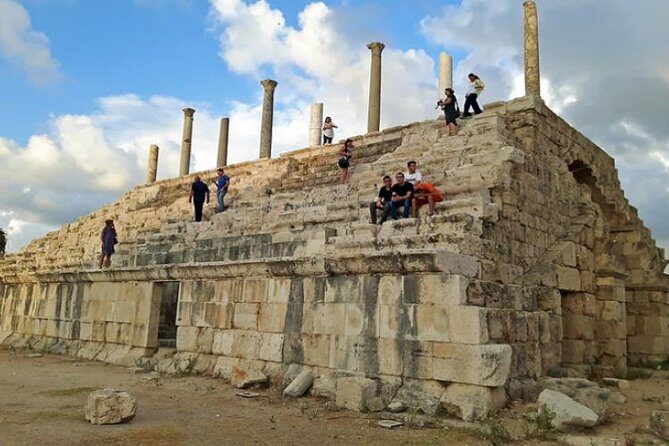
After the general Tyre walk, you get a focused visit to Al-Bass, described as the largest and best-preserved example of a Roman hippodrome.
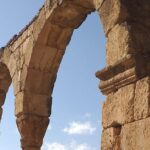
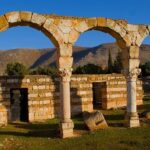
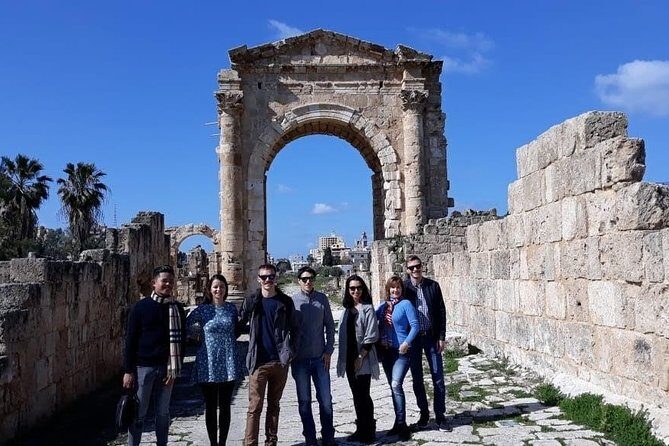
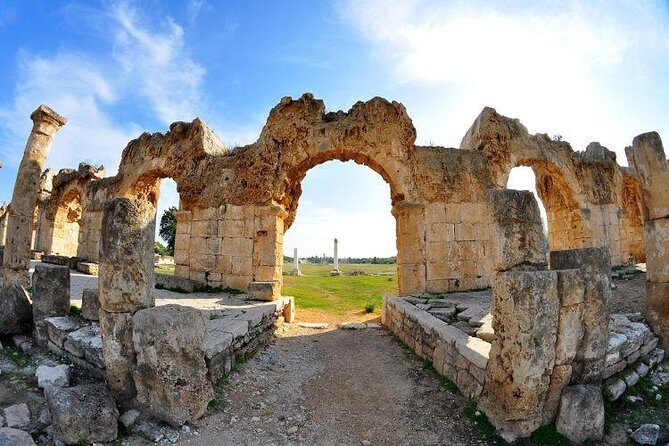
This area ties together a lot of the “how a Roman city worked” ideas. The sector includes remains of a necropolis on both sides of a wide monumental causeway, dominated by a Roman triumphal arch from the 2nd century AD. There’s also an aqueduct and the hippodrome itself, dating to the 2nd century, noted as one of the largest in the Roman world.
The necropolis component is what makes the stop feel more real. It includes several hundred well-preserved sarcophagi and an intact Roman road, plus the arch and aqueduct. Even if you’re not an archaeology fanatic, you’ll feel the scale quickly.
Admission isn’t included for Al-Bass here, so plan to add that cost if you want the full experience.
Old Souk Heritage Square in Tyre: Food Stops Without the Tour Being About Shopping
You end Tyre with time around the Old Souk of Tyre’s Heritage Square. This is a smaller, more digestible shopping-and-snacking moment, with shops selling items like gold, copper, vegetables, fish, meat, clothing, and antiques.
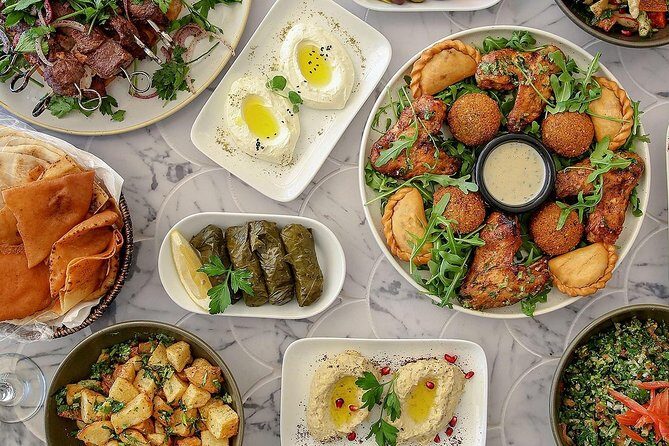
The practical idea here is food. Delicious sandwiches, foul, and hummus are some of the popular stops in the old souk area. Even if you skip buying souvenirs, it’s a good place to refuel and reset before returning toward Beirut.
Admission is free for this component, and it’s only about 15 minutes, so it doesn’t turn into a forced detour.
Lunch in Tyre: Traditional Food That Keeps You Going
Lunch is included, and it’s served in Tyre at a local restaurant. That matters. You’re spending hours between sites, and the value of a planned meal is that you avoid the “what’s open?” scramble.
Because the lunch is part of the tour package, you don’t have to guess timing. It also keeps the day’s flow from getting broken by meal hunting, which is a real risk on independent day trips.
Who This Tour Fits Best (and Who Might Want Something Else)
This day trip is best for:
- First-time visitors who want to see Sidon + Tyre + Maghdouche in one go.
- Travelers who like guided context, especially for archaeology and historic sites.
- People who prefer a small group up to 20 rather than a large coach.
It might be less ideal if:
- You hate paying separate admissions for some stops (Sea Castle, Soap Museum, Al-Bass).
- You want a slower, longer time at fewer sites. This is more of a “hit the highlights” day than a long wander.
Booking Advice: How to Decide Fast
If your goal is a smart first pass through Lebanon’s heritage on a single day, this is an easy yes. The structure is efficient, lunch is included, and you get both guidance and breathing room in Tyre.
Before you book, do one quick check in your head:
- You’re okay with a few extra admission fees.
- You’re ready for a long but manageable 8-hour day starting at 8:00 am.
- You want the story behind the stones—sea castle, Roman remains, and a shrine tied to a specific 1721 discovery story.
If that sounds like your kind of day, this tour is a strong value.
FAQ
What cities are included on the tour?
The tour covers Sidon, Tyre, and Maghdouche (including the Marian shrine there), all departing from Beirut.
How long is the tour?
The duration is about 8 hours.
Is lunch included?
Yes. Lunch at a local restaurant in Tyre is included.
What’s the group size?
This experience has a maximum of 20 travelers.
Is hotel pickup and drop-off included?
Yes. Hotel pickup and drop-off are included.
Are admission tickets included for every stop?
Not all are included. Admission is listed as not included for the Crusaders Sea Castle, the Soap Museum, and Al-Bass. Other stops are listed as free, including Khan al-Franj, Tyre, the Marian shrine in Maghdouche, and souk heritage areas.
What time does the tour start?
The start time is 8:00 am.
Do I get a mobile ticket?
Yes. The tour offers a mobile ticket.
Is free cancellation available?
Yes. You can cancel for a full refund up to 24 hours before the experience start time.