REVIEW · BEIRUT
Small-Group Adventure Tour to Sidon Tyre & Maghdouche-Day Trip
Book on Viator →Operated by Lebanon Local Tour · Bookable on Viator
Sun, ruins, and souks in one long day. This small-group coast tour strings together Sidon’s souks and Tyre’s UNESCO hippodrome with hotel pickup and an air-conditioned ride, so you spend less energy on logistics and more on looking.
I like the way the route layers eras in a natural flow: Phoenicians and crusaders in Sidon, then the Marian shrine in Maghdoucheh, and finally the big Roman-scale remains at Tyre. I’m also a fan of the Sidon market time—vaulted alleys, old-palace stairways, and the everyday vibe that still feels like a working port town, not a set piece.
One thing to consider: even though the tour is described as having an English-speaking guide and includes entrances, the on-the-day reality can vary. Some site notes flag admissions as not included, and a few experiences describe mostly driving instead of real guiding—so if you care about narration at the ruins, confirm what’s covered and what kind of commentary you’ll get.
In This Review
- Key things to know before you go
- Why this Beirut-to-South Lebanon route feels like good value
- Morning timing: what your day rhythm will look like
- Sidon’s Crusaders Sea Castle: views first, explanations second
- Sidon Souks: where everyday life makes the history believable
- Musee du Savon: a 17th-century soap factory that smells like history
- Al-Omari Mosque and Khan El Franj: where power changes clothes
- Maghdoucheh’s Our Lady of Awaiting: calm time in a cave shrine
- Tyre: harbor views first, then the scale of Roman entertainment
- Al-Bass Archaeological Site: the behind-the-scenes layer
- Price, entrances, and lunch: what to budget so you’re not stuck
- When guidance is strong (and when you should ask for more)
- Who should book this Sidon, Tyre & Maghdoucheh trip
- Should you book this day trip?
- FAQ
- What time does the tour start?
- How long is the experience?
- Is hotel pickup and drop-off included?
- Is lunch included?
- Are entrance fees included?
- How big is the group?
- What’s included during the trip?
- What’s the cancellation policy?
- Does it use a mobile ticket?
Key things to know before you go
- Small group (max 15) with hotel pickup and drop-off makes the day feel manageable instead of chaotic.
- Sidon Souks includes vaulted market lanes and stops like el-Shakiriyya with the Debbaneh Palace stairway (built 1721).
- Musee du Savon sits in an old soap factory and focuses on the history of olive-oil soaps and hammam traditions, with a live making demonstration.
- Crusaders Sea Castle + Great al-Omari Mosque give you a clear “who built what” timeline in Sidon—fortress, church, then mosque.
- Tyre’s Roman Hippodrome is UNESCO-listed and built for about 20,000 spectators, with the best-preserved scale of its type.
- Good days can include extra en-route touches: some guides/drivers like Harake or Rabie have been described as friendly with coffee/water and helpful context in the van.
Why this Beirut-to-South Lebanon route feels like good value
This day trip is built for time. Driving yourself from Beirut to Sidon and Tyre means dealing with routes, parking, and the “where do we start?” problem—so you lose hours. Here, you get a set plan with hotel pickup, an A/C vehicle, and a sequence of stops that are geographically sensible for one long day.
The price is also easier to swallow because the day isn’t just “see a monument, move on.” You get multiple Sidon experiences (castle views, market lanes, a museum) before heading to Maghdoucheh and then spending real time in Tyre’s UNESCO-listed Roman remains. Even if you only remember a couple of moments vividly, the mix is the point.
If you’re the type of traveler who likes structure—morning departure, timed stops, and clear transfers—this works well. If you hate rushing, plan to slow down at the markets and ruins, and accept that the overall day is packed.
A few more Beirut tours and experiences worth a look
Morning timing: what your day rhythm will look like
You’ll be picked up in the morning (the schedule shows pickup around 8:15 am, with the day starting at 8:30 am). That early start matters. It gives you enough daylight to enjoy the souks before you move on to the museums and churches/mosques, and it keeps your Tyre ruin time from feeling like a mad dash.
The vehicle is climate-controlled, and bottled water is included. In real-life terms, that means you can focus on the stops instead of worrying about hydration—especially on hotter days.
Group size is capped at 15, which keeps it from turning into a crowded school bus. Still, expect a “day trip pace”: you’ll be walking for short stretches at multiple locations, and you’ll want comfortable shoes.
Sidon’s Crusaders Sea Castle: views first, explanations second
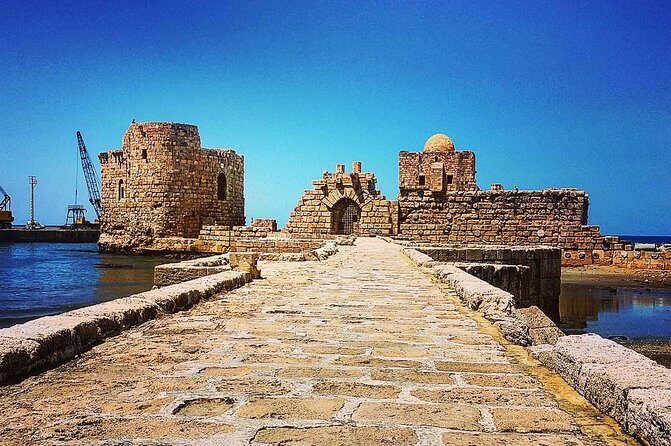
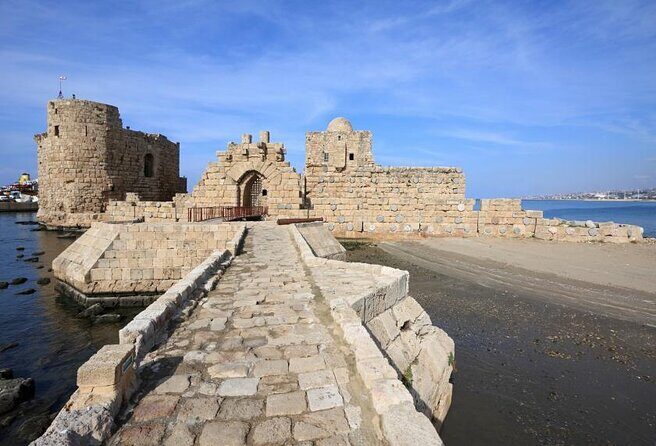
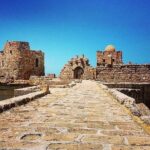
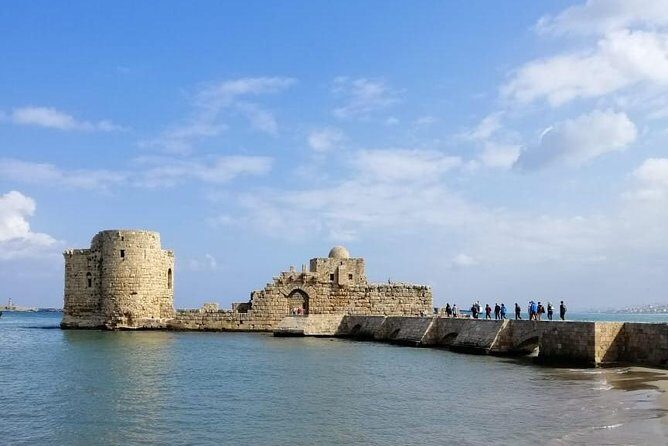
Your first major stop in Sidon is the Crusaders Sea Castle, timed at about 45 minutes. The castle is a great opener because it orients you. Even before you go deep into dates, the sea-facing position tells you why Sidon mattered—religiously, politically, and commercially—for so many centuries.
The tour’s framing also points you to Sidon’s long timeline, including the claim that it was inhabited as far back as 4000 B.C. That kind of anchor helps your brain place the rest of the day in layers rather than as random ruins.
A practical note: the schedule lists admission for this stop as not included, so it’s worth budgeting time and money for that possibility. If your guide is talkative that day, you’ll probably get more out of the castle than if you’re mostly looking from a viewpoint.
Sidon Souks: where everyday life makes the history believable
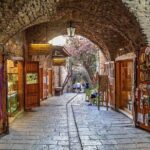
Next comes the Sidon Souks, with about one hour. This is the stop where I’d bet you’ll feel the most texture. You’re moving through old commercial lanes that still function, with vaulted alleys described as stretching roughly 14 kilometers. Whether or not you count every step, the architecture does something useful: it shapes how you move and how you see.
You’ll also get details that turn the souk from generic to specific:
- the presence of craftsmen shops and visible repair work
- a traditional coffee house stop where men meet to smoke a narguileh (water pipe) and drink Turkish coffee
- the idea of fishermen selling the day’s catch near the port area
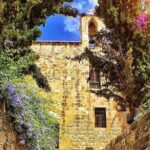
One of the best parts is the “small surprise” factor near the market: el-Shakiriyya connects to Debbaneh Palace (built in 1721). There’s a roofed narrow stairway that leads into an internal yard—exactly the kind of detail that makes you look up, not just walk forward.
Timing tip: if you want photos, spend the first 10 minutes walking slowly without shooting. You’ll learn the lane rhythm, then your camera work gets easier.
Musee du Savon: a 17th-century soap factory that smells like history
Then you head to Musee du Savon, about 30 minutes. This museum is built around soap-making history in the region—especially the development and manufacturing of traditional olive oil soaps—and it includes a demonstration.
Why I like this stop: it’s hands-on learning in a short window. You see how the process works, and you connect it to the regional bath culture tied to the hammam tradition. The museum building itself is described as an old soap factory built in the 17th century, with parts that may date back to the 13th century. That’s the kind of depth that doesn’t require a long lecture.
There’s also a historical artifacts section, including items found during on-site excavation such as clay pipe heads dating from the 17th to 19th centuries, plus pottery fragments. Even if you’re not a museum person, it’s a nice break from walking—plus it keeps the day feeling cultural rather than only architectural.
The schedule lists admission as not included here, so bring a bit of flexibility or confirm what you’re expected to pay on the spot.


Al-Omari Mosque and Khan El Franj: where power changes clothes
After the museum, the day leans back into architecture and shifting control with the Great al-Omari Mosque (about 15 minutes). It’s described as the former Church of St. John of the Hospitalers. The rectangular structure’s four walls date to the 13th century, and the building was restored to show its natural beauty.
If you care about “why does this building look like that?” this is a helpful stop. A place like this is both physical and symbolic—you can see the outline of a fortress-like compound that once had its own chapel, and you can also grasp how the function shifted over time.
Very close by is Khan El Franj, a caravanserai-style stop tied to merchants and goods. It’s described as a typical khan built by Fakhredine II, with a large rectangular courtyard, a central fountain, and covered galleries. The schedule also notes that it was a key economic center in the 19th century and even housed the French consulate.
You may not spend long here, but it’s the kind of “pause and picture the flow” site that makes Sidon feel like a trading hub rather than a museum town.
Maghdoucheh’s Our Lady of Awaiting: calm time in a cave shrine
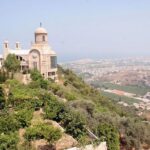
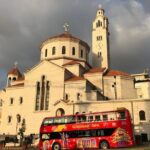
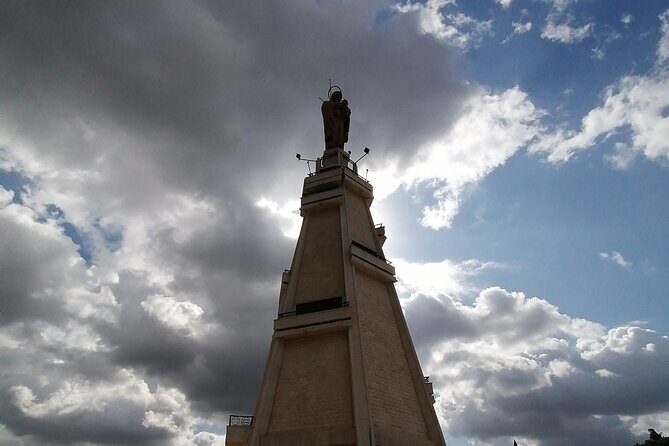
Then it’s off to Maghdoucheh for Our Lady of Awaiting, a Marian shrine tied to the Melkite Greek Catholic tradition. You’ll have about 30 minutes, and admission is listed as free.
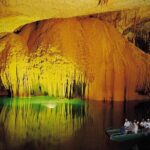
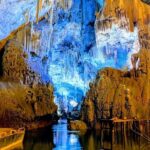
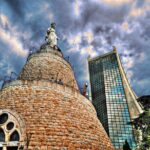
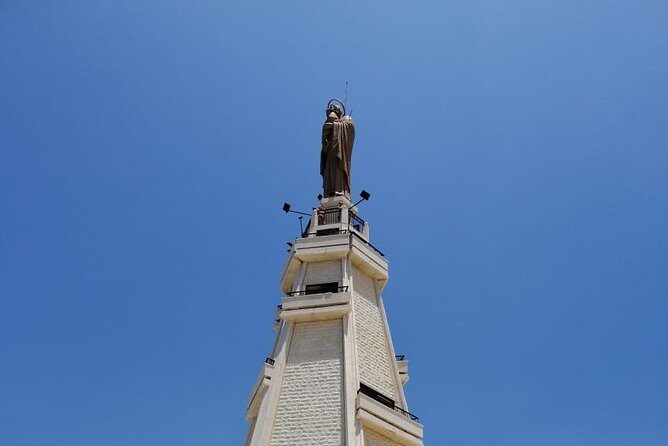
This stop is centered on a mix of spaces: a tower crowned with a statue of the Virgin and Child, a cathedral, a cemetery, and a sacred cave. The cave is described as believed to be the place where the Virgin Mary rested while she waited for Jesus, and the shrine tradition says it was discovered in 1721.
What I like here is the pacing contrast. After Sidon’s markets and stone architecture, you get a more reflective setting. Even if you’re not visiting for religious reasons, it’s a meaningful place to slow down and look at the way faith is built into physical geography.
A practical detail: this is still an active walking stop. Plan for uneven surfaces around the shrine/cave area, and keep your visit respectful and quiet.
Tyre: harbor views first, then the scale of Roman entertainment
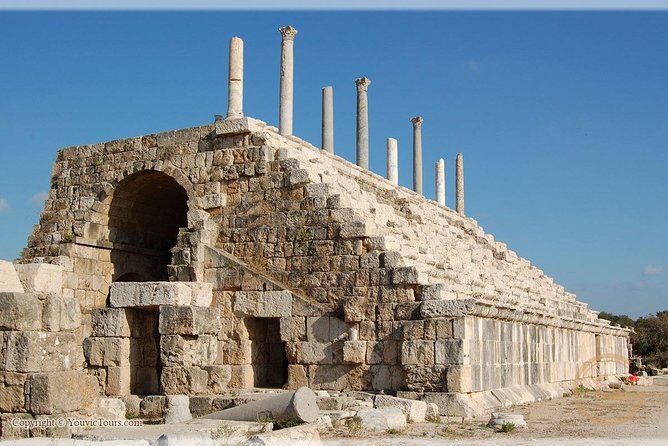
Tyre is the next big shift, and you’ll spend about 45 minutes to see the city’s old north harbor, colorful streets, and beach views from two sides of town.
The tour also frames Tyre with very old anchors, including that it was founded around 2750 B.C. (as attributed to Herodotus). It also connects the city to the Europa myth and Carthage’s founder Dido. Even if you treat those connections as legend and not a calendar, it helps you understand why Tyre kept pulling attention across centuries.
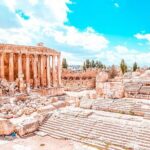
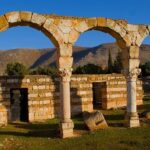
From there, you move to the Roman Hippodrome, a UNESCO-listed site from the 2nd century C.E. This is one of the moments where the numbers matter:
- horseshoe-shaped structure
- about 480 meters long and 90 meters wide
- seating for around 20,000 spectators
- designed for chariot racing
Admission is listed as not included for this stop, so don’t assume it’s already paid. Also, if you want explanations, this is a good place to lean on your guide. A site like this is impressive, but a guide helps you interpret what you’re seeing—where the action likely was, and how crowds would have experienced it.
If the narration is light that day, still take 10 quiet minutes and let the shape sink in. The structure gives you a built-in sense of scale.
Al-Bass Archaeological Site: the behind-the-scenes layer
Finally, you reach Al-Bass, also around 45 minutes, with admissions listed as not included.
This stop is more “trace the timeline” than “stand and pose.” It’s described as home to:
- a Byzantine road
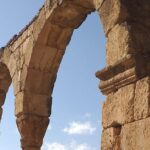
- a 2nd-century triumphal arch
- a Roman road with an aqueduct
- remains of a second-century enormous structure (described that way in the schedule)
Why this works after Tyre’s hippodrome: it adds the connective tissue. You start seeing not only where entertainment happened, but also how roads, water, and monuments fit into the city’s daily machinery.
It’s also the kind of stop where you can do best with a guide-led explanation. If your day runs more like transport than commentary, focus on visual patterning—arches, road traces, and the way the site is laid out.
Price, entrances, and lunch: what to budget so you’re not stuck
At $65 per person for about a 9-hour day, the value depends on one key factor: how smoothly the plan matches what you care about most.
On the practical side, you get:
- hotel pickup and drop-off
- air-conditioned vehicle
- bottled water
- entrance costs are described as included in the overview
On the “double-check” side, multiple stops on the day notes show admissions as not included. That means you might need to pay on arrival for certain entry tickets. The tour also lists lunch as not included, and you should plan for your own food time.
I’d treat it like this:
- Bring a small cash/card buffer for any on-site admissions that aren’t covered.
- Pack snacks if you’re picky about food or you’re sensitive to waiting times.
- Don’t assume lunch or dinner is handled, even if the driver/guides sometimes help with small extras.
When guidance is strong (and when you should ask for more)
The best days feel like you’re riding with someone who knows local angles. In several good experiences, people highlighted guides like Harake and Rabie for being friendly, helpful, and more than just a driver—adding context about Lebanon and the sites, and even sharing small comfort touches like coffee and water along the route.
At the same time, a couple of experiences described the day as mostly transport, with limited narration at key ruins or the castle, especially when a true guide presence wasn’t clearly felt. Since the description promises an English speaker local group leader, I’d treat this as a simple planning task:
- If you want real explanations at the Tyre ruins, ask ahead what you can expect in terms of guiding depth and time inside each site.
Also, because one negative account mentions risky driving behavior (speeding and using the phone while driving), if safety is your top priority, ask how they staff and manage drivers on the day.
Balanced takeaway: this tour can be excellent for route + schedule convenience, and it can also be hit-or-miss depending on who is actually guiding that day.
Who should book this Sidon, Tyre & Maghdoucheh trip
This day trip is a great fit if you:
- want to see multiple major sites in one go without self-driving
- enjoy markets and everyday city atmosphere as much as ruins
- like short, structured stops with clear transfer time
- can tolerate a full day with walking and timed visits
It may be less ideal if you:
- need long museum-style explanations at every stop
- dislike surprise costs for admission tickets
- want a relaxed pace with lots of free wandering time
If you’re traveling with limited mobility, you might find the number of stops and the walking time challenging, and you should plan accordingly (the overall notes only say most travelers can participate, but they don’t describe accessibility accommodations).
Should you book this day trip?
If your priority is getting to Sidon and Tyre efficiently—with a plan that mixes markets, castles, worship spaces, and UNESCO-listed Roman remains—then yes, I think this is worth booking. The route is well-sorted for a single day, and the Sidon souk portion can be memorable in a very human way.
Before you go, do two quick things:
- Confirm what entrance fees are truly covered, since some stops are marked as admission not included.
- If you care about interpretation at Tyre’s hippodrome and Roman areas, ask how much guiding you’ll receive on the day.
Do those, and you’ll spend your energy on the best part: walking into Lebanon’s layered coast cities, one stop at a time.
FAQ
What time does the tour start?
The day tour starts in the morning, with pickup around 8:15 am and the start time listed as 8:30 am.
How long is the experience?
It runs for about 9 hours.
Is hotel pickup and drop-off included?
Yes. You’re picked up from your Beirut hotel and returned there after the tour.
Is lunch included?
No. Lunch is not included.
Are entrance fees included?
The tour overview says entrance fees are included, but the schedule notes that several stops have admission tickets not included. It’s a good idea to confirm what’s covered when you book.
How big is the group?
The tour is a maximum of 15 travelers.
What’s included during the trip?
The tour includes an experienced English speaker local group leader, hotel pickup and drop-off, bottled water, and travel in an air-conditioned vehicle.
What’s the cancellation policy?
You can cancel for a full refund up to 24 hours before the experience starts.
Does it use a mobile ticket?
Yes, the tour includes a mobile ticket.