REVIEW · BEIRUT
Guided Full-Day Private Tour to Jeita Grotto, Byblos and Baalbek
Book on Viator →Operated by Lebanon Tours & travels · Bookable on Viator
Three stops. One smooth, story-packed day. You’ll see Jeita Grotto’s limestone formations, walk the ancient port city of Byblos, then finish at UNESCO-listed Baalbek with Roman temples that feel almost unreal. I like that it’s a true private setup with a tour leader and a car that handles the driving, so you can focus on the sights instead of the logistics.
Two other things I really value here: door-to-door pickup and drop-off from your Beirut hotel, and the chance to hit multiple top highlights in a single 10-hour block. One thing to plan for: key sections don’t include admission (notably Jeita Grotto, Byblos Castle, and the Baalbek temples area), and lunch isn’t included—so your day works best if you budget a bit extra.
In This Review
- Key points to know before you go
- The smart way to do Jeita, Byblos, and Baalbek in one pass
- Jeita Grotto: upper and lower galleries, plus what to look for
- Byblos: Phoenician legends, the Castle viewpoint, and quick market strolls
- Byblos Castle (plus the view you’ll remember)
- Old Souk and the Port area (short, but fun)
- Baalbek: Roman temple giants and the stories behind them
- Temples stop time: use your eyes, not just your camera
- The Stone of the Pregnant Woman: a quick stop with big scale
- Timing, tickets, and how to keep the day feeling good
- Value check: is $100 per person a fair deal?
- Who this tour is best for
- Should you book this private full-day loop?
- FAQ
- What time does the tour start?
- How long is the tour?
- Is pickup and drop-off included?
- Is this tour private?
- What is included in the price?
- Are admission tickets included for each stop?
- Is lunch included?
- Do I get a mobile ticket?
- Can I cancel for a full refund?
Key points to know before you go

- Private and full-day (about 10 hours), starting at 7:30 am from Beirut
- Jeita Grotto’s upper + lower cave galleries in about one hour at the site
- Byblos walk time plus extras: Castle, Old Souk, and the Port area
- Baalbek Roman temples and nearby monoliths, including the Stone of the Pregnant Woman
- Tickets vary by stop: some are free, some are not included
- Mobile ticket + local tour leader to keep you moving and informed
The smart way to do Jeita, Byblos, and Baalbek in one pass
If your time in Lebanon is tight, this kind of full-day circuit is exactly what you want. You’re not trying to stitch together separate rides, separate guides, and separate ticket lines. Instead, you get an air-conditioned vehicle, a tour leader to explain what you’re seeing, and pickup/drop-off built around your Beirut hotel.
It also helps that the flow makes sense. Jeita Grotto gives you a dramatic, cool-world start. Byblos adds a walkable historic city feeling—stopping for the Castle viewpoint, then wandering the Old Souk and nearby port area. Then you move into the Bekaa Valley and the Baalbek temple complex, where scale becomes the main story.
One of the strongest points in the feedback I saw was the guide experience, including a clear mention of Hassan by name. That matters, because places like Baalbek can feel like “big rocks” if nobody puts them into context. With the right guide, you get the names, the layers of culture, and a reason to look closely rather than just take photos.
You can also read our reviews of more guided tours in Beirut



Jeita Grotto: upper and lower galleries, plus what to look for
Jeita Grotto is a limestone cave system formed over millions of years, and it’s the Middle East’s longest cave complex. What you’re actually walking through is two connected cave areas at different levels:
- Upper cave: about 2,130 metres long, with a concentration of crystallized formations like stalactites, stalagmites, columns, and “curtains/draperies,” plus ponds.
- Lower gallery: about 6,200 metres long, about 60 metres below the upper level. This section is traversed by a smooth underwater river and a lake.
In practice, the time at Jeita is about one hour, and admission isn’t included in the tour price. That short visit can still work well, as long as you set expectations: you’re not trying to see every corner like a dedicated cave expedition. Instead, you’ll get the big highlights, and your guide can point out what’s worth your attention fast.
A good strategy is to think in layers of observation:
- First, scan for the major formations (the main stalactites/stalagmites shapes).
- Then notice the “types” of rock features: columns vs. curtains, dry-looking formations vs. watery areas.
- Finally, keep an eye on the overall feeling of height and depth as the upper and lower spaces relate to each other.
Caves tend to be cooler and more humid than the outside world, so I’d pack a light layer and wear shoes you trust on uneven surfaces. Even if you’re only there an hour, you’ll appreciate being comfortable.
Byblos: Phoenician legends, the Castle viewpoint, and quick market strolls
Byblos is one of the oldest Phoenician cities, and it’s been inhabited since Neolithic times. It’s tied to the Mediterranean’s long cultural story, including the diffusion of the Phoenician alphabet. On this schedule, you get about one hour for the main Byblos area, which is enough time for a feel of the place without turning it into a rushed checklist.
This tour also builds in a few very practical extras right inside the Byblos archaeological setting:
Byblos Castle (plus the view you’ll remember)
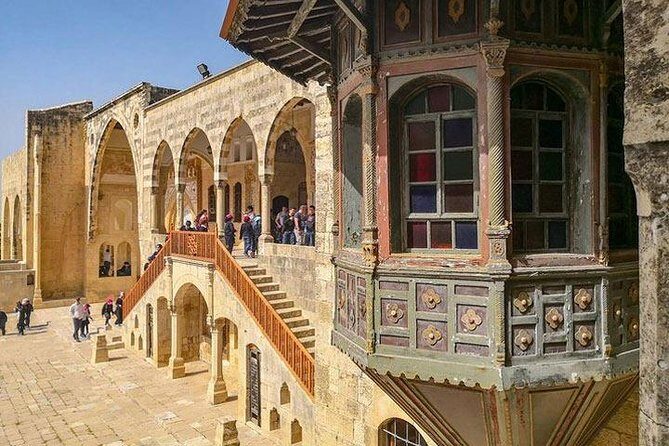
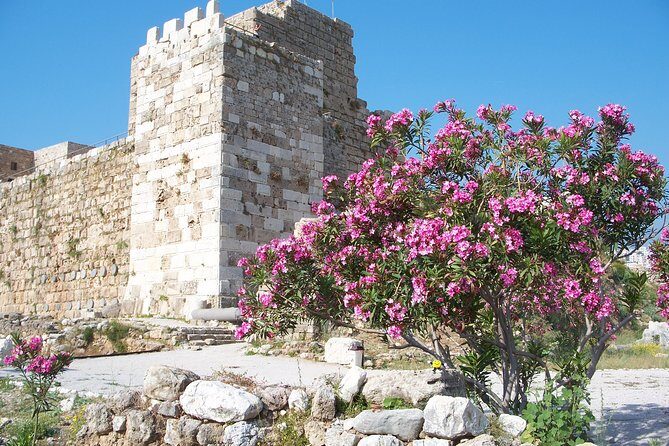
Byblos Castle is a restored 12th-century Crusader castle, sitting inside an archaeological area that includes ruins like the Temple of Baalat Gebal and the Temple of the Obelisks. The castle itself sits by a dry moat about 10 metres wide.
Your stop here is about 30 minutes, and admission isn’t included. The real draw is the perspective: the top of the foursquare keep gives you a strong viewpoint over the ruins toward the sea. Inside, there’s a small museum and information panels that summarize the city’s history—helpful if you want your walk to make more sense.
Old Souk and the Port area (short, but fun)
After the Castle, you get:
- Old Souk for about 10 minutes (free admission)
- Byblos Port for about 10 minutes (free admission)
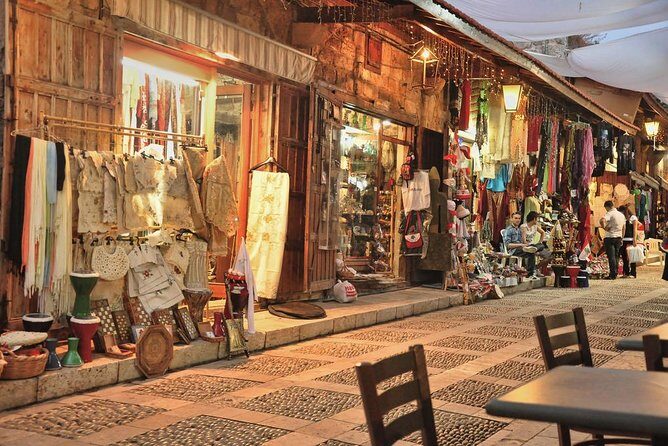
These are quick stops, but they’re a nice break from “ruins-only” tourism. The Old Souk is an atmospheric cobblestone area where you can browse souvenirs or antiques at a relaxed pace. The port area is tied to a popular Lebanese belief that it’s the oldest port in the world. Around 3000 BC, Byblos Port was described as the key timber shipping center in the eastern Mediterranean.
That combination—ruins plus a real market texture—helps Byblos feel less like a museum and more like a living place.
You can also read our reviews of more private tours in Beirut





Baalbek: Roman temple giants and the stories behind them
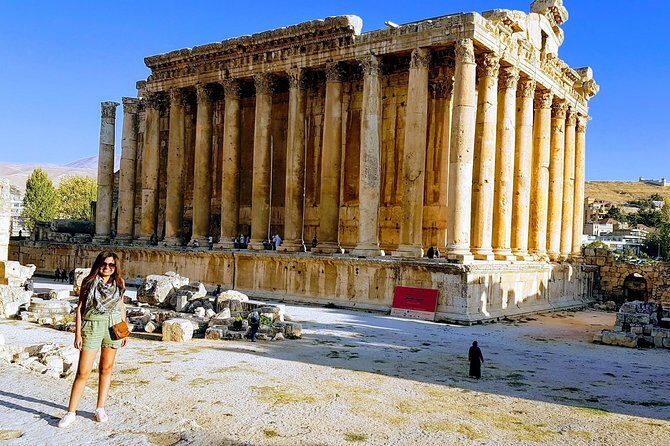
Baalbek is built around one of Lebanon’s most impressive archaeological zones: the Baalbek temple complex, inscribed as a UNESCO World Heritage site in 1984. On this tour, you’ll spend about 1.5 hours at Baalbek and then another 1.5 hours focusing on the temples area—though note that admission isn’t included for the temples stop.
Here’s what you’re going to run into, and why it matters:
- Baalbek is known for two standout Roman temples: the Temple of Bacchus and the Temple of Jupiter. They’re described as among the largest and grandest Roman temple ruins.
- In the Hellenistic period, the city was called Heliopolis, and it retained its religious function into Roman times.
- The worship story centers on a triad of deities: Jupiter, Venus, and Bacchus. Even though they’re Romanized names here, the cult is essentially tied to Phoenician tradition.
- Pilgrims came to the sanctuary in large numbers, drawn by the religious importance of the sanctuary of Heliopolitan Jupiter.
The temples themselves are the headline: colossal constructions built over more than two centuries, making this one of the best examples of Imperial Roman architecture.
Temples stop time: use your eyes, not just your camera
When you’re in the temples area for around 1.5 hours, don’t only look for the “most famous shot.” Instead, try to notice scale relationships: how the columns and platforms dwarf people, how symmetry and spacing guide your movement, and how different temple structures relate to each other.
Also, this stop has admission not included—so bring extra budget for those tickets if you want the full experience.
The Stone of the Pregnant Woman: a quick stop with big scale
Between the main temple viewing moments, you’ll also stop at the Stone of the Pregnant Woman. This is a worked Roman monolith, and it’s described as one of the largest stone blocks ever quarried, along with another nearby monolith block.
This is a shorter stop—about 30 minutes—and admission is free. The value here isn’t deep interpretation time. It’s the instant perspective shift: when you see a monolith this massive close up, you start to understand why the Roman builders could create structures that still feel monumental today.
Timing, tickets, and how to keep the day feeling good
The tour starts at 7:30 am and runs about 10 hours total. That’s a full day, and it can feel long if you’re tired early or if you don’t plan your comfort.
Here are the practical things that matter most based on the stops:
- Jeita Grotto (1 hour): admission ticket not included
- Byblos (1 hour): admission free
- Byblos Castle (30 minutes): admission not included
- Old Souk (10 minutes): free
- Byblos Port (10 minutes): free
- Baalbek (1.5 hours): admission free for that listed stop
- Temples of Baalbek (1.5 hours): admission ticket not included
- Stone of the Pregnant Woman (30 minutes): free
Also, lunch isn’t included, so you’ll either need to eat on your own schedule or rely on quick stops near the route. If you hate surprises, keep some snacks or plan where you’ll grab food during breaks.
One more timing reality: this itinerary hits a lot of “top highlights.” That’s the point, but it means each location has limited time. If your travel style is slow and linger-heavy, you might prefer a single-site day. If your style is getting your bearings fast and checking the essentials off, this is a great fit.
Value check: is $100 per person a fair deal?
At $100 per person, you’re paying for a private day built around three major destinations, with hotel pickup and drop-off in Beirut, air-conditioned transportation, and a tour leader doing the explanation work. You’re also getting a mobile ticket and the flexibility of a private group setting where only your group participates.
The best value depends on how you’re traveling:
- If you’re a couple or small group, private transport plus guided interpretation across long-distance stops can feel like a bargain compared to piecing it all together.
- If you’re traveling solo, the tour still makes sense if you want a guided route and hate negotiating rides between places.
The main “value trade” is that you’ll handle some admissions and lunch on your own, depending on which stops you choose and how you plan your meals. Still, the schedule is designed to cover the big-name sites without making you spend half the day in transit.
Who this tour is best for

This is ideal if you:
- Have limited time in Lebanon and want a structured day covering Jeita Grotto, Byblos, and Baalbek
- Prefer a private setup with pickup/drop-off rather than navigating independently
- Like having context for what you’re seeing, not just walking around
It’s less ideal if you:
- Want a long, slow pace at only one site
- Don’t want to deal with extra admissions and meal planning during the day
Should you book this private full-day loop?
I’d book it if you’re trying to make the most of one day and you want a guided, efficient route through three of Lebanon’s standout attractions. The format is especially strong for first-timers: you get caves, a historic port city, and Roman-era giants all in one sweep, with enough explanation to connect the dots.
Just go in with your budget set for admissions that aren’t included and a plan for lunch. Do that, and this tour turns a long day into a satisfying one—no wasted hours, and plenty of moments where you stop and think, yes, this is really here.
FAQ
What time does the tour start?
The tour starts at 7:30 am.
How long is the tour?
The duration is about 10 hours.
Is pickup and drop-off included?
Yes. Hotel pick-up and drop-off are included, with door-to-door service in Beirut.
Is this tour private?
Yes. It’s a private tour/activity, and only your group participates.
What is included in the price?
Included features are hotel pickup & drop-off, comfortable private transportation, a tour leader, an air-conditioned vehicle, professional knowledgeable guides, and local authentic experiences.
Are admission tickets included for each stop?
Not all of them. Jeita Grotto admission isn’t included. Byblos is listed as free. Byblos Castle admission isn’t included. Old Souk and Byblos Port are free. Baalbek’s stop is listed as free, but the Temples of Baalbek admission isn’t included. The Stone of the Pregnant Woman is free.
Is lunch included?
No. Lunch is not included.
Do I get a mobile ticket?
Yes. Mobile ticket is listed as a feature of the tour.
Can I cancel for a full refund?
Yes. Free cancellation is available, and you can cancel up to 24 hours in advance for a full refund.