REVIEW · BEIRUT
Guided Small-Group Tour to Tripoli and Batroun with Lunch
Book on Viator →Operated by Lebanon Tours & travels · Bookable on Viator
Tripoli feels like a living workshop. This guided day trip threads you through Tripoli’s historic trade streets and then shifts to Batroun’s Phoenician coastline, with pickup and drop-off that saves you the headache of planning. I especially like the small-group size (max 15), because the guide can actually answer questions and slow down when something is worth seeing.
Two things I really like: the day is built around real places people used every day—mosques, khans, and hammams—not just monuments behind fences; and you get lunch at an authentic Lebanese restaurant so the food is part of the experience, not an afterthought. The pacing also works well if you want depth without being stuck on a bus all day.
One possible drawback: Tripoli is a lot of walking on old streets, and several stops are short (think quick mosque and hammam visits). Also, Citadel Saint Gilles has an admission cost that isn’t included, so budget a little extra for that one site.
In This Review
- Key points to know before you go
- Tripoli and Batroun in one day: small-group pacing that feels human
- Hotel pickup, timing, and what the 8-hour route actually means
- Tripoli’s working trade streets: khans, souks, and the feeling of everyday architecture
- Citadel Saint Gilles (Qal’at Sinjil) and the mosques: power shifts written in stone
- Soap Khan and hammams: scented trade rooms and bath-house architecture
- El Mina port, Rachid Karami’s unfinished fair, and Tripoli’s famous sweets
- Batroun’s Phoenician Wall: the coast’s oldest defense
- Lunch, guide chat, and how to get more out of the day
- Price and value for $65 with pickup and lunch
- Should you book this Tripoli and Batroun tour?
- FAQ
- What time does the tour start?
- How long is the day trip?
- Is lunch included?
- Does the tour include hotel pickup and drop-off?
- How large is the group?
- Do I need to pay admission fees for the sites?
- What’s the price per person?
- What is the cancellation policy?
Key points to know before you go
- Max 15 people means you’re not lost in a crowd, and you can ask questions.
- Door-to-door Beirut pickup and drop-off helps you start fresh and keeps the day efficient.
- Tripoli’s working texture: souks, khans, soap rooms, and hammams—history you can sense with your senses.
- Many sites are free to enter, with Citadel Saint Gilles as the main exception.
- Batroun’s Phoenician Wall is a rare coastal sight with real physical scale (225 meters).
- Lunch is included, and it’s positioned as an authentic Lebanese stop.
Tripoli and Batroun in one day: small-group pacing that feels human
This tour makes sense for one big reason: it chooses a scale that fits a single workday. Tripoli gives you hours of old-city atmosphere—souks, khans, mosques, and the famed hammams—while Batroun adds a calmer coastal “reset” with the sea wall and city views. With a group capped at 15, you’re guided through the “why” behind what you’re seeing, not just marched from stop to stop.
You’ll also notice the itinerary keeps mixing types of places. You’re not only looking up at buildings; you’re stepping into rooms and courtyards that were designed for daily life: prayer spaces, trade courtyards, and public baths. That matters because it turns the day from sightseeing into understanding.
And yes, you’re moving fairly steadily. The day is packed, but it’s packed in a way that’s easy to follow—especially because you’ll be using an air-conditioned vehicle for the driving segments and the guide keeps things organized.
You can also read our reviews of more guided tours in Beirut


Hotel pickup, timing, and what the 8-hour route actually means
You start at 8:30 am, and the company handles hotel pickup and drop-off in Beirut, so you don’t need to figure out buses, taxis, or meeting points downtown. The tour runs about 8 hours, which is a practical length: long enough to feel like you’re doing something substantial, but not so long that everyone is dragging by mid-afternoon.
The schedule is split into two clear parts. The Tripoli side is the heavier lift—several hours of old-city walking plus a concentration of historic religious and commercial sites. Then you head to Batroun for a shorter but meaningful coastal segment. Those short stop times are normal on a day like this, so I’d plan on comfortable shoes and a mindset of “small bites, good explanations,” not “perfect slow stroll everywhere.”
If you’re sensitive to steep stairs or uneven pavement, Tripoli’s street texture is something to take seriously. It’s historic city fabric—walkable, but not smooth.
Tripoli’s working trade streets: khans, souks, and the feeling of everyday architecture
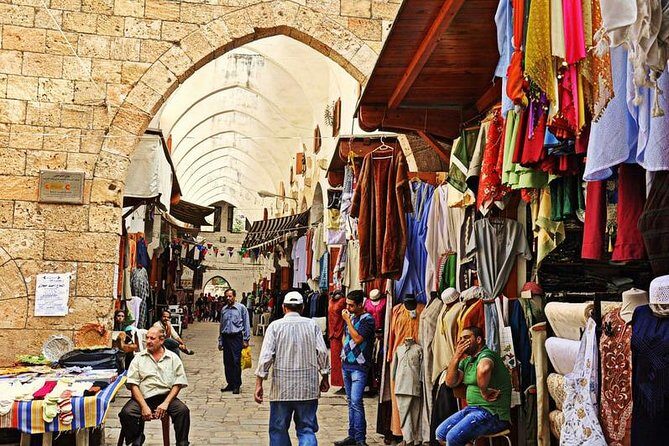
Tripoli is one of Lebanon’s oldest cities, dating back to the Phoenician era, and the old center carries layers that survived through time. Buildings from around the 14th century are recognized as historical sites, and you’ll see mosques from Mamluke and Ottoman periods still standing. The city’s “everyday” identity—built around baths, markets, and inns for traders—shows up everywhere you turn.
One of the best uses of your time here is the souk experience. You’ll spend time in Souk Al-Harajb, and the guide explanation makes a difference because the souks aren’t one long street. There are nine souks in Tripoli (Attareen, Bazerkan, Haddadin, Haraj, Kameh, Koundarjiyeh, Nahhasin, Samak, Sayyaghin). The guide helps you see the logic of the lanes and what types of goods they traditionally hosted.
Then come the khans—covered complexes that once supported trades and travelers. Khan Al-Khayyatin is a good example: a long rectangular building with a covered central courtyard and shops on both sides, known for tailoring-related work. Even if you’re just walking through quickly, you can feel the design purpose: bring craft and commerce under one roof so it works in every kind of weather.
In Tripoli, this is where the day becomes more than pictures. The sights are physical and tactile—cool shadows in courtyards, the scale of arched corridors, and the way trade streets still shape movement.
Citadel Saint Gilles (Qal’at Sinjil) and the mosques: power shifts written in stone
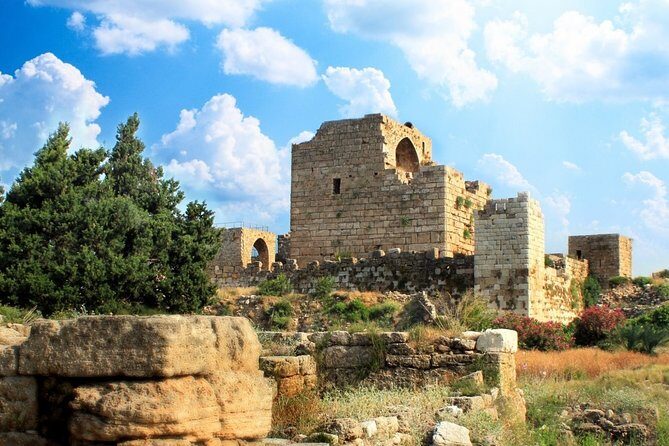
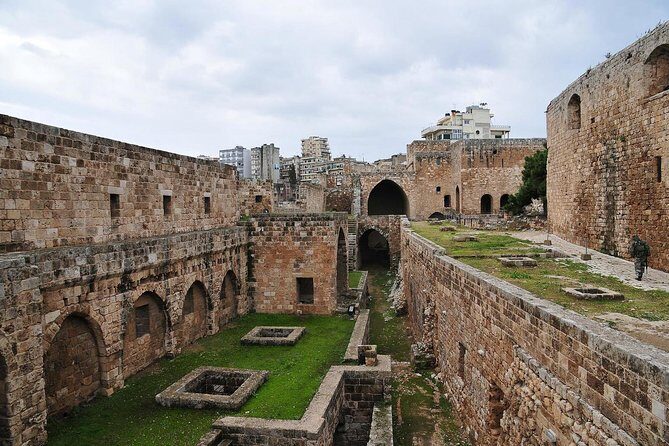
Your Tripoli skyline moment is the Citadel Saint Gilles (Qal’at Sinjil). It’s impressive not just because it’s large (about 140 meters long and 70 meters wide), but because it was repeatedly reshaped by different powers. You’re looking at Fatimid octagonal constructions, Crusader-era changes when parts became a church, then later Mamluke additions, and then Ottoman alterations in the 16th century. The restoration work tied to Mustafa Barbar Agha in the early 1800s is part of why the citadel looks the way it does today.
What I’d watch for: this isn’t a single-style monument. It’s an architectural timeline. If you like spotting how design changes with rulers, this stop will click.
After that, the day shifts from fortress to devotion with two key mosques.
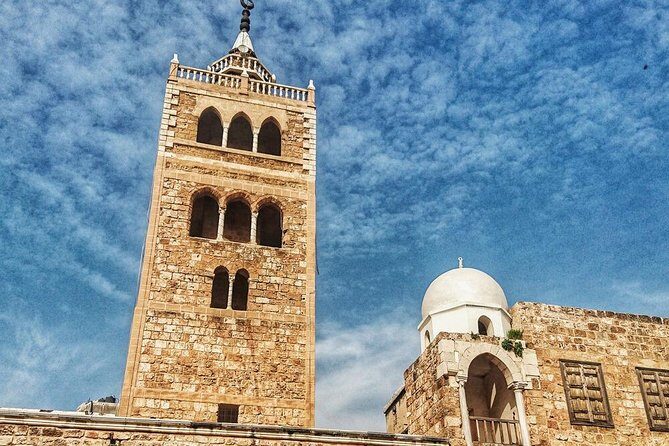
Al Mansouri Great Mosque was begun in 1294 and completed in 1315. It was built on the ruins of a 12th-century Crusader cathedral dedicated to St. Mary of the Tower. Inside, the courtyard and vaulted prayer hall give you a clear sense of how worship space is organized. You can still notice Western architectural elements—like the northern entrance and a bell tower transformed into a minaret. The guide’s context about the inscriptions and plaques (covering daily life in the Mamluke period) helps you read what otherwise feels like decorative stone.
Then Taynal Mosque (built 1336 by Saif Ed-Dine Taynâl) continues the story of reuse. It sits on the site of a ruined Crusader church, and the adjoining domed mausoleum holds the tomb of the founder. Even the reused material stands out—granite columns with late Roman capitals—and the decoration in the second prayer hall reflects Tripoli’s Mamluke-era architectural taste. If you want to see how history is layered rather than erased, these two mosques are a strong pairing.
Soap Khan and hammams: scented trade rooms and bath-house architecture
Tripoli doesn’t just do markets and mosques. It also has a strong bath-house tradition, and this tour leans into it with several hammam stops.
First, you’ll visit Khan el Masriyen, commonly associated with the soap complex Khan As Sabon. It was built at the beginning of the 17th century. It’s not just a pretty building; it was planned for control. Originally intended to serve as a barracks so Ottoman troops could garrison nearby, it was built in the center of the city to help manage potential uprisings. The layout—two-story arcaded corridors around a fountain courtyard—gives you that strong “purpose-built trade complex” feeling.
Then it’s on to hammams.
- Hammam Al Jadid (Hammam El-Abed) is described as the only functioning hammam in Tripoli, likely built at the end of the 17th century. Look for the pierced domes and the traditional interior setup, including cushions and a central fountain.
- Hammam Al-Jadid, also referred to as the New Bath, was built around 1740. It’s the largest one in Tripoli, though it hasn’t been in operation since the 1970s. That means you’ll see faded grandeur—still enough to spark your imagination about how it worked.
- Ezzeddine Hammam ties directly to political power, given by Mamluke governor Izz ed-Dîne Aybak. The governor is buried in a mausoleum beside it, and the hammam was in continuous use until recently. It’s currently under restoration, so it’s worth going in with the expectation that not everything will be fully “alive” like a working bath.
These stops are short, but they give you variety. And the hammam theme is more than one building—it’s how the city handled hygiene, social life, and architecture long before modern conveniences.
A few more Beirut tours and experiences worth a look

El Mina port, Rachid Karami’s unfinished fair, and Tripoli’s famous sweets
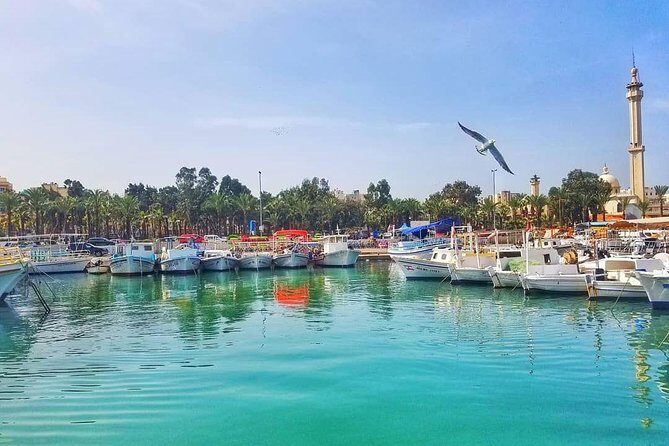
After the old-city center, the tour keeps expanding the Tripoli story in two different directions: maritime continuity and modern-era ambition.
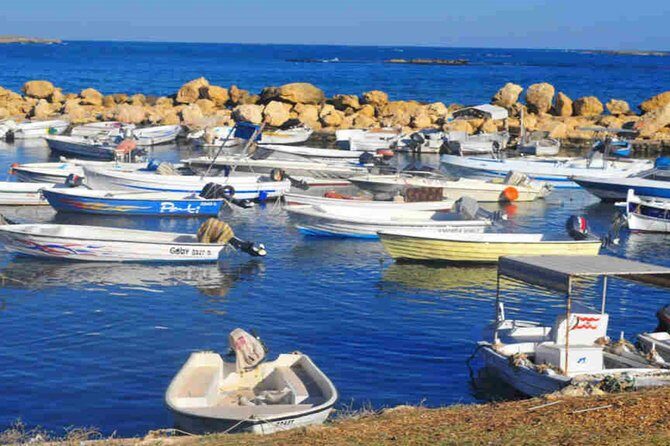
At El Mina Port, you’re in the coastal area linked to the old Phoenician city of Tripoli. The port today connects to modern harbor life, but the setting carries older roots. A highlight is the mention of islands nearby—nine islands, with four natural reservations designed to protect fish breeding and preserve habitat. Even if you don’t take a boat, the port stop gives you a sense of why Tripoli has always been tied to the sea.
Then there’s Rachid Karami International Fair, located at the exhibition center named after the Lebanese leader Rachid Karami. Here’s the twist: it’s tied to one of the world’s biggest exhibition-center dreams, designed by Oscar Niemeyer in 1963 with 15 structures—but the project was abandoned during the civil war in 1975, leaving the complex unfinished. If you’re the kind of person who likes modern history alongside ancient architecture, this stop adds contrast to the day.
Finally, you’ll hit Hallab 1881, a landmark for Lebanese sweets originating from Tripoli. It’s associated with Abdul Rahman Hallab and his legacy starting in 1881. The “Kasr El Helou” name is tied to a famous sweets-focused destination that people from around the region visit in large numbers. Even if you don’t snack heavily, I’d treat this as a moment to end the Tripoli portion on something tasty and simple.
Batroun’s Phoenician Wall: the coast’s oldest defense
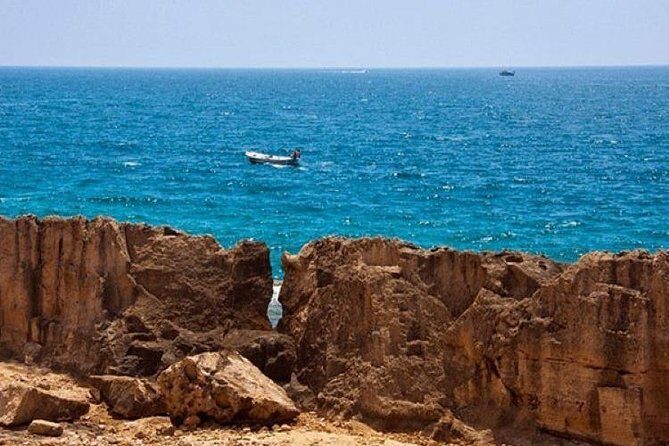
When the day shifts to Batroun, the mood changes. Batroun is described as one of the world’s oldest cities, with a Phoenician metropolis foundation over three millennia ago. It sits along the Mediterranean and is known for ancient churches and castles, citrus fruit, beaches, and nightlife.
The main payoff in this tour is the Phoenician Wall. This isn’t a decorative relic—it’s a physical coastal defense story that stretches 225 meters in length and is about 1 to 1.5 meters thick. The wall’s shape took its present form around the first century BC, after the Phoenicians reinforced a natural structure made from petrified sand dunes. Roman times later turned it back into a quarry, so parts crumbled and changed over time, but what remains still forms a bulwark against storms for local residents.
If you like travel that connects you to place through function, this is your stop. You’re not just looking at an ancient wall; you’re standing in the logic of coastal survival.
Lunch, guide chat, and how to get more out of the day
The tour includes lunch at an authentic Lebanese restaurant, which is exactly how a good guided day should feed you: with local food that fits the rhythm of the sites you’ve been visiting. I like this because it keeps the day cohesive. You’re not scrambling for a meal between monuments—you’re given time to refuel with something that tastes like the region.
The guide interaction is another big part of why this tour works. Based on standout feedback about guide Albert, the explanations aren’t just architectural notes. You also get room for conversation—about the sites and also about current situations in Lebanon and even the wider world. That human layer matters. It turns “here’s a mosque” into “here’s what it meant, what it became, and why it’s still part of daily life.”
To get the most out of the lunch and conversations, do this: ask one practical question you actually care about. For example, ask how Tripoli’s markets and trade areas function today, or what to watch for when you walk through other historic cities.
Price and value for $65 with pickup and lunch
At $65 per person, this day trip is priced for what you get: hotel pickup and drop-off, guided visits, air-conditioned transport, a small-group format (max 15), and a lunch included with authentic Lebanese food.
If you tried to build this yourself, the costs would creep up quickly—private transport from Beirut to multiple neighborhoods, plus the time cost of finding the right entrances and understanding what you’re looking at. Here, you pay for organization. The one line-item to consider is the Citadel Saint Gilles admission, which is not included. Everything else listed is free entry, so the Citadel is the main place where you might need to pull out a little extra cash.
Also, timing matters. An 8-hour day can be a lot more valuable than a half-day if the guide is steering you through the right spots in the right order. This route does that by clustering related sights in Tripoli and then finishing with Batroun’s most distinctive coastal feature.
Should you book this Tripoli and Batroun tour?
Book it if you want a guided day that feels practical and local: small-group attention, real city fabric (souks, khans, hammams), and a meaningful coastal finish at the Phoenician Wall. The included lunch is a strong plus, and free entry at most stops helps keep the day manageable.
Skip it if you hate short stops and lots of walking. Tripoli rewards curiosity, but you’ll be moving through older streets where the pavement isn’t modern-smooth. Also, if you don’t want to pay extra for one major site, plan for the Citadel admission.
If you’re the kind of person who likes reading architecture as a timeline—Fatimid, Crusader, Mamluke, Ottoman—and seeing how trade shaped a city, this tour is a good fit.
FAQ
What time does the tour start?
The tour starts at 8:30 am.
How long is the day trip?
The duration is about 8 hours.
Is lunch included?
Yes. Lunch is included at an authentic Lebanese restaurant.
Does the tour include hotel pickup and drop-off?
Yes. Hotel pickup & drop-off in Beirut is included.
How large is the group?
The tour has a maximum of 15 travelers.
Do I need to pay admission fees for the sites?
Most listed stops have free admission, but Citadel Saint Gilles (Qal’at Sinjil) notes admission is not included.
What’s the price per person?
The price is $65.00 per person.
What is the cancellation policy?
You can cancel for a full refund up to 24 hours before the experience’s start time.