REVIEW · BEIRUT
Half-Day Private Panoramic Tour of Beirut
Book on Viator →Operated by Lebanon Tours & travels · Bookable on Viator
Beirut in five hours is plenty. With hotel pickup and a private, customizable route, this half-day panoramic tour helps you get your bearings fast while your guide handles the driving, timing, and logistics. I especially like the way you can shape the day around your interests, not some rigid checklist, but one catch is that the clock moves and some stops are short photo breaks.
I also love the mix of scenes: seaside icons like Pigeon Rocks, then downtown landmarks like the major mosques and churches. Our guide Albert kept things smooth and flexible, and you’ll feel that in how the stops are paced—no frantic sprinting, but it still runs like a well-timed route.
By the end, you’ve seen the big Beirut moments and still keep the rest of the day to yourself. That’s a good deal if you’re working with limited time and want more than a bus-tour overview.
In This Review
- Key highlights worth your attention
- How the half-day panoramic format keeps Beirut manageable
- Pigeon Rocks and Raouche Corniche: the postcard start
- Zaytouna Bay: modern waterfront strolls and a war-memory stop
- Martyr’s Square to Place de l’Étoile: downtown geometry and monuments
- Mohammad Al-Amin Mosque, Al-Omari Mosque, and St. George Cathedral
- Mohammad Al-Amin Mosque (the so-called Blue Mosque)
- Al-Omari Mosque
- Greek Orthodox Cathedral of Saint George
- Beirut Souks and Roman Baths: shopping + ancient streets
- Beirut Souks
- Roman Baths (Roman Berytus Baths)
- Price and logistics: is $75 per person worth it?
- Who this tour suits best (and who should rethink it)
- Should you book? My practical take
- FAQ
- Is hotel pickup and drop-off included?
- How long is the tour?
- Is this tour customizable?
- Are admissions included?
- What’s included in the price?
- Is it really private, or will I be joining strangers?
- Where does the tour take you during the half day?
Key highlights worth your attention
- Hotel pickup + drop-off so you can start in the right place without planning
- A customizable route where you choose the emphasis across downtown and waterfront sights
- Iconic stops in a tight loop: Pigeon Rocks, Zaytouna Bay, Martyr’s Square, and the Souks
- Real faith landmarks on the same day (mosques and a major Orthodox cathedral)
- Free admissions listed for many stops, helping your budget stay under control
How the half-day panoramic format keeps Beirut manageable
This is built for people who want a lot of Beirut in a single session, without doing the exhausting thing where you bounce between places on your own time. You get a private tour setup—your group only—and a guide plus driver who take care of the moving parts.
The value here is the combination of structure and freedom. You’ll follow a set of major areas that make sense geographically, but you don’t have to treat it like a fixed museum circuit. Your guide can steer the order and attention based on what you care about most—downtown monuments, waterfront views, religious sites, or shopping-and-stroll time.
The other practical point: it’s about orientation. You’re not trying to “see everything in Beirut,” because that’s not the point. You’re trying to leave with a clear sense of the city’s layout: the western coastline, the downtown core, and the places where life moves in clusters—squares, promenades, and markets.
And because it’s half-day, you don’t feel trapped. After the tour window ends, you still have time to extend the parts you liked most—whether that’s lingering at a waterfront, grabbing lunch on your schedule, or doing a slower walk through the Souks.
You can also read our reviews of more private tours in Beirut

Pigeon Rocks and Raouche Corniche: the postcard start
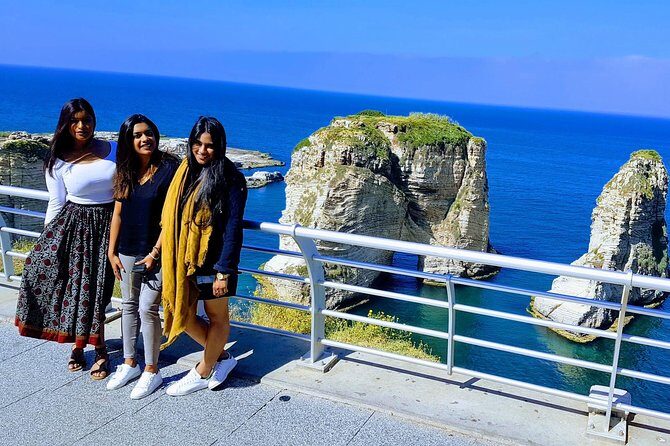
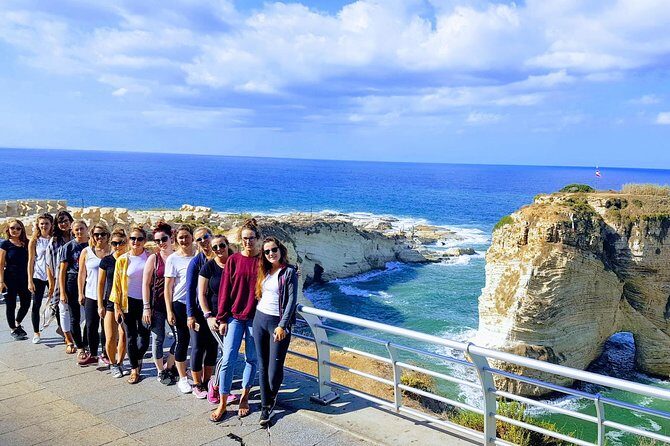
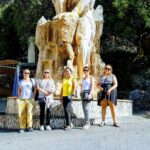
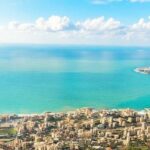
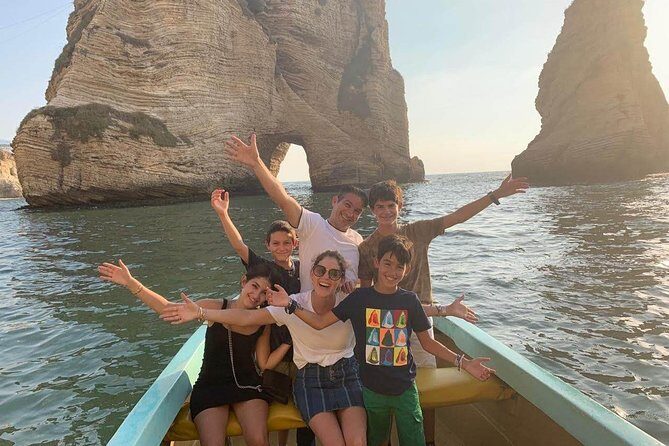
Most panoramic tours in Beirut begin where the views already do half the work—and that’s exactly what happens at Pigeon Rocks (Raouche). These towering rock formations at the western tip of the city are one of Beirut’s most recognizable coastal images. It’s a simple stop but a strong one: you get the scenery, you understand the coastline’s shape, and you get oriented for everything else you’ll see later.
What I like about starting here is the perspective shift. Beirut isn’t just a downtown story; it’s a city with a dramatic edge of sea and rock, and Raouche shows that immediately. You also get a quick “reset” before you move inward toward the dense downtown streets.
Right after that, you transition to Al Manara Corniche, the famous seaside promenade stretching along the waterfront toward the Saint George marina area. This is the part where you can see the water line for long stretches and take in the way the Mediterranean frames the city.
Practical tip: because this is a short visit (it’s listed as about 15 minutes for the Corniche segment), plan to move efficiently—camera ready, quick photos, and then use your time to soak in the view rather than trying to cover every angle.
Zaytouna Bay: modern waterfront strolls and a war-memory stop
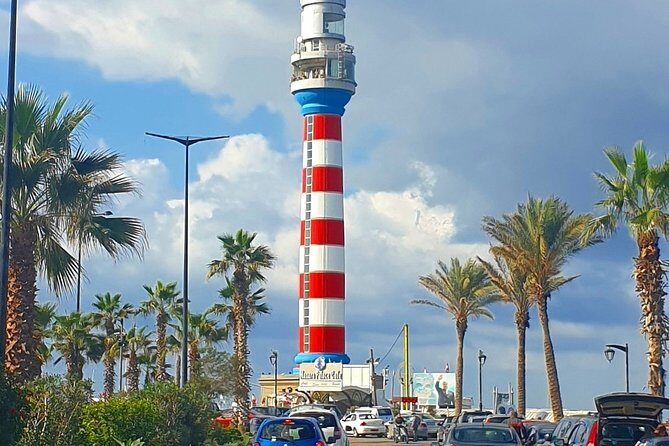
Next comes Zaytouna Bay, a newer waterfront promenade with shops and restaurants. If you want to understand where Beirut is headed (not just where it has been), this stop gives you a clean, contemporary slice of the city. It’s also an easy place to get your bearings because it’s designed for strolling—an in-between zone between “sightseeing” and “doing.”
The time here is brief, so I’d treat it like a chance to watch how people move, grab a cold drink if it’s offered, and decide later if you want to return.
Then the tour makes a thoughtful turn: a stop near an abandoned Holiday Inn Hotel that’s known as a war landmark. This is one of those places where you don’t need a long explanation to feel the weight of what you’re seeing. The hotel was built during a booming era in the early 1970s, it later became part of the long conflict period often called the Battle of the Hotels, and decades later the building remains untouched—an unfiltered reminder of what happened.
Even though it’s emotionally heavy, it’s also historically useful. It puts Beirut’s “present-day sightseeing” into context. You start understanding why certain downtown areas feel layered—beautiful, meaningful, and scarred at the same time.
If you’re the kind of visitor who prefers to keep the day light, this may be the toughest moment. On the other hand, if you want Beirut to make sense beyond Instagram photos, it’s a real anchor point.
Martyr’s Square to Place de l’Étoile: downtown geometry and monuments
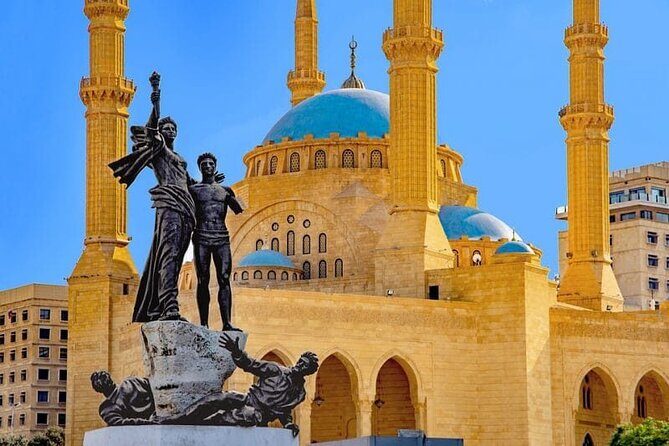
From there, you head into the heart of downtown with stops that act like landmarks on a map. Martyr’s Square is central—historically tied to what used to be called Al Burj and Place des Cannons. It’s named for executions in 1916, and the square’s identity is built into its name and location.
This is a good pause because it helps you understand how Beirut’s downtown formed around major civic spaces. You’ll feel the “center of gravity” of the city here: squares, official buildings, and the kind of street life that spreads outward.
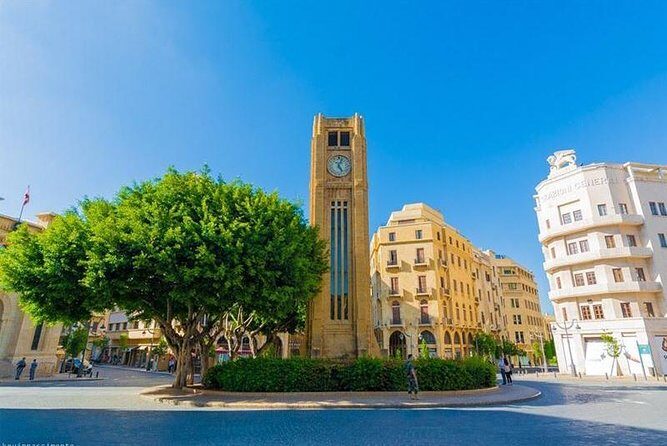
A short move brings you to Place de l’Etoile (Nejme Square), also associated with the Lebanese Parliament and nearby institutional buildings, including cathedrals and a museum area. This square is known internationally for its four-faced clock and for its recognizable architecture.
I like squares like this because they do two jobs at once. They’re places you can look up and orient, and they’re places where you can sense how the city is organized. If you come to Beirut and only see waterfront and markets, you miss the political and civic spine that shapes the city’s rhythm.
Time-wise, the stop is listed as around 10 minutes for the square segment. That means you’ll want to focus on one or two priorities: get the classic photo, look around at the buildings that frame the space, then move on.
Mohammad Al-Amin Mosque, Al-Omari Mosque, and St. George Cathedral
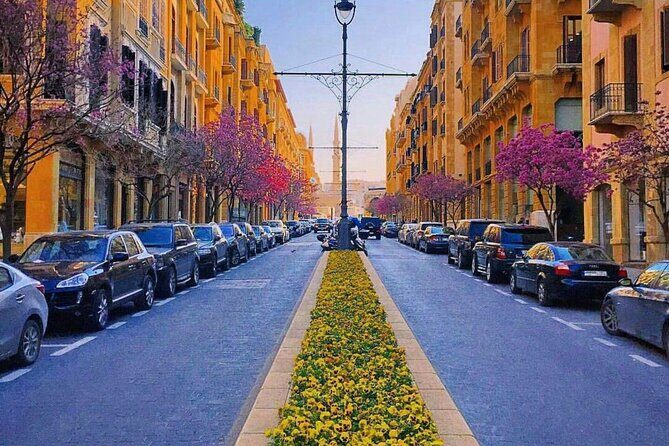
Beirut has a strong religious-and-architectural mix, and this tour uses it efficiently. You get multiple major sites that show different eras and traditions, all within a practical routing loop in downtown.
A few more Beirut tours and experiences worth a look



Mohammad Al-Amin Mosque (the so-called Blue Mosque)
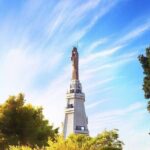
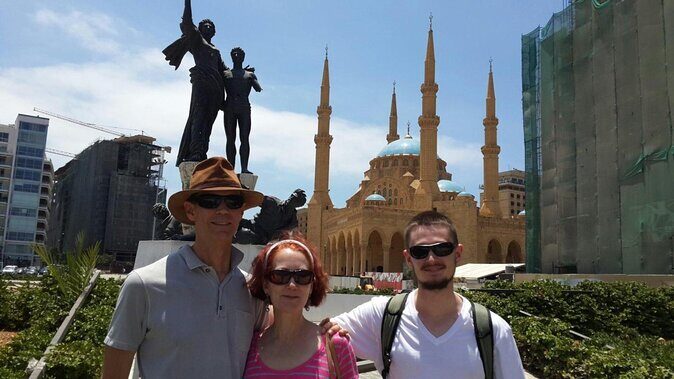
Mohammad Al-Amin Mosque is one of Lebanon’s biggest mosques and a major downtown presence near Martyr’s Square. It opened in the late 2000s and is known for its tall minarets and multiple domes. The light blue tiling across the domes gives it its nickname in popular conversation.
What makes this stop worth your attention isn’t just the scale. It’s the contrast: you’re standing near historic squares, then you see a huge, modern monumental mosque with a carefully designed interior look that feels both traditional and newly built.
Plan for a short visit (about 15 minutes listed). If you want photos, do them quickly and leave time to take in the full structure rather than only the most obvious angle.
Al-Omari Mosque
Next is Al-Omari Grand Mosque, tied to deep time: it’s described as originally built in the era of Omar bin Al Khattab in 635 AD, later converted to a church during the Crusader period, and then retransformed into a mosque by the Mamluks in 1291. Damage during the civil war led to refurbishment, completed in 2004.
This is the kind of site where history is layered in the building’s identity. It’s not one era frozen in time—it’s a building that changed hands and purposes across centuries.
Because the stop is also listed around 15 minutes, it’s ideal if you’re comfortable with a “see and absorb” pace rather than a long guided deep read.
Greek Orthodox Cathedral of Saint George
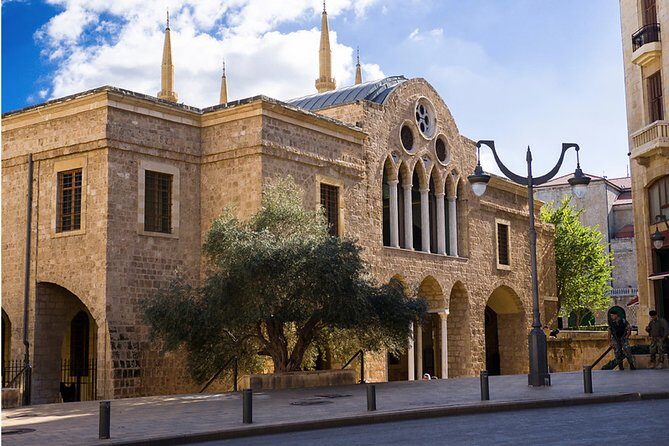
Then you shift to Greek Orthodox Cathedral of Saint George, described as the oldest church in Beirut and associated with the Greek Orthodox Metropolitan bishop of Beirut. It’s located in the city center and is linked with a temple site dating back to the mid 6th century AD.
This stop broadens the day in a meaningful way. Seeing a cathedral after mosques helps you understand Beirut not as a single cultural story, but as a shared urban space with many communities and long timelines.
Like the other downtown religious stops, it’s brief (about 15 minutes). It’s enough to get oriented and appreciate the architecture and setting—especially if you’re the kind of traveler who likes to compare styles and time periods.
Beirut Souks and Roman Baths: shopping + ancient streets
After the downtown monuments, the tour gives you two very different kinds of “feel the city” stops.
Beirut Souks
Beirut Souks is the commercial district in the city center, with many shops, cafes, and restaurants, plus a cinema complex. It’s basically built for browsing and stopping, not just photographing. Even if you’re not shopping, it’s a useful place to see how Beirut’s downtown leisure works.
The stop is listed as around 10 minutes, so don’t plan to window-shop like you have an hour. Treat it as a taste: walk through a few lanes, notice the variety, and if something catches your eye, decide later if you want to return after the tour ends.
Roman Baths (Roman Berytus Baths)
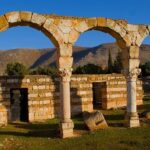
Next is one of the biggest outdoor ancient remnants in downtown: the Roman Baths (Roman Berytus baths). The baths were discovered in the late 1960s, renovated in the mid 1990s, and are tied to early Roman-era construction under Augustus. An earthquake in 551 AD destroyed the baths, and today the site reflects those ancient traditions, with one bath complex used for artistic performance and concert space.
I love this stop because it breaks the pattern of “modern monuments only.” Beirut has deep roots, and the Roman Baths offer a physical sense of age in the middle of a modern city.
It’s listed as about 15 minutes, which is just enough to understand what you’re looking at and appreciate why this site matters.
Price and logistics: is $75 per person worth it?
At $75 per person for a private half-day, the value depends on one thing: how much you’d otherwise pay to cobble together transport, find someone reliable to guide you, and keep your time tight.
You’re not only buying a list of sights. You’re buying:
- hotel pickup and drop-off, which matters in a city where moving around can take effort
- a private air-conditioned vehicle, which is practical for comfort and pacing
- professional guidance, especially useful when you’re moving across religious sites and historic downtown areas
Also, many stops are listed with free admission. That helps keep the day from turning into an expensive “fees add up fast” outing. Lunch is not included, so you’ll want to plan your meal separately. But you’re not paying an extra big mandatory cost just to visit the sights.
If you’re traveling as a couple, a small group, or as friends who want control over what matters to you, private often becomes the smart move. You get flexibility without losing the benefits of a driver and guide.
Who this tour suits best (and who should rethink it)
This tour is a strong fit for you if:
- you’re short on time and want the downtown core plus the seaside
- you enjoy architecture and landmarks, including mosques and churches
- you want a guide who can adjust the day instead of forcing a fixed itinerary
- your group values convenience: pickup, transport, and logistics handled
You might rethink it if:
- you prefer unhurried exploration with long museum time (this is short by design)
- you want fewer emotional-history stops (the abandoned Holiday Inn war landmark may be intense)
Because the tour is private, your preferences matter. The whole point is tailoring the emphasis.
Should you book? My practical take
If you want a fast, high-impact orientation to Beirut—with the kind of guidance that helps you connect the dots between waterfront views, downtown civic spaces, major religious landmarks, and even Roman-era remains—this is a good bet.
For me, the biggest strengths are the flexible private format and the way the route covers both the sea and the city center in a sensible loop. Add in the praised professionalism and flexibility of guide Albert, and you’ve got a tour that doesn’t just move you from stop to stop—it helps you shape the day.
Book it if you’re the type who likes seeing the major highlights, then using the rest of your time to go deeper on what you loved most.
FAQ
Is hotel pickup and drop-off included?
Yes. Round-trip transfers from your Beirut hotel are provided, so you don’t have to arrange separate transport to start or end the tour.
How long is the tour?
It’s a half-day private tour, listed at about 5 hours approximate.
Is this tour customizable?
Yes. The tour is private and you can tailor it to your group’s interests. You’re not locked into a single fixed itinerary.
Are admissions included?
Many of the listed stops show admission ticket free, and the tour includes local guidance. Lunch is not included.
What’s included in the price?
The price includes hotel pickup and drop-off, comfortable private transportation (air-conditioned vehicle), professional knowledgeable guides, and local authentic experiences.
Is it really private, or will I be joining strangers?
It’s a private tour/activity. Only your group will participate.
Where does the tour take you during the half day?
You’ll visit major Beirut areas such as Pigeon Rocks in Raouche, Zaytouna Bay, Martyr’s Square, Mohammad Al-Amin Mosque, Al-Omari Mosque, the Greek Orthodox Cathedral of Saint George, Place de l’Etoile, Beirut Souks, and the Roman Baths.