REVIEW · BEIRUT
Private Guided Tour to Sidon, Tyre and Maghdouche from Beirut
Book on Viator →Operated by Lebanon Tours & travels · Bookable on Viator
Sidon and Tyre in one smooth day beats traffic stress. I like the private door-to-door transfers (so you spend less time wrestling roads and more time looking up at old stone) and the way the route mixes Crusader-era Sidon with UNESCO Roman Tyre. One thing to plan for: the tour price covers the guide and transport, but entrance fees are not included, and a couple of stops can cost extra.
You’ll start around 9:00am in an air-conditioned vehicle, guided by a professional who can connect Phoenician, Roman, Crusader, and local Lebanese culture into one day. The main “trade-off” is simple: it’s about 8 hours, so each site gets focused time rather than a slow wander.
In This Review
- Key takeaways before you go
- Sidon and Tyre: why this day tour works
- Door-to-door logistics from Beirut (and what to expect)
- Sidon’s Sea Castle, Khan al-Franj, souks, and the soap tradition
- Sea Castle: what’s left of a Crusader fortress
- Khan al-Franj: a working courtyard feel
- Sidon souks: small lanes, crafts, and quick bites
- Soap museum: local craft made visitor-friendly
- Maghdoucheh’s Our Lady of Mantara shrine: a calm break in the middle
- Tyre UNESCO ruins: Al-Bass and the Roman hippodrome complex
- Tyre itself: Phoenician roots, purple dye lore, and seaside energy
- Al-Bass: where Roman architecture becomes your main character
- Time, walking, and what to budget for (entrance fees and lunch)
- What’s covered
- What costs extra
- $100 value check: what you’re really paying for
- The guide experience: how history turns into understanding
- Who this tour suits best
- Should you book this Sidon, Tyre, and Maghdouche tour?
- FAQ
- What’s included in the $100 per person price?
- Are entrance fees included?
- Is lunch included?
- How long is the tour, and when does it start?
- Do you get pickup and drop-off from Beirut hotels?
- Is this a private tour?
- Can I cancel for a full refund?
Key takeaways before you go
- Door-to-door comfort from Beirut means less time in the car and more time on site.
- Sidon’s Sea Castle and Khan al-Franj give you a feel for the port city’s layered past.
- Tyre’s UNESCO Roman remains are the big visual payoff, especially at Al-Bass.
- A practical religious stop at Our Lady of Mantara in Maghdoucheh breaks up the day.
- Lunch and some entrances cost extra, so budget for those up front.
- Local guidance can make it click, from Tyrian purple to soap-making traditions.
Sidon and Tyre: why this day tour works
Beirut is a launchpad, and this route is one of the best ways to hit two major ancient Phoenician cities without turning the day into a long, disorganized checklist. Sidon was a powerhouse in the ancient world—known for purple dye and glassware—and it later got reshaped by Crusaders and Mamluks. Tyre followed a different arc, but it’s just as important: a famous port city with UNESCO World Heritage status for its archaeological remains.
What I like about the format is that it doesn’t treat history like trivia. It gives you visible anchors: a Crusader fortress in Sidon, then Roman monumental architecture in Tyre, and a living shrine stop on the way home in Maghdoucheh. If you enjoy connecting the dots between eras—Phoenician to Roman to medieval—you’ll find plenty to think about.
You can also read our reviews of more guided tours in Beirut

Door-to-door logistics from Beirut (and what to expect)
This is a private tour, so you’re not sharing time slots with random groups. Pickup and drop-off are included, and the drive is done in an air-conditioned vehicle with a tour leader and a professional guide.
A few practical points matter here:
- Timing is tight but realistic: the day runs about 8 hours, starting around 9:00am. You’ll have enough time to see the core highlights, not enough time to “linger forever.”
- The itinerary is built to reduce friction: it’s designed so you’re not piecing together transportation across southern Lebanon on your own. One review even praised how the usual traffic headaches were barely part of the day.
- Mobile ticket included: it’s a simple touch, but it helps if you want less admin when you’re traveling.
If you hate rushing, manage expectations. You’ll move from stop to stop with short windows—so bring comfortable shoes and a plan to take photos quickly and then look longer.
Sidon’s Sea Castle, Khan al-Franj, souks, and the soap tradition
Sidon gets a generous opening chunk—about 2 hours—and it’s smart because Sidon’s story isn’t just one monument. It’s a port city that has been rebuilt, re-used, and reinterpreted again and again since antiquity.
Sea Castle: what’s left of a Crusader fortress
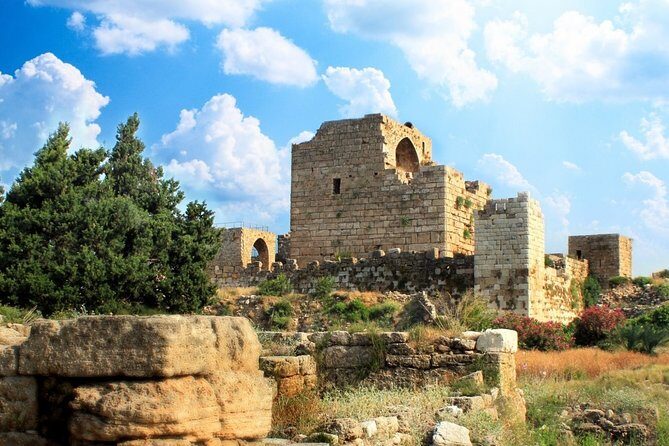
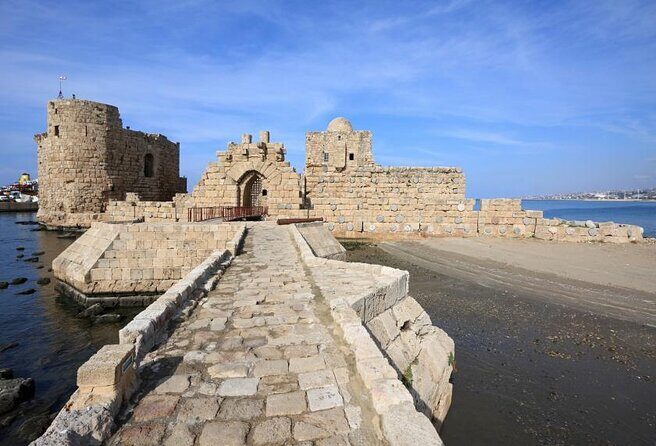
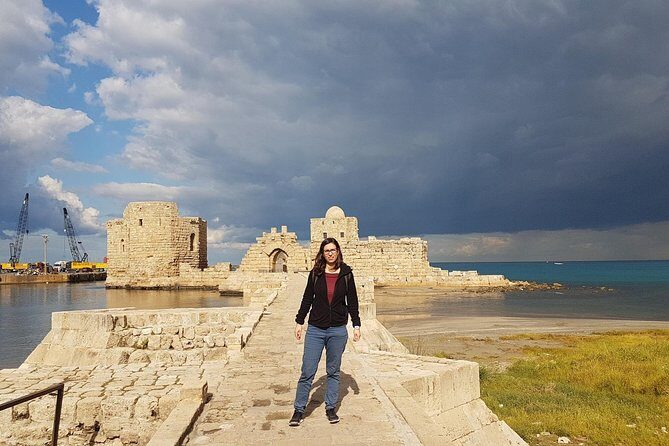
The Crusaders Sea Castle is the signature stop here. The fortress was built in the 13th century by the Crusaders on a small island, linked to the mainland by a causeway. You can imagine why that location mattered: control the harbor, guard the approach.
Reality check: the site has been largely destroyed, including damage by the Mamluks in 1291. Later, it was restored in the early 17th century. So what you see today is part of a bigger story, not a perfectly preserved original.
You’ll likely have around 30 minutes here. That’s just enough time to walk the main areas, orient yourself, and notice how the setting (water, causeway, fortress geometry) shapes the experience.
Khan al-Franj: a working courtyard feel
Next is Khan al-Franj, a traditional caravanserai-style complex built in the early 17th century. It started as a center for ambassadors and commercial exchange between Lebanon and France, and it became a hub for literature and diplomacy.
This is the kind of place that works even if you’re not a hardcore architecture person. The layout—a large rectangular courtyard, a central fountain, and covered galleries—gives you a sense of how people once moved through business, conversation, and politics. Expect about 15 minutes.
You can also read our reviews of more private tours in Beirut



Sidon souks: small lanes, crafts, and quick bites
Then you’ll step into the Sidon souks for about 15 minutes. It’s a maze of narrow alleyways with shops and tiny stalls—tailors, shoe-makers, jewelers, grocers, and more. Even if you don’t buy anything, it’s useful for understanding how the city still functions as a commercial port.
Best approach: move slowly for 2–3 lanes, then grab a quick drink or snack if you’re in the mood. This isn’t the time for a long shopping spree.
Soap museum: local craft made visitor-friendly
The tour overview also includes the Soap Museum as part of the Sidon experience. That matters because you’re not only seeing big political history; you’re learning how a tradition connects to daily life—how soap-making can be part of cultural identity, not just a souvenir.
Keep in mind: the exact time given to the soap museum can affect how quickly you move through the rest of Sidon.
Maghdoucheh’s Our Lady of Mantara shrine: a calm break in the middle
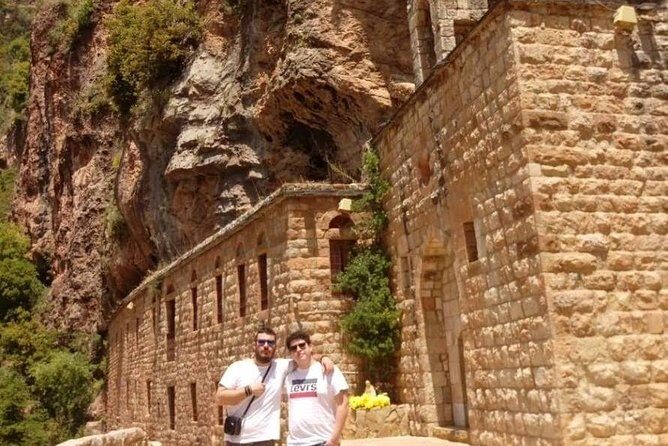
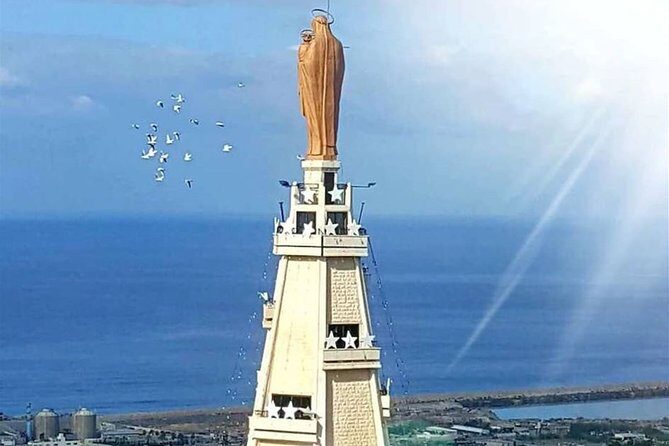
On the way home, you stop at Our Lady of Mantara (also known as Our Lady of Awaiting) in Maghdouché for about 20 minutes.
This is a Melkite Greek Catholic shrine discovered on 8 September 1721 by a young shepherd. The site includes:
- a tower topped with a statue of the Virgin and Child
- a cathedral
- a cemetery
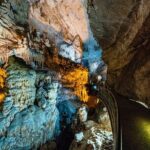
- a sacred cave believed to be where Mary rested while waiting for Jesus
The reason this stop works in the middle of a history-heavy day is pacing. After Tyre and Sidon, it gives you a human-scale, spiritual landmark that feels more present-day than ancient ruins. It also makes the drive feel purposeful rather than purely logistical.
If your religious practice includes visiting shrines, this stop is one of the best reasons to pick this specific itinerary.
Tyre UNESCO ruins: Al-Bass and the Roman hippodrome complex
Tyre is the headline. The tour includes about 2 hours in Tyre itself, and then an additional 1 hour at the Al-Bass Archaeological Site—the portion most people picture when they think of Roman Tyre.
Tyre itself: Phoenician roots, purple dye lore, and seaside energy
Tyre was another powerhouse Phoenician port city, linked to Elissar, the princess associated with the founding of Carthage. You’ll also hear about Tyre’s famous purple dye, traditionally associated with murex sea snails.
You also get the “place” factor. Tyre has a strong seaside setting and clean beaches, so even the breaks in the ruins feel like a real town visit—not just a stop for monuments.
Al-Bass: where Roman architecture becomes your main character
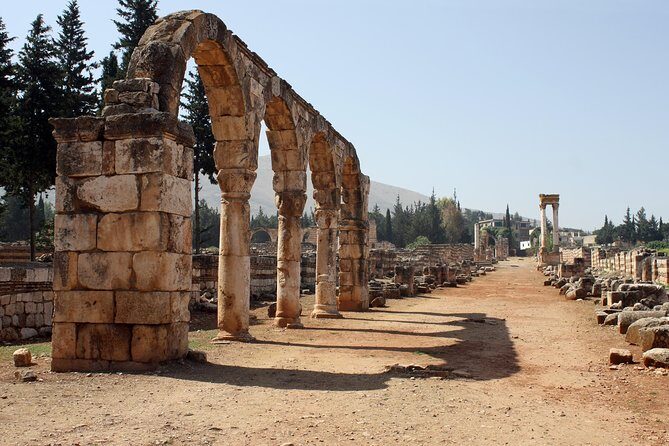
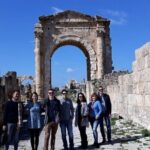
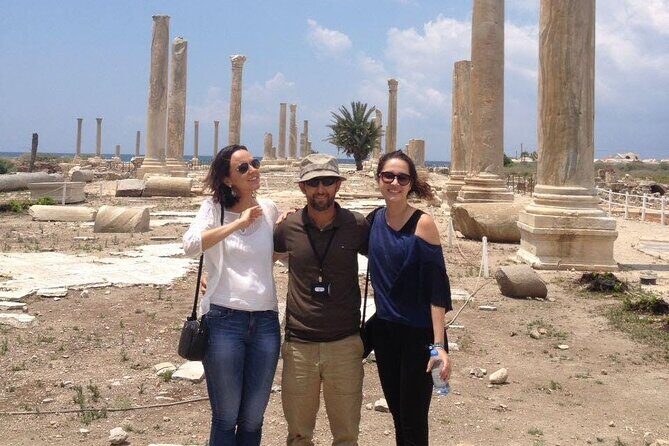
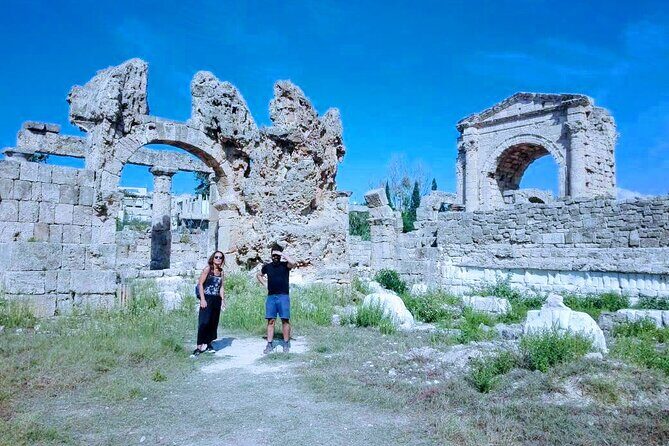
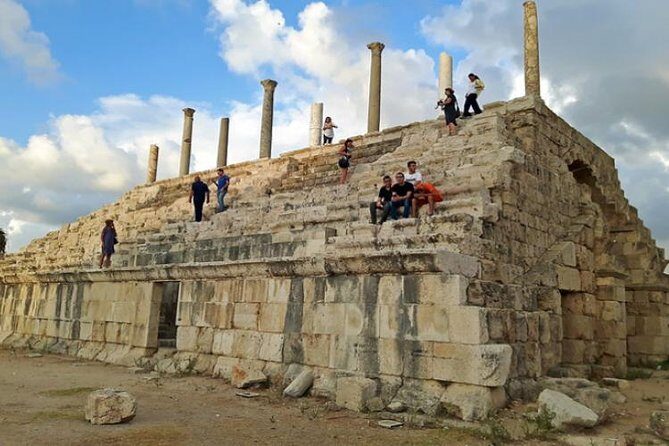
At Al-Bass, you’re stepping into one of the best-preserved examples of a Roman hippodrome. The entrance zone in ancient times included a wide causeway and a Roman triumphal arch from the 2nd century AD.
This part is worth it because it’s packed with variety. You can expect to see:
- a necropolis with several hundred well-preserved sarcophagi
- an intact Roman road
- an aqueduct
- the monumental arch
- the hippodrome area itself
Entrance fees aren’t included here, so plan on that cost.
Walking through a site like this teaches you something quickly: the Romans didn’t just build buildings—they built a whole system for movement, ceremony, and entertainment. A guide who explains what you’re looking at can turn “big ruins” into a clear mental map.
Time, walking, and what to budget for (entrance fees and lunch)
This tour is built around set time windows, so your comfort depends on your tolerance for short hops between sites.
What’s covered
Included in the $100 per person price:
- comfortable private transportation
- hotel pickup and drop-off
- tour leader / professional guide
- air-conditioned vehicle
What costs extra
Not included:
- Lunch
- Entrance fees at certain sites (the Sea Castle and Al-Bass are specifically flagged as not included)
So you’ll want to budget for at least:
- a paid site fee or two
- lunch (and possibly drinks)
My practical advice: if you’re the type who hates guessing, ask ahead what entrance fees are likely for the specific dates you’re traveling. That way the day stays fun instead of math-heavy.
$100 value check: what you’re really paying for
At $100 per person, the tour is less about buying “more sightseeing” and more about buying less hassle.
You’re paying for:
- a private vehicle with A/C
- pickup and drop-off
- a guide who helps you interpret what you see (and keeps the day from feeling chaotic)
If you tried to do Sidon and Tyre on your own, you’d likely spend extra time coordinating transportation, and you might miss context that makes ruins readable. That’s where a good guide changes the experience from scenic photos to real understanding.
Also, a couple of reviews highlighted how the day felt easy on the road and that lunch arrangements were part of the overall enjoyment, even though lunch isn’t included in the price. If you’re traveling during a period where exchange rates are favorable, that can add to the perceived value.
The guide experience: how history turns into understanding
The best days with ancient sites aren’t just about monuments—they’re about interpretation. In past trips with this operator, guides like Hassane were praised for the way they made the whole tour flow, and other reviews specifically name Kamil and Kassim as helpful, polite, and strong on local context.
What matters for you:
- You’ll hear about Phoenician purple dye, but explained in a way that connects to culture rather than sounding like a school worksheet.
- You’ll also get traditions close to hand, like soap-making, which helps Sidon feel more than an ancient label.
If you care about “why this place matters,” you’ll get more out of this tour than a straight photo-walk.
Who this tour suits best
This is a great match if:
- you’re short on time in Beirut but want two major ancient cities
- you don’t want to fight Lebanese driving or logistics between sites
- you like your history with a guide who can explain what you’re seeing
- you want a day that includes both ruins and a living shrine stop
It may be less ideal if:
- you want long, slow stays at every monument
- you hate any extra costs beyond the advertised price (because entrances and lunch are not included)
Should you book this Sidon, Tyre, and Maghdouche tour?
Book it if you want a balanced day: Crusader Sidon, UNESCO Roman Tyre, and a meaningful stop at Our Lady of Mantara—without the stress of planning drives and schedules yourself. The private pickup and the focused itinerary are the main reasons it feels good value.
Skip it if your priority is total freedom to linger for hours at a single site, or if you’re trying to lock down a “no surprise costs” budget. Entrance fees and lunch will factor in.
If you’re aiming for the best mix of comfort and real highlights in southern Lebanon, this one is a strong choice.
FAQ
What’s included in the $100 per person price?
The price includes hotel pickup and drop-off, a tour leader/professional guide, and comfortable private transportation in an air-conditioned vehicle. A mobile ticket is included as well.
Are entrance fees included?
No. Entrance fees are excluded, and some sites are explicitly listed as not included, such as the Crusaders Sea Castle and the Al-Bass Archaeological Site.
Is lunch included?
No. Lunch is not included in the tour price.
How long is the tour, and when does it start?
It’s about 8 hours and typically starts at 9:00am.
Do you get pickup and drop-off from Beirut hotels?
Yes. Hotel pickup and drop-off are included.
Is this a private tour?
Yes. It’s a private tour/activity, meaning only your group participates.
Can I cancel for a full refund?
Yes. The policy allows free cancellation up to 24 hours before the experience’s start time for a full refund.