REVIEW · BEIRUT
Guided Full-Day Private Trip to Cedars, Baalbek and Chateau Ksara
Book on Viator →Operated by Lebanon Tours & travels · Bookable on Viator
A day in Lebanon where ancient stones and cedar shade both win. This private full-day trip is a smart mix of Baalbek Roman temples and Chouf cedar forest walking, with a wine tasting stop in the Beqaa Valley for a little balance. I especially like the way the day threads together big-name sights with hands-on time at each place, plus the fact you get a driver-guide and a local guide in Baalbek. One thing to keep in mind: lunch isn’t included, so you’ll want to plan for food breaks.
The big value here is simple: you spend less time figuring out transport and more time actually seeing things. You leave Beirut in the morning in an air-conditioned private vehicle, get hotel pickup and drop-off, and move through the day on a schedule that covers history, religion, wine, and nature without feeling like you’re sprinting.
In This Review
- Key points worth getting excited about
- Private Beirut Pickup to Beqaa Valley: How the Day Flows
- Baalbek Roman Temples: Bacchus, Jupiter, and the Scale Shock
- What to watch for during your visit
- A practical note on tickets
- The Story Behind Sayyida Khawla, Plus the Stone of the Pregnant Woman
- Why these two stops work well
- Château Ksara Wine Tasting in the Beqaa Valley
- How to make the most of your hour
- Maasser el Chouf Cedar Nature Reserve: A Real Hike Among Lebanon’s Cedars
- What to consider for the cedar walk
- Price and What You’re Really Paying For (Including Tickets and Lunch)
- Who This Tour Fits Best
- Should You Book This Private Cedars, Baalbek, and Ksara Tour?
- FAQ
- How long is the private tour?
- What time does the tour start?
- Is hotel pickup and drop-off included?
- Is lunch included?
- Are entrance tickets included for every stop?
- What’s the cancellation policy?
Key points worth getting excited about
- Baalbek with a local guide that helps the Roman scale make sense
- UNESCO-listed Roman temples at Heliopolis, including the Temple of Bacchus and Jupiter
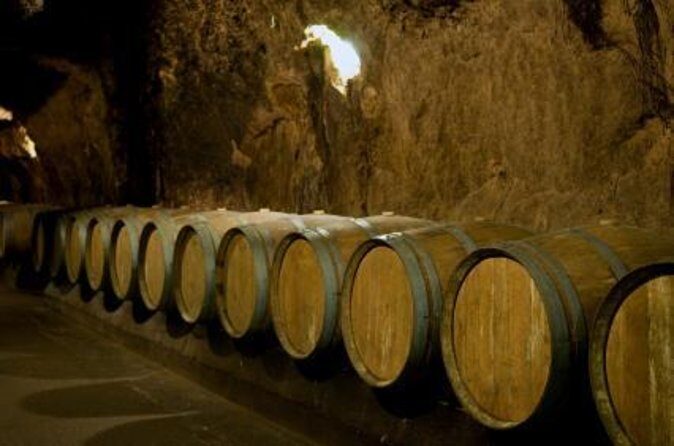
- Château Ksara wine tasting tied to Lebanon’s first dry wine legacy
- A proper cedar walk in Maasser el Chouf Cedar Nature Reserve on Barouk Mountain
- Some admissions are free while others aren’t included, so you can budget smoothly
- Private pickup and drop-off means a calmer day than public transport
Private Beirut Pickup to Beqaa Valley: How the Day Flows
You start around 8:30 am with pickup from your Beirut hotel, then settle into a private, air-conditioned vehicle with a driver-guide for the day. This matters more than it sounds. The distances in Lebanon can add up fast, and having one trusted person managing the route saves you energy for the sights.
The trip runs about 9 hours total, so it’s a full day. That’s good if you like efficiency, but it also means you’ll want to pace yourself: hydrate early, keep sunscreen handy, and wear shoes you’re comfortable walking in. The itinerary includes a hike later in the day, so a lighter meal or snacks earlier can make the cedar forest portion feel easier.
Because the tour is private, you’re not stuck waiting on other groups. You also have a better chance to ask real questions, especially during the Baalbek time when the local guidance is a big part of the value.
You can also read our reviews of more guided tours in Beirut

Baalbek Roman Temples: Bacchus, Jupiter, and the Scale Shock
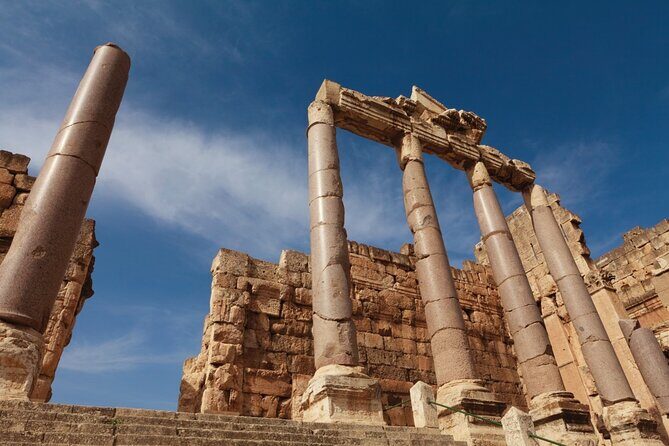
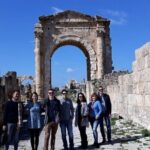
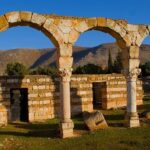
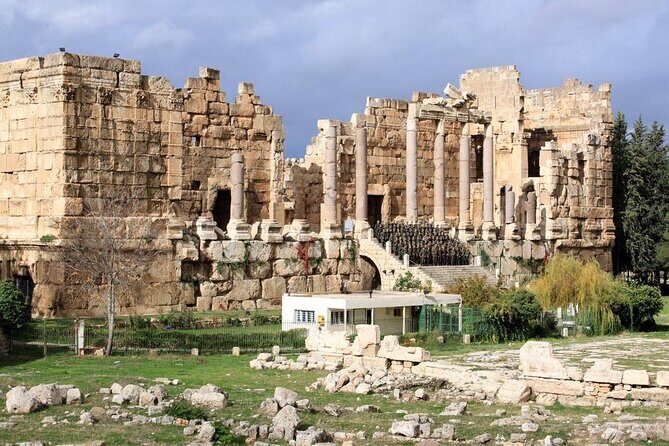
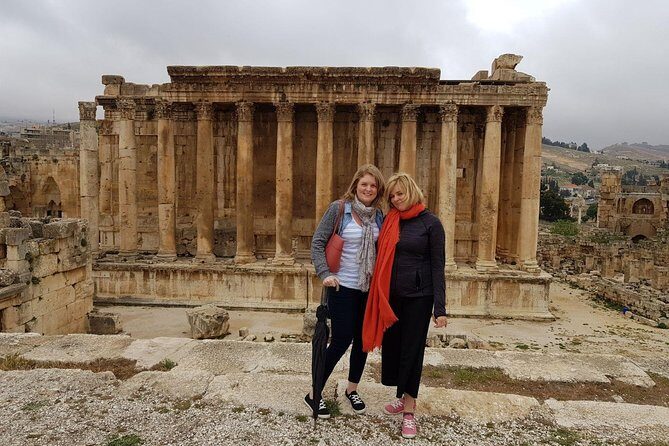
Baalbek is the star of the history show. You’ll spend time at the temple complex, and it’s the kind of place where your brain needs a minute to catch up with your eyes. The ruins are famous for a reason: colossal Roman construction built over more than two centuries, and it still feels immense even when you know it’s ancient.
At the first Baalbek stop, you get about 2 hours, and the admission is marked as free. This is where the big impressions happen, including the Temple of Bacchus and the Temple of Jupiter area. Baalbek is tied to the Romanized triad of Heliopolis—Jupiter, Venus, and Bacchus—but the roots go deeper into the Phoenician city that was known as Heliopolis during the Hellenistic period.
Here’s a detail I think helps you understand why people once came in huge numbers: during Roman times, the sanctuary of Heliopolitan Jupiter drew thousands of pilgrims. When you’re standing among the ruins, it stops being just architecture and starts feeling like a destination people traveled for—religion with a travel itinerary.
For extra context, Baalbek’s setting is also part of the story. The temple complex sits at the foot of the Anti-Lebanon slope, bordering the fertile Bekaa plain, at about 1,150 meters altitude. That high setting can mean cooler air in the morning and strong sun later, so plan for both.
What to watch for during your visit
- The sheer massing of the stones, especially where you can see how multiple temples relate across the complex
- The way Roman structures were layered over older Phoenician religious traditions
- The feeling of a sanctuary designed for crowds, not quiet strolls
A practical note on tickets
One portion of the Baalbek temple complex is marked as not included for admission. You won’t want surprise expenses, so it’s worth keeping a little budget aside for the areas where entry is required.
The Story Behind Sayyida Khawla, Plus the Stone of the Pregnant Woman
Between the Roman giants, the tour also slows you down with two smaller stops that add human scale.
First is the Mosque of Sayeda Khawla in Baalbek. It’s believed to be built on the site where Sayyida Khawla—described locally as the daughter of Imam al-Hussein, the grandson of Prophet Muhammad—is said to have been buried. There’s also a local belief attached to Karbala: when the caravan of captives passed through Baalbek, Khawla was believed to have passed away and been buried there. Even if you’re not from the region, you’ll likely feel how this is less about sightseeing and more about place and memory.
This mosque stop is also a good reminder that Baalbek isn’t only ruins behind fences. It’s a living town with ongoing faith, and the tour’s inclusion of this site helps you see the layers.
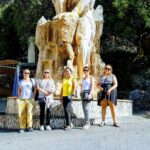
Then you move to a quick, fascinating detour: the Stone of the Pregnant Woman. You’ll have about 30 minutes, and admission is marked as free. This is a worked Roman monolith, and what’s striking is its size and engineering. Together with another nearby ancient stone block, it’s described as among the largest monoliths ever quarried. It’s widely thought the two building blocks were meant for the nearby Roman temple complex, and the whole point is that it shows off monolithic gigantism that wasn’t common in antiquity.
You can also read our reviews of more private tours in Beirut

Why these two stops work well
They break up the day. After the big Roman areas, the mosque gives you a quiet pause, and the stone gives you a quick engineering-focused payoff. Together, they make Baalbek feel like a full setting, not just a museum of ruins.
Château Ksara Wine Tasting in the Beqaa Valley
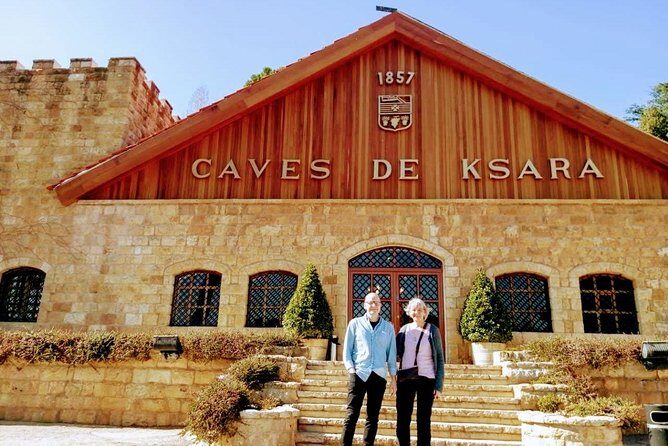
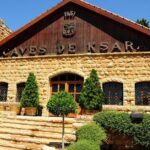
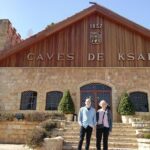
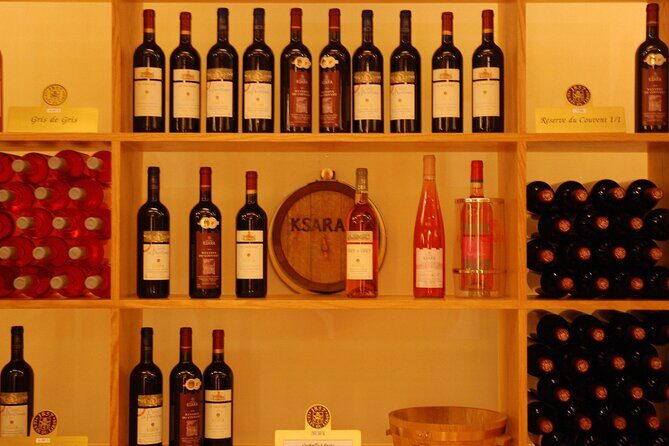
After history and faith stops, the Beqaa Valley shifts the mood with Château Ksara. You’ll get about 1 hour here, and the admission/tasting is marked as not included, so plan on paying for your wine tasting experience.
This stop is more than a branded winery visit. Château Ksara was founded in 1857 by Jesuit priests, and it’s credited with developing the first dry wine in Lebanon. That’s a useful detail because it gives the tasting some context. You’re not just sampling wine—you’re sampling a long-running local industry with a specific moment in its evolution.
Château Ksara produces about 3 million bottles annually and exports wines to over 40 countries. So while the setting is local and grounded in the Beqaa Valley, the company’s reach is international. That contrast is neat: you’re in the countryside, but the wines you taste have a track record far beyond Lebanon.
How to make the most of your hour
- Go in with an open mind. Dry wine is a signature, not always what people expect if they’re used to sweeter styles.
- If you’re also planning to hike later, pace yourself so you still enjoy the cedar forest without feeling sluggish.
Also, because lunch isn’t included, many people find it helpful to either eat before you go or plan to pick something up around the winery area. The tour gives you the sightseeing and tasting time, but food is on you.
Maasser el Chouf Cedar Nature Reserve: A Real Hike Among Lebanon’s Cedars
The day finishes with nature at Maaser el Chouf Cedar Nature Reserve in the Chouf District. This is where the tour earns its “Lebanon countryside” promise in a tangible way.
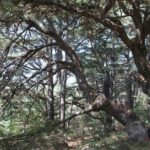
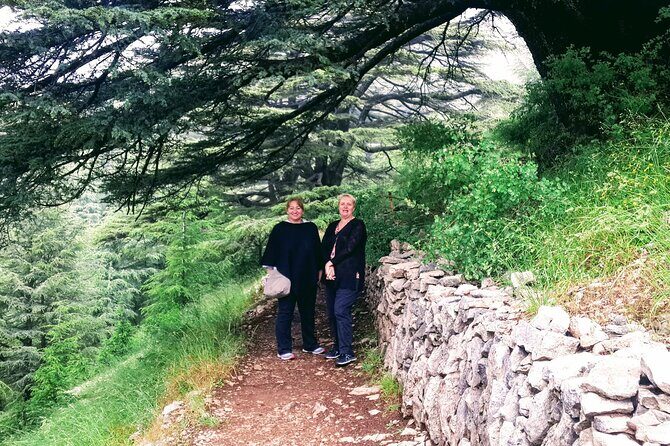
You’ll spend about 2 hours here. Admission is marked as free, and the reserve is described as part of the Al-Shouf Cedar Nature Reserve, which was recognized as a UNESCO biosphere reserve in 2005. The site sits on the slopes of Barouk mountain, covering about 550 km²—which is noted as roughly 5.3% of Lebanese territory and about 70% of Lebanon’s green area. That scale matters because it explains why this doesn’t feel like a small roadside park. It’s a big protected area.
The tour description calls these Lebanon’s national trees, and the tone of the stop fits that idea. Instead of squeezing in quick photo moments, the schedule includes actual walking time. In practice, you’ll get shade, softer pacing, and a chance to reset after all the hard lines of ancient ruins.
What to consider for the cedar walk
You’re going to be outdoors and walking for around two hours. So bring:
- Comfortable shoes with grip
- Water (especially if it’s sunny)
- A light layer if the morning sun gives way to cooler air
If you’re the type who likes nature but gets impatient with slow tours, this is still a win. Two hours is long enough to feel like you did something, not so long that the day drags.
Price and What You’re Really Paying For (Including Tickets and Lunch)
At $100 per person, this tour can be a strong deal because so much of the “hard part” is handled for you. You get:
- Hotel pickup and drop-off in Beirut
- Private transportation in an air-conditioned vehicle
- A driver-guide, plus a local guide in Baalbek
- A day plan that covers Baalbek, a shrine site, a winery tasting stop, and a cedar reserve hike
The ticket piece is the main variable. Admissions are marked like this:
- Baalbek temple stop: free for the first major segment
- Temples of Baalbek: not included for at least one part
- Stone of the Pregnant Woman: free
- Château Ksara: not included
- Maasser el Chouf Cedar Nature Reserve: free
So the $100 isn’t paying for every entrance fee, and it doesn’t include lunch. That’s a fair trade if you like private comfort and local guidance, but it means you should budget a bit extra for the Baalbek ticketed sections and the wine tasting.
On the upside, the tour offers group discounts (helpful if you’re traveling with friends) and uses a mobile ticket. That tends to keep things smoother on the day.
Who This Tour Fits Best
This is a great match if you want one day that hits multiple Lebanon highlights without the stress of self-planning. I think it’s especially good for:
- History lovers who want Roman architecture plus context you can actually understand
- People who like their sightseeing with a human layer, like the Sayyida Khawla mosque stop
- Wine curious visitors who want a structured tasting at a major Beqaa producer
- Nature walkers who don’t want only a quick “look at trees” moment
It might be less ideal if you dislike hiking or you’re not interested in wine. Also, since lunch isn’t included, if you hate thinking about food on a tour day, you’ll want a plan.
Should You Book This Private Cedars, Baalbek, and Ksara Tour?
If you’re choosing between a half-day history sprint and a bigger nature day, this private full-day plan is the better “all-in-one” compromise. It’s efficient, and the structure gives each place time to land. The Baalbek experience shines because you’re not just seeing ruins—you’re getting help making sense of them. The cedar forest hike is a real payoff after the temple stops, and the wine tasting at Château Ksara adds a fun local flavor that breaks up the seriousness of ancient sites.
So yes, I’d book it if you want a calmer private day with hotel pickup, a local Baalbek guide, and an itinerary that actually mixes history, faith, wine, and walking. And if your schedule is changeable, the tour includes free cancellation up to 24 hours before the start time, which helps you book with less stress.
FAQ
How long is the private tour?
The tour runs for approximately 9 hours.
What time does the tour start?
The start time is 8:30 am.
Is hotel pickup and drop-off included?
Yes. Hotel pickup and drop-off are included, along with a private, air-conditioned vehicle.
Is lunch included?
No. Lunch is not included.
Are entrance tickets included for every stop?
Some are free and some are not included. Baalbek includes a free stop segment and the Stone of the Pregnant Woman is free, while some Baalbek temple access and the Château Ksara tasting are marked as not included.
What’s the cancellation policy?
You can cancel for a full refund up to 24 hours in advance of the experience’s start time.