REVIEW · BEIRUT
Small Group Tours to Beirut, Beiteddine & Deir el Qamar with lunch and all fees
Book on Viator →Operated by Beirut Daily Tours · Bookable on Viator
Beirut in one day, with real context. This small-group tour (capped at 15 people) blends iconic Beirut stops with a countryside leg to Beiteddine Palace and Deir el Qamar, plus lunch and all site fees.
I love the early start: the Pigeon Rocks area is great for photos in soft morning light. I also like the on-the-ground guidance—Natasha was notably professional and detailed, making each landmark easier to understand as you see it.
One consideration: the day has a lot of moving parts, and many stops are quick (often 10 minutes), so plan on comfy shoes and be ready to absorb a lot in a short time.
In This Review
- Key Things I’d Prioritize on This Tour
- How the Day Feels: Tight Sights, Big Variety
- Price and What You Actually Get for $99
- Pickup and Group Size: Why It Makes the City Easier
- Raouché Morning: Pigeon Rocks and the Corniche Sea Views
- Zaitunay Bay: Modern Waterfront Break
- The Abandoned Holiday Inn: A War Landmark You Can’t Ignore
- Downtown Beirut: The Blue Mosque, Saint George, Martyrs Square
- Nejme Square and the Beirut Souks: City Life and a Landmark Clock
- Roman Baths: Where Ancient Beirut Still Shows Through
- Beiteddine Palace: Your 1.5-Hour Big Moment
- Deir El Qamar: A Village Built From Many Faiths
- Fakhreddine’s Mosque and Saydet El Talle Church Stops
- Lunch and Tickets Included: The Practical Convenience Factor
- Who This Tour Is Best For (And Who Might Want a Different Style)
- Should You Book This Tour?
- FAQ
- What is the duration of the tour?
- How much does the tour cost?
- Is lunch included?
- Does the price include admission fees and tickets?
- Is pickup available?
- How big is the group?
- FAQ
- What time does the tour start?
- Can I cancel for a full refund?
- Is the tour suitable for most people?
Key Things I’d Prioritize on This Tour
- Small group size (15 max) keeps the pace personal instead of chaotic.
- Natasha’s explanations turn landmarks into stories you can actually follow.
- Beiteddine Palace time (1.5 hours) gives you more than a rushed look.
- Short, focused downtown stops work well if you like variety over lingering.
- Lunch plus admission fees included means fewer surprises mid-day.
How the Day Feels: Tight Sights, Big Variety
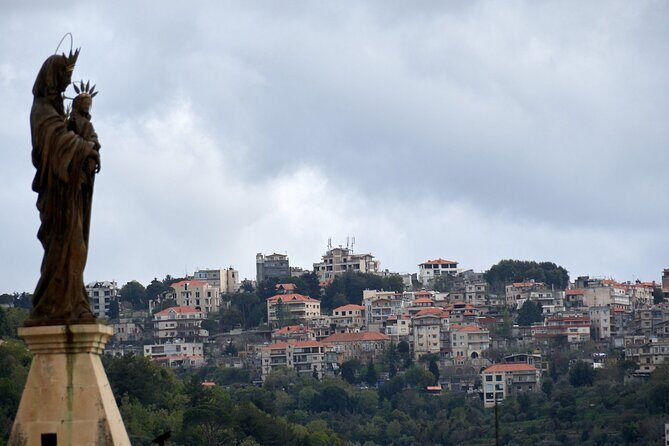
This is the kind of Lebanon day trip that works because it’s structured. You’re not stuck in a single neighborhood for hours—you get Beirut’s downtown highlights, sea views, and then a climb into the Chouf hills for palace-and-village atmosphere.
With pickup and a ride in an air-conditioned minivan, you’re spared the constant logistics. The rhythm is: view, walk a bit, listen to your guide, then move on—smart for first-time visitors and people who want a lot of coverage in 8 hours.
That said, it’s not a slow “wander and linger” style. If you’re the type who wants to sit in one place for a long time, you may wish a few stops had more time. The upside is you get breadth, and you can still choose what you’d explore later on your own.
A few more Beirut tours and experiences worth a look

Price and What You Actually Get for $99
At $99 per person, the real value is that the tour bundles lunch, transport, and admission/tickets. That matters because entrance fees and midday food can quietly add up fast in a full-day itinerary.
You also get a dedicated tour leader for the whole day, plus hotel pickup and drop-off. Add in the mobile ticket for simpler day-of entry, and you get a clear day plan without juggling individual bookings.
In plain terms: if you’d otherwise be paying for a separate driver, paying for site entries, and then booking lunch, this price looks more reasonable than it first sounds. If you’re only interested in one or two highlights, you might question the value—but for a “see a lot of Lebanon” day, it’s a strong deal.
Pickup and Group Size: Why It Makes the City Easier
The tour is scheduled to start at 8:00 am, with hotel pickup offered. Beginning early is practical because it gives you daylight for photos, and it helps you beat the worst parts of traffic that can build during the day (especially in downtown Beirut).
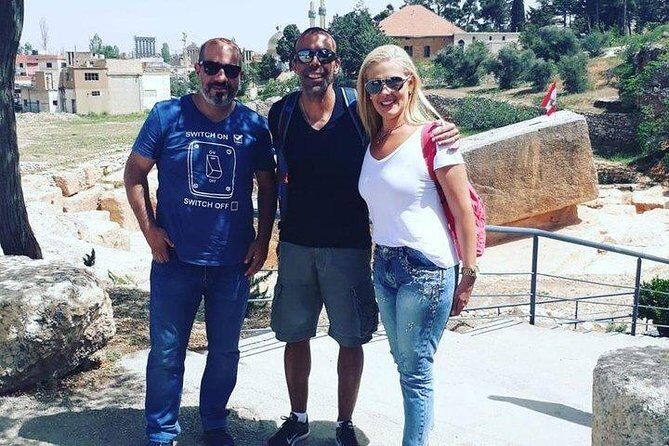
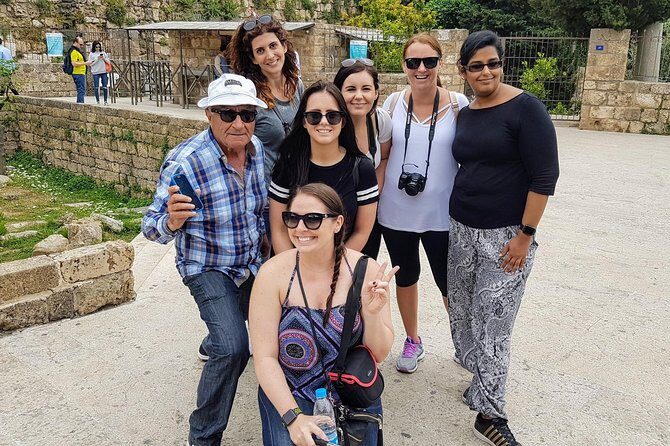
The group stays small—15 travelers max—so you’re not lost in a crowd. That size also makes it easier for your guide to point things out clearly and keep track of where everyone is when you’re moving between sites.
If you like asking questions, small groups help. You’ll hear explanations you might miss on a larger bus tour, and you get better context about what you’re looking at as you’re walking.
Raouché Morning: Pigeon Rocks and the Corniche Sea Views
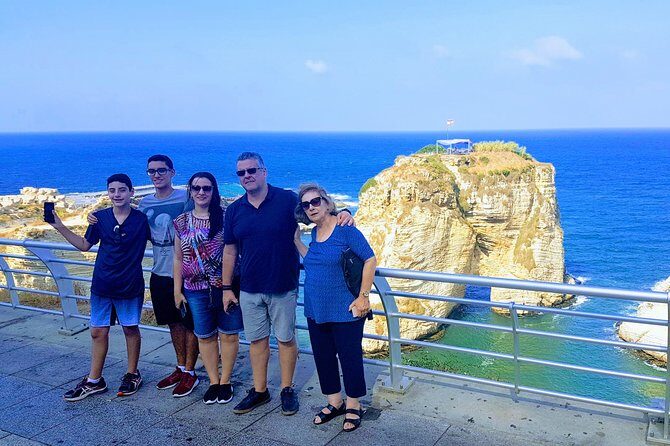
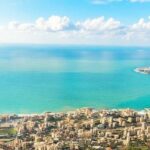
The morning highlight begins at Pigeon Rocks (Raouché), two massive rock formations at Beirut’s western edge. Even if you’ve seen pictures, seeing them in person has weight—especially when the light is gentle.
You also get quick access to the Al Manara Corniche, the palm-lined seaside promenade. It’s one of those places where the view does half the work: you look out over the Mediterranean while the iconic rocks and Mount Lebanon in the distance help frame the scene.
A practical note: this is a “look, walk, photograph, move on” stop. If you’re aiming for top-level shots, give yourself a few extra seconds to step back and find a clean line of sight, and be ready when your guide signals the best spots.
Zaitunay Bay: Modern Waterfront Break
After the sea rocks, you head to Zaitunay Bay, described as Beirut’s finest leisure destination. This is a newer waterfront promenade with shops and restaurants, so it feels more polished and commercial than some of the historic downtown areas.
Think of this stop as a palate cleanser. You get the water again, but the mood shifts: it’s brighter, more active-looking, and it gives you a change of pace before downtown religious and historical sites.
Since the time here is short, keep expectations realistic. Treat it like a photo-and-stroll moment, then save longer shopping or restaurant time for later if you want it.


The Abandoned Holiday Inn: A War Landmark You Can’t Ignore
One stop really changes the tone of the day: the abandoned Holiday Inn Hotel, a major war landmark. It was built in the early 1970s, ran until the Lebanese civil war began in 1975, and then became part of the longer conflict known as the Battle of the Hotels.
The scale of fighting is part of what your guide likely emphasizes: the struggle included many luxury hotels, including the Holiday Inn and the famous Phoenicia, with more than 25,000 combatants involved in the broader battle for control. Today, the hotel remains untouched and empty, functioning as a hard reminder of the war’s aftermath.
If you prefer tours that only stick to cheerful scenes, this may feel heavy. But if you want an honest read on modern Lebanon, it’s an important stop.
Downtown Beirut: The Blue Mosque, Saint George, Martyrs Square
Downtown Beirut gives you the religious and political anchors in a tight sequence.
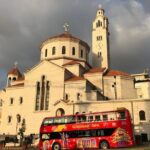
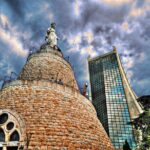
First is the Mohammad Al-Amin Mosque, also called the Blue Mosque. It’s the biggest mosque in Lebanon, opened in 2008, with four minarets reaching about 65 meters. The domes are made from light blue tiles, and the scale of the arches makes it feel huge even from a short viewing time.
Next comes the Greek Orthodox Cathedral of Saint George. It’s the oldest church in Beirut and one of the oldest in the region, with Christian worship dating back at least to the mid-sixth century AD at that site. It’s centrally located and tied to Beirut’s well-known law school area, which helps you understand the cathedral as part of the city’s life, not just a standalone monument.
Then you reach Martyr’s Square, historically called Al Burj or Place des Cannons. The naming connects to the executions of Lebanese nationalists on 6 May 1916 by the Ottomans, ordered by Jamal Pasha during World War I.
This downtown cluster is one of the most rewarding parts of the tour because it links faith, architecture, and historical memory in a small geographic area. The quick stop length means you won’t absorb everything like a textbook—but it’s enough to get oriented and know what you’d want to revisit.
Nejme Square and the Beirut Souks: City Life and a Landmark Clock
At Place de l’Étoile (Nejme Square), you get Beirut’s recognizable center-point energy. The square includes Lebanon’s Parliament and related buildings, two cathedrals, a museum, and plenty of cafés and restaurants.
The standout detail here is the four-faced Rolex clock, a highly visible icon of Beirut. Even if you’re not a watch person, it’s an easy visual anchor for the city’s architecture and public space design.
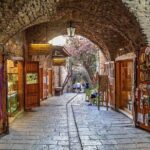
After that, you’re taken to the Beirut Souks—a large commercial district with over 200 shops and 25 restaurants and cafés, plus an entertainment area and cinema complex. This is less about ancient ruins and more about living city culture.
Since the stop is about 10 minutes, use it to get your bearings. If you want to shop, you’ll have to return on your own, but as a first pass it helps you understand where people gather and where goods are concentrated.
Roman Baths: Where Ancient Beirut Still Shows Through
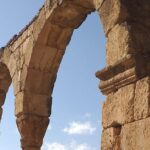
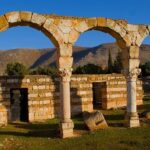
In downtown Beirut, the Roman Baths (Roman Berytus) are your ancient reality check. These are the largest outdoor sight in the area, discovered in 1968–1969, then renovated in the mid-1990s.
The site reflects early Roman life: bath complexes began in the early first century under Augustus, but a major earthquake in 551 AD destroyed the baths. Today, part of the baths area is used for artistic performances and concerts, so the ancient space still plays a role in contemporary culture.
If you’re short on time elsewhere in Beirut, this stop is worth it because it shows layering: Roman beginnings, destruction, then modern adaptation. It also gives your feet a break from the hardest stretches of city walking while still delivering a real sight.
Beiteddine Palace: Your 1.5-Hour Big Moment
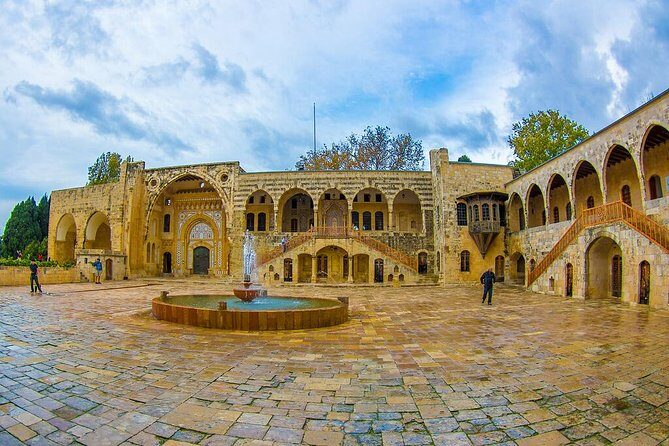
Now we shift from downtown intensity into Chouf-style monument time at Beiteddine Palace. This is a 19th-century palace that serves as a museum and ties into the annual Beiteddine Festival.
The palace was built between 1788 and 1818 by Emir Bashir Chehab II (he later became ruler of the Mount Lebanon Emirate). After 1840, it was used by the Ottomans as a government building, and during the French Mandate it served as a local administrative office. Later, in 1943, it became the president’s official summer residence.
You also get context for the damage: during the Lebanese Civil War, the palace was heavily damaged, and parts are still used as the president’s summer residence while other sections are open to the public.
The big win here is time: you get 1 hour 30 minutes, which is long enough to wander thoughtfully and take photos without feeling like you’re being herded. From the overall experience I’d say this is where the tour earns its name as a highlight day. Even if the rest of the city stops are quick, palace time gives you a deeper, calmer pace.
Deir El Qamar: A Village Built From Many Faiths
After Beiteddine, you head to Deir al-Qamar—about five kilometers from the palace, in the Chouf District. The name means Monastery of the Moon, and the feel of the place leans toward old stone village life.
You get 30 minutes here, so it’s not a long slow walk—but it’s enough to see the core identity of the town. Deir el Qamar was the first village in Lebanon to have a municipality in 1864, and it’s often described as the birthplace of artists, writers, and politicians. The town also had a mix of religious communities: mosque, synagogue, and Christian churches existed in the same place.
History also hits hard. In 1860, the town was destroyed during conflict between Druze and Christians, and it was set ablaze. Napoleon III then sent a French contingent to rebuild it, which explains why the rebuilt feel has a different political and architectural layer than older ruins.
With only half an hour, focus on atmosphere more than checking off every corner. Use the time to connect the dots: palace power in Beiteddine, then village life and mixed community identity in Deir el Qamar.
Fakhreddine’s Mosque and Saydet El Talle Church Stops
In Deir el Qamar, you visit two more heritage anchors that show how varied the town’s religious architecture is.
First is Fakhreddine Mosque, known for its octagonal minaret. Built in 1493 and restored in the 16th century by Fakhreddine I, it’s described as the oldest mosque in Mount Lebanon. Even in a short stop, the minaret shape gives you something clear to look for.
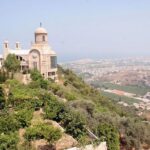
Then comes Saydet El Talle Church (Our Lady of the Hill), dating to the 15th century. The site is layered: the church was built by Monk Nicolas Smisaati over ruins of an earlier Phoenician temple dedicated to Astarte, later destroyed by an earthquake in 859. There’s also a legend about a light appearing on the hill and a Druze emir in Baakline ordering soldiers to dig in the morning.
This pairing is smart because you see different timelines and different faith expressions in close proximity. The time is short, but if you’re paying attention to the architectural details your guide highlights, you’ll leave with a clearer sense of how Deir el Qamar changed across centuries.
Lunch and Tickets Included: The Practical Convenience Factor
A lot of full-day tours say they include lunch. This one does, and it includes your admission and tickets too. That combination is a real quality-of-life benefit—less money spent later, fewer stops where you’re forced to figure out payment and entry lines mid-day.
Because the tour includes transport and a tour leader, your day feels like a single plan rather than a patchwork. It’s also easier to stay on schedule, since the guide already knows the flow between sites.
If you’re the type who gets tired of counting euros or translating ticket rules, this format is a gift. You can focus on seeing the places and asking questions, instead of managing logistics.
Who This Tour Is Best For (And Who Might Want a Different Style)
This tour is a strong match if you want a high-coverage Lebanon day: Beirut icons, a war landmark, a quick downtown tour, then palace and village culture in the hills.
It also fits well if you enjoy structure with a guide who can translate what you’re seeing into context. Natasha is singled out in the experience summary for being informative and professional, and that kind of guidance matters most when you only have limited time at each place.
If you’re someone who hates rushing and wants to spend long hours at one museum or one neighborhood, you may find the frequent quick stops limiting. Here, the tradeoff is variety over deep lingering.
Should You Book This Tour?
I’d book it if you want a smooth day with lunch, transport, and site fees handled, plus a guide who explains what matters. The Beiteddine Palace timing and the Chouf-village visit make it more than a city checklist.
I’d think twice if your travel style is slow and you want unstructured time to roam without an agenda. The short stops in Beirut mean you’ll move quickly, even if the palace and village segments slow down a bit.
If you’re trying to make the most of an 8-hour window in Lebanon, this is a well-balanced way to see both the modern, layered Beirut story and the older hill-town world of Beiteddine and Deir el Qamar.
FAQ
What is the duration of the tour?
The tour runs for about 8 hours.
How much does the tour cost?
It costs $99.00 per person.
Is lunch included?
Yes. Lunch is included in the tour price.
Does the price include admission fees and tickets?
Yes. Admission and tickets to the sites are included.
Is pickup available?
Yes, the tour offers hotel pickup and drop-off.
How big is the group?
The group is limited to a maximum of 15 travelers.
FAQ
What time does the tour start?
The experience starts at 8:00 am.
Can I cancel for a full refund?
Yes. You can get a full refund with free cancellation up to 24 hours in advance of the experience start time.
Is the tour suitable for most people?
The info provided says most travelers can participate.