REVIEW · BEIRUT
Small Group Tours to Baalbek, Anjar & Chateau Ksara with lunch and Tickets
Book on Viator →Operated by Beirut Daily Tours · Bookable on Viator
Roman ruins and wine in one day.
If you like your Lebanon with facts and comfortable timing, this small-group loop out of Beirut is a smart hit: Baalbek’s monumental Roman complex, Aanjar’s Umayyad city remains, and a visit to Chateau Ksara in the Bekaa Valley with lunch and tastings.
I especially like two things. First, the guide work—Natasha, an archaeologist, connects the dots at Baalbek so the size and layout make sense fast. Second, the day’s flow: you’re in a climate-controlled private minivan with hotel pickup and drop-off, so you spend your energy looking, not navigating.
One consideration: Chateau Ksara’s admission ticket isn’t included, so you’ll want to budget for that extra cost when you arrive (everything else, including key site entries and lunch, is handled).
In This Review
- Key highlights to care about
- Baalbek, Anjar, Ksara: three eras, one efficient day plan
- The small-group comfort that actually matters (private minivan, real pacing)
- Morning start: what 8:00 a.m. sets you up for
- Stop at Baalbek: Roman temples, the Triad, and scale you can’t fake
- The Mosque of Sayeda Khawla and the story behind the Stone of the Pregnant Woman
- Aanjar (Umayyad ruins): why a city at crossroads became a statement
- Chateau Ksara: wine tasting, the cave, and the Jesuit-era origin story
- Lunch at a local Lebanese restaurant: fuel, not an afterthought
- Value check: how $75 makes sense when tickets and time are baked in
- Guides make the difference: Natasha, Khalil, and Ziad
- Who this tour suits best (and who might prefer something else)
- Should you book this Baalbek–Aanjar–Ksara tour?
- FAQ
- What does this tour include?
- How long is the tour?
- Is hotel pickup and drop-off included?
- What time does the tour start?
- How big is the group?
- Are entrance tickets included?
- Is lunch included?
- Is wine tasting included?
- Is there air-conditioned transportation?
- What if the weather is bad?
Key highlights to care about
- Max 15 people keeps questions easy and explanations clear.
- Hotel pickup and drop-off plus a private minivan cuts stress for a full 9-hour day.
- Baalbek temples + the Mosque of Sayeda Khawla + the Stone of the Pregnant Woman means one stop covers several layers of meaning.
- Aanjar’s crossroads location helps you understand why the Umayyads built here when routes mattered.
- Chateau Ksara wine samples and the on-site cave make the winery visit more than a quick tasting.
- Lunch at a local Lebanese restaurant gives you a solid break between archaeological stops.
Baalbek, Anjar, Ksara: three eras, one efficient day plan
This tour is built for people with limited time in Beirut who still want variety. You get the kind of sites that usually take separate planning—Roman architecture at Baalbek, early Islamic-era urban ruins at Aanjar, then a winery experience in the Bekaa Valley—without feeling like you’re rushing through on your own.
The best part is how the sites “talk” to each other. Baalbek is all about Roman imperial scale and religious space. Aanjar shows how another power organized city life using major trade routes. Then Ksara shifts the mood from stones to grapes, where the day ends with wine-making history and tastings.
And because the group is capped at 15, you’re more likely to hear direct answers instead of waiting your turn.
A few more Beirut tours and experiences worth a look

The small-group comfort that actually matters (private minivan, real pacing)
A full-day excursion can be tiring, even when the sights are great. This one helps you stay functional. You’re taken by a comfortable air-conditioned vehicle, with pickup and drop-off from your hotel in Beirut. That means you’re not figuring out bus schedules, taxis, or where to stand once you reach the sites.
You also get a tour leader and local guide support, so the context doesn’t fall apart when you’re walking between areas. In practice, that pacing matters at places like Baalbek, where scale can overwhelm you if you’re just staring at giant ruins with no guidance.
Morning start: what 8:00 a.m. sets you up for
The day begins at 8:00 a.m., which is a smart move for a longer route into the Bekaa. A morning departure gives you more usable daylight for the outdoor parts of Baalbek and Aanjar, and it helps you finish the winery visit without it turning into a late, rushed wrap-up.
The tour is listed at roughly 9 hours, so you should treat it as a full outing rather than a quick half-day. Think of it like a structured day trip: you’re seeing three major stops, with enough time at each location to absorb what you’re looking at.
Stop at Baalbek: Roman temples, the Triad, and scale you can’t fake
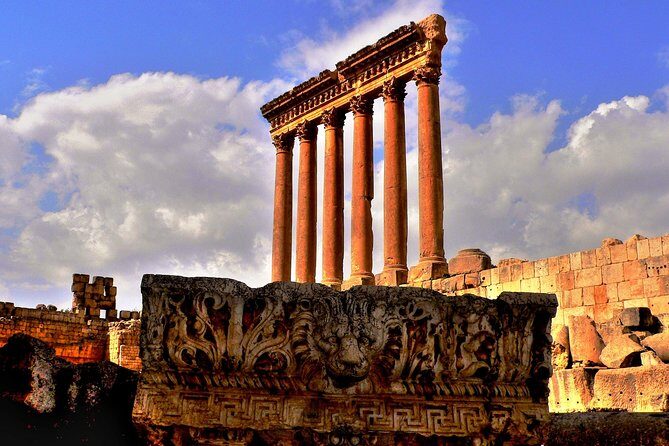
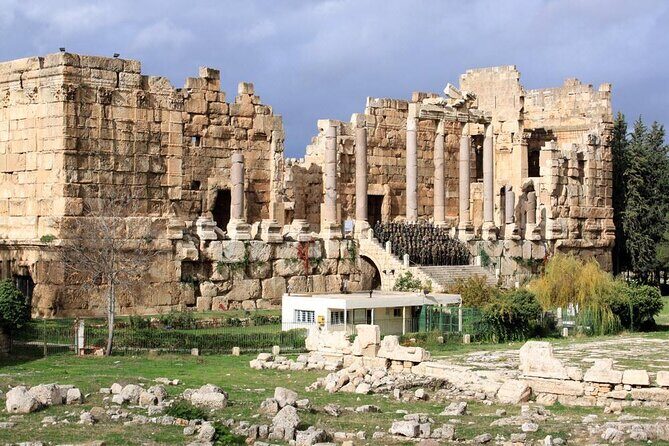
Baalbek is famous for a reason, but what makes it powerful on a guided day is learning what you’re actually looking at. The temples sit at the foot of the south-west slope of Anti-Lebanon, bordering the fertile Bekaa plain, at about 1,150 meters altitude. That setting matters because it frames the city as more than ruins in the sun—it’s a sanctuary tied to a landscape and a pilgrimage pattern.
The Roman peak at Baalbek came through imperial building over more than two centuries. Visitors came to honor a Romanized version of an older, Phoenician cult: the triad of Jupiter, Venus, and Bacchus (often linked with Heliopolis). When the guide explains it clearly, you start noticing how the architecture supported that “sanctuary” role.
Admission for the Baalbek temples area is included, so you’re not stuck at the entry gate trying to sort out payments while your focus cools down.
The Mosque of Sayeda Khawla and the story behind the Stone of the Pregnant Woman
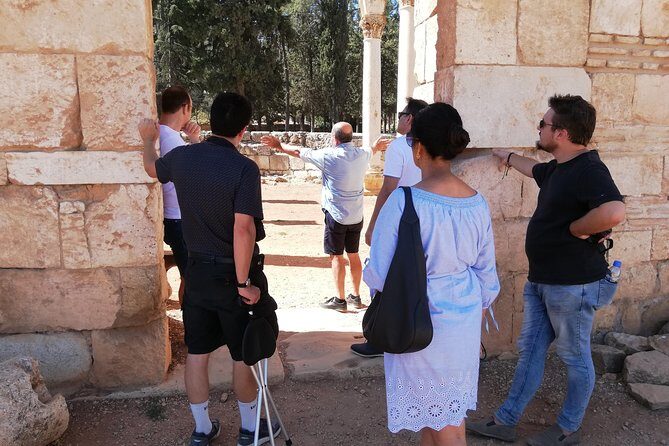
One of the reasons I like this route is that it doesn’t treat Baalbek as only “Roman.” Right within the wider Baalbek setting, you visit the Mosque of Sayeda Khawla. Local belief says it’s erected on the burial site of Sayyida Khawla, believed to be the daughter of Imam al-Hussein and the grandson of the Prophet Muhammad. The story tied to Karbala and a caravan of captives gives the area a living, human layer instead of keeping it strictly archaeological.
Then comes the Stone of the Pregnant Woman—a worked Roman monolith. It’s paired with another massive block nearby, and together they’re known for their monolithic “gigantism,” a scale that was exceptional in antiquity. It’s a short stop time on paper, but if you’re paying attention, it becomes one of those moments where you realize how much labor and planning had to happen to even quarry and move such blocks.
And yes: the Stone of the Pregnant Woman entry is listed as free, so you can spend money elsewhere (like at the winery). In an itinerary like this, every included ticket helps.
A few more Beirut tours and experiences worth a look
Aanjar (Umayyad ruins): why a city at crossroads became a statement
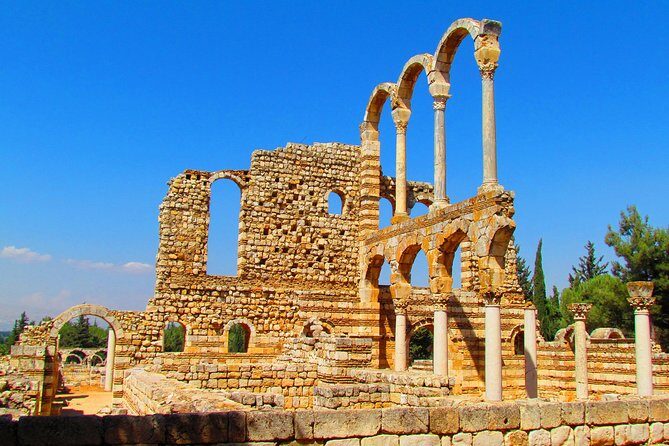
After Baalbek, the day shifts from Roman sacred space to an Umayyad inland city—Aanjar—and that contrast is a gift if you like seeing how different rulers shaped place.
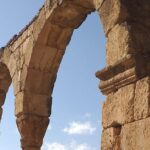
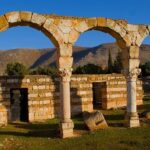
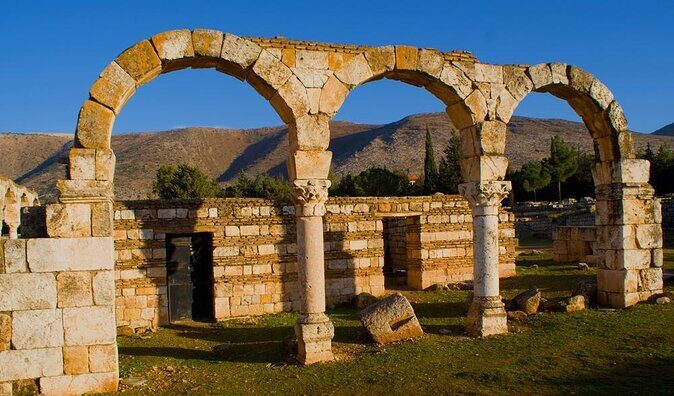
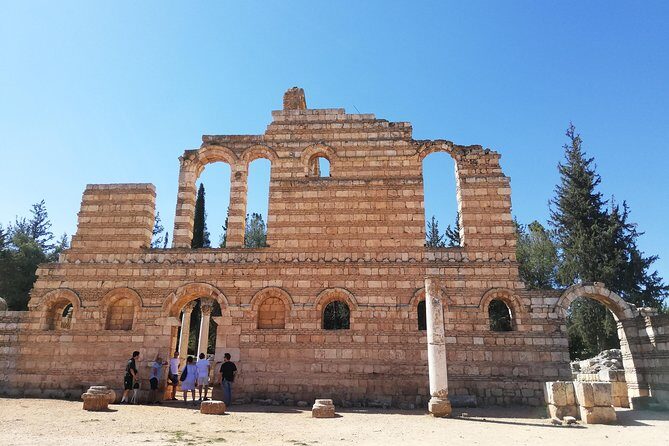
Aanjar is described as an outstanding witness to Umayyad civilization and as an inland commercial center at the crossroads of two routes: one connecting Beirut to Damascus, and another running across the Bekaa from Homs to Tiberiade. That “where trade goes” logic matters because it explains why this type of urban planning appears in specific landscapes, not just randomly.
The ruins were only discovered by archaeologists at the end of the 1940s, which is worth keeping in mind. You’re seeing a site that re-entered public knowledge relatively recently, and that helps you understand why guides can still focus on interpretation and context while you walk.
The time you have here is around 45 minutes, which is enough for the main elements without turning the site into a blur:
- walls of the Umayyad palace
- harems
- a mosque
- the great palace of the caliph
- thermal baths
- pillars with some Roman architectural elements
It’s that last point—Roman stylistic influence showing up inside Umayyad planning—that ties your day together. You’re learning that cultures weren’t always separate boxes.
Chateau Ksara: wine tasting, the cave, and the Jesuit-era origin story
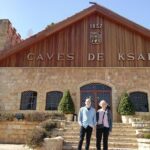
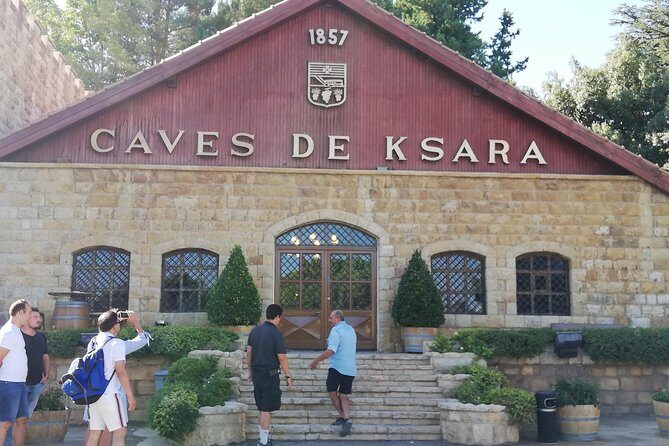
In the Bekaa Valley, Chateau Ksara shifts the mood. Founded in 1857 by Jesuit priests, it’s described as the producer of the first dry wine in Lebanon. If wine history matters to you, this stop gives you a grounded origin story instead of a generic tasting-room routine.
The winery produces around 3 million bottles annually, and those numbers help you understand why the place matters beyond Lebanon. It’s not a tiny back-room operation; it’s built to scale while still focusing on how wine is made.
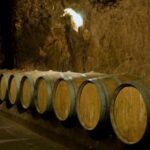
This portion of the visit also includes the kind of behind-the-scenes look that makes tastings more meaningful: you get to learn how Lebanese wine is made and peek inside the on-site cave. The cave detail is especially good on a day like this because it’s physical—stone, temperature, and craft—so your earlier archaeological focus doesn’t feel out of place.
Two practical notes for planning: the tour includes the site time around 1 hour, but Chateau Ksara’s admission ticket isn’t included. Plan for a final stop cost.
Lunch at a local Lebanese restaurant: fuel, not an afterthought
A included lunch is one of those details that quietly makes or breaks a day trip. You’re in transit across multiple sites, and hunger can turn even the best monuments into a chore. This tour includes lunch at a local Lebanese restaurant, giving you a real break between Baalbek and the winery.
From the way the lunch is described, it’s treated as part of the experience, not a last-minute sandwich. That also helps if you have dietary preferences: you’ll at least be eating at a proper restaurant with a normal meal pace, rather than snacking on the run.
Value check: how $75 makes sense when tickets and time are baked in
At $75 per person, the value depends on two things: what’s included, and how many separate tasks the tour removes.
Here’s what you’re getting that would cost time or separate money on your own:
- hotel pickup and drop-off
- air-conditioned private minivan transport
- local guide and a tour leader for interpretation
- lunch
- admission included for Baalbek temples and Aanjar
- the Stone of the Pregnant Woman entry is listed as free
- a mobile ticket setup
The trade-off is the one clear gap: Chateau Ksara admission ticket isn’t included. In my view, that’s a reasonable structure because it lets you treat the winery as a flexible final choice. Still, don’t ignore it—factor it in when you budget.
Also, the schedule is built around a realistic rhythm for a 9-hour day: you’re not stuck transferring forever between places, which is where DIY trips often lose time and energy.
Guides make the difference: Natasha, Khalil, and Ziad
The tour experience lives or dies on interpretation, and this one has strong names behind it.
Natasha is described as an archaeologist who brought lots of insights while explaining what you were seeing. When the guide understands the layers—Roman imperial planning, sacred space, and how monumental scale worked—you don’t just walk through ruins. You get a storyline.
At Baalbek, Khalil is mentioned as being an experience on site, which is exactly the kind of local guidance that helps you understand what to focus on when everything is big.
And behind the scenes, Ziad is noted as taking careful care of the group as the day moved along. That’s not flashy, but it’s crucial on a multi-stop trip where timing and smooth routing keep you from feeling stressed.
Who this tour suits best (and who might prefer something else)
This tour is a great match if you:
- want major Lebanon highlights from Beirut without complicated logistics
- like guided context more than wandering alone
- want a mix of Roman, Umayyad, and wine culture in one day
- prefer small group size over a big bus where questions vanish
It may be less ideal if you:
- hate full-day excursions (this is about 9 hours)
- want total control over stops and timing (the structure is part of the value)
- don’t want any additional ticket purchases, since Chateau Ksara admission isn’t included
One extra practical tip: Baalbek can feel like a lot of stone at once. If you’re visiting in off-season or quieter months, you may find it easier to read the site and take photos without constant movement around you.
Should you book this Baalbek–Aanjar–Ksara tour?
If you’re trying to pack Lebanon’s biggest “wow” moments into one logical day, I’d book it. The combination is efficient: Baalbek gives you monumental Roman scale, Aanjar adds an Umayyad city that explains how power and trade shaped urban life, and Ksara ends with wine-making and a cave visit that feels connected to place.
Just do two things before you go:
- Budget for Chateau Ksara admission, since it’s not included.
- Wear comfortable walking shoes and plan for a full day.
For a first-timer in Beirut who wants real context and a smooth ride, this small-group format is exactly the kind of day trip that feels worth the time.
FAQ
What does this tour include?
It includes visits to Baalbek temples, the Mosque of Sayeda Khawla area, the Stone of the Pregnant Woman (free admission), Aanjar (Umayyad ruins), and Chateau Ksara for wine tasting and a cave visit, plus hotel pickup and drop-off and lunch at a local Lebanese restaurant.
How long is the tour?
The duration is listed as approximately 9 hours.
Is hotel pickup and drop-off included?
Yes. Hotel pickup & drop-off is included.
What time does the tour start?
The start time is 8:00 a.m.
How big is the group?
The tour has a maximum of 15 travelers.
Are entrance tickets included?
Baalbek temples admission is included, Aanjar admission is included, and the Stone of the Pregnant Woman is free. Chateau Ksara admission ticket is not included.
Is lunch included?
Yes, lunch at a local Lebanese restaurant is included.
Is wine tasting included?
The winery visit includes wine samples, along with a look at how Lebanese wine is made and access to the on-site cave.
Is there air-conditioned transportation?
Yes. You travel in an air-conditioned vehicle.
What if the weather is bad?
The experience requires good weather. If it’s canceled due to poor weather, you’ll be offered a different date or a full refund. Free cancellation is available up to 24 hours in advance for a full refund.